“No person who was born blind has ever been diagnosed with schizophrenia.”

Advertise here with Carbon Ads
This site is made possible by member support. 💞
Big thanks to Arcustech for hosting the site and offering amazing tech support.
When you buy through links on kottke.org, I may earn an affiliate commission. Thanks for supporting the site!
kottke.org. home of fine hypertext products since 1998.
Beloved by 86.47% of the web.
Entries for February 2020
Ghost City Photos of a Usually Bustling Shanghai During Coronavirus Outbreak

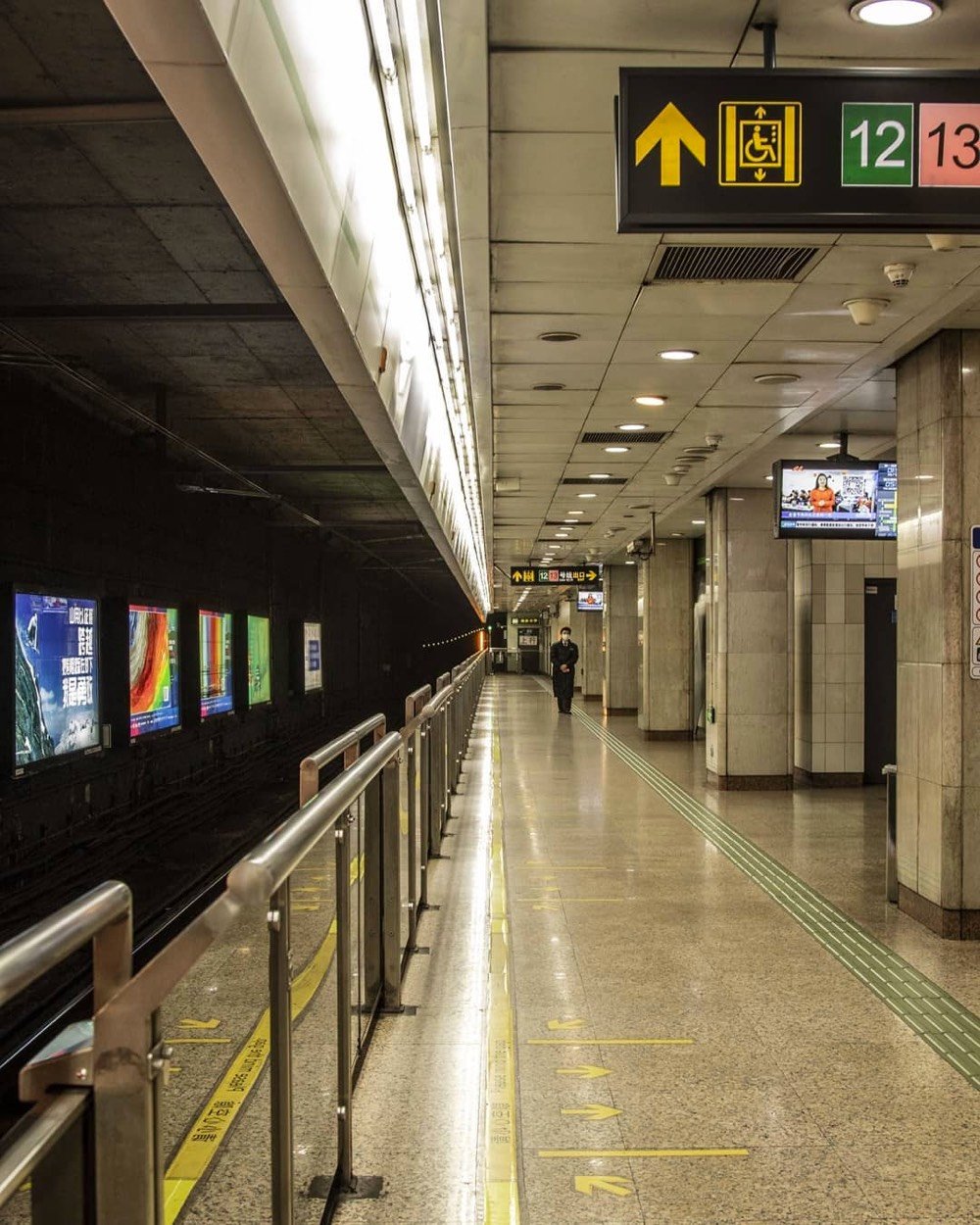
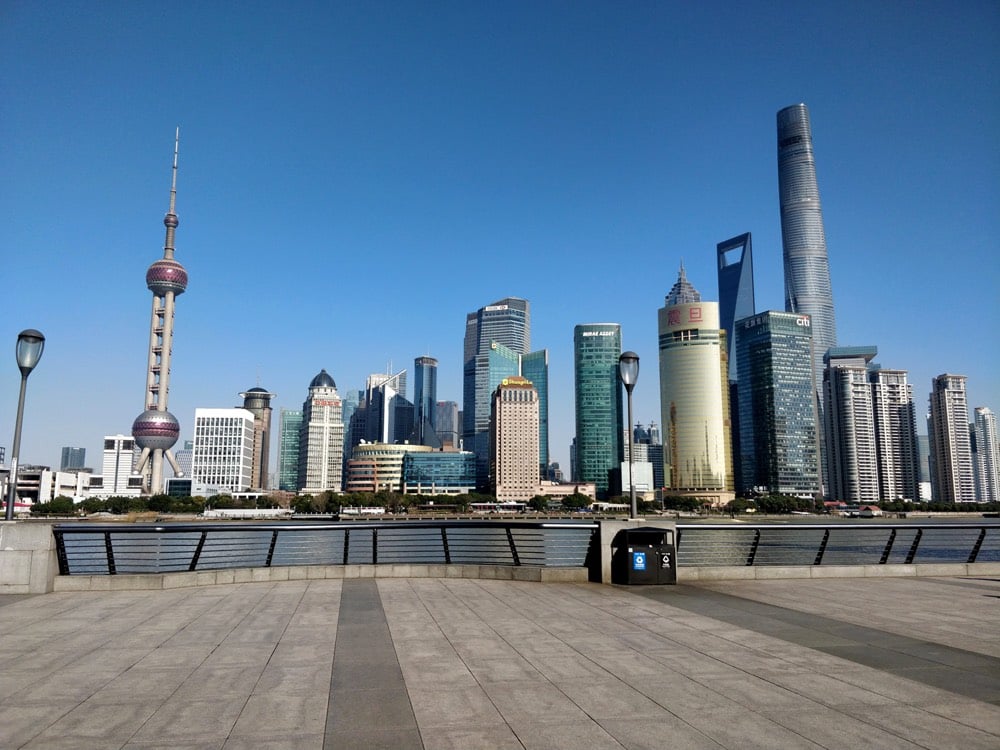
For her series One Person City, photographer nicoco has been taking photos of Shanghai that emphasize how deserted the city was due to the COVID-19 outbreak that has killed more than 1000 people in China. In an interview with Hyperallergic, the photographer said:
My objective for this series was to capture the feeling of apocalyptic emptiness. Some of the photos may look as if they were captured at strange early morning hours, but as a collection, it seeks to reinforce there were no people, anywhere.
These are Shanghai’s busiest locations that can compare to Times Square in New York City, Big Ben in London, the Bean in Chicago, or the Washington Monument in DC. They are very popular on an average day, and very, very popular during holidays as domestic tourists and residents spend time with their families and check out festive displays, shop, or just meander around.
You can find the photos on her Instagram.
Trailer for The Jesus Rolls, a sequel (of sorts) to The Big Lebowski featuring John Turturro’s Jesus Quintana character. Turturro stars & directs. Early reviews aren’t great.
The Sleep Blanket
Over a period of three months, Seung Lee knit a blanket showing a visualization of his infant son’s sleep patterns from birth to his first birthday.

The sleep data was collected with the BabyConnect app which lets you export to CSV. The CSVs were filtered and converted into JSON (using Google Apps Script and Python) which could then be used for visualization and tracking.
Brilliant. This deservedly made Flowing Data’s list of the Best Data Visualization Projects of 2019. See also Global Warming Blankets and this train delay scarf.
Wes Anderson’s The French Dispatch
Trailer ↑. Well, if you like Wes Anderson this looks terrific. And if you don’t, well, perhaps not. The French Dispatch is about a weekly literary magazine in the style of the New Yorker. From the actual New Yorker:
Wes Anderson’s new movie, “The French Dispatch,” which will open this summer, is about the doings of a fictional weekly magazine that looks an awful lot like — and was, in fact, inspired by — The New Yorker. The editor and writers of this fictional magazine, and the stories it publishes — three of which are dramatized in the film — are also loosely inspired by The New Yorker. Anderson has been a New Yorker devotee since he was a teen-ager, and has even amassed a vast collection of bound volumes of the magazine, going back to the nineteen-forties. That he has placed his fictional magazine in a made-up French metropolis (it’s called Ennui-sur-Blasé), at some point midway through the last century, only makes connecting the dots between “The French Dispatch” and The New Yorker that much more delightful.
Amazing…he basically made a movie about the New Yorker archives. And btw, writing “teen-ager” instead of “teenager” is the most New Yorker thing ever — but at least it wasn’t “teën-ager.”
Back to the movie, it’s got a cracking cast: Benicio del Toro, Adrien Brody, Tilda Swinton, Léa Seydoux, Frances McDormand, Timothée Chalamet, Jeffrey Wright, Bill Murray and Owen Wilson all star and then the supporting cast includes Liev Schreiber, Elisabeth Moss, Willem Defoe, Saoirse Ronan, Christoph Waltz, Jason Schwartzman, Anjelica Huston, and even the Fonz, Henry Winkler. The poster is quite something as well:
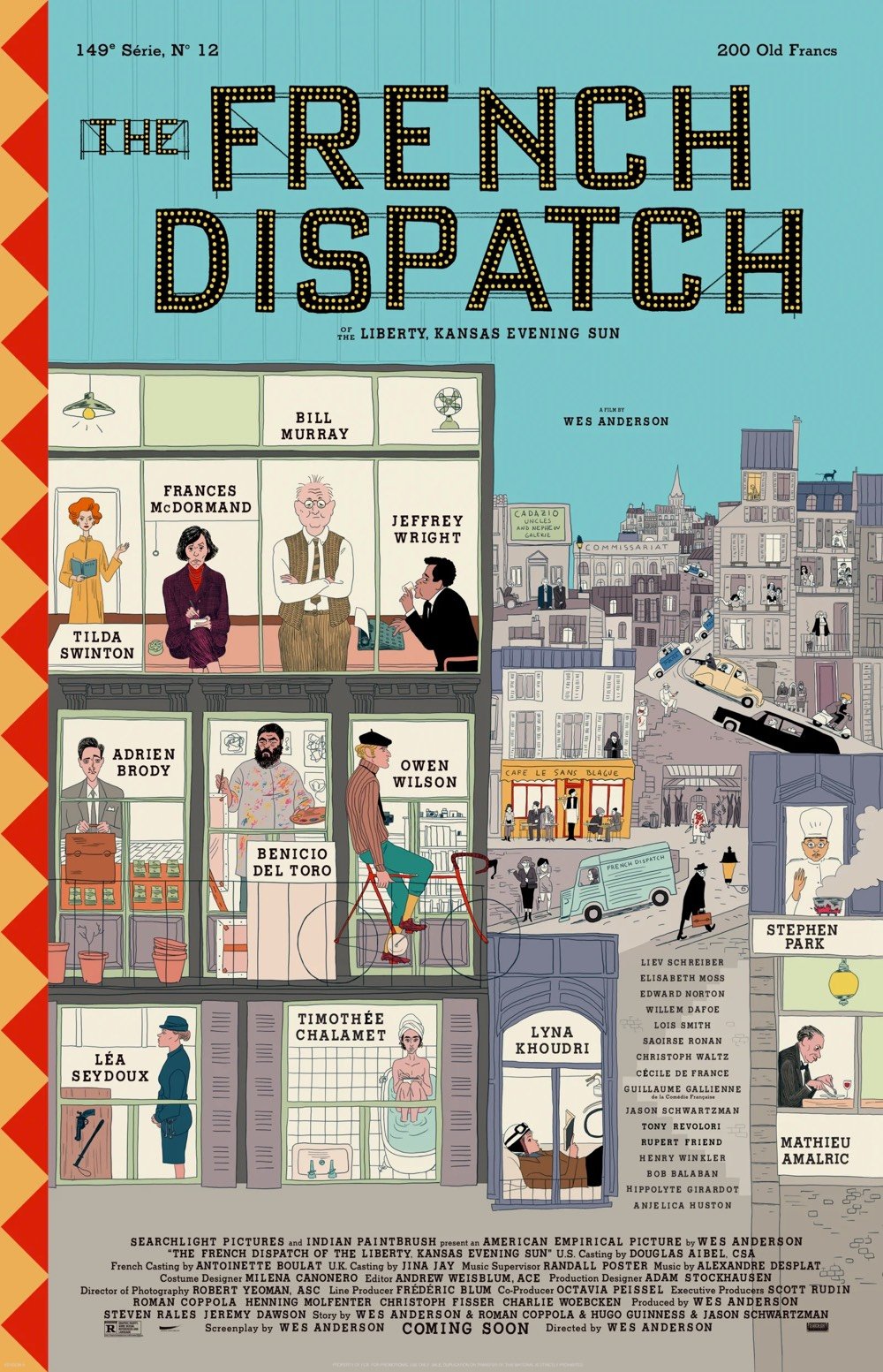
Opens July 24…can’t wait!
Parking lot turned into a multifaceted public square

Great reinvention of a former parking lot in south-east Melbourne, Australia. Reclaiming the space from cars, including Saturday night “burnouts,” Prahran Square was designed to recall surrounding landmarks, draw in citizens, and become a true public square, deliberately linking itself to existing spaces.
[T]he square is part of a greater public realm strategy that includes surrounding street, public forecourts and pocket parks to create a new integrated precinct. “All the streets started to become shared, and with Prahran Square, we started to create a civic village, which is a combination of squares, parks, streets,” says Bauer. “That was always the bigger idea, defining little projects that all slowly start to weave together.”
The new installations were divided in various zones, all overlooking the central event space and providing varied uses.
A zig-zag ‘forest’ walk and playgrounds, sloped lawn, art and flowering garden-beds all triggered familiar activities for local residents to enjoy. Each corner of the square too has a different materiality, a different character and different things to see and do.
The whole project is now better integrated in the surrounding neighbourhood and welcomes a number of different needs and communities.
It’s very eclectic, it has something for old and new communities, passing populations of young people, different national backgrounds, night spots, market-going families, the fashion people, elderly and infirm people, people watching, meeting up, just hanging out.

Photos by John Gollings with permission from Foreground.
Advice from Medieval Monks on Avoiding Digital Distraction
For Aeon, historian Jamie Kreiner writes about what advice medieval monks might have for us on avoiding the distractions of our phones, social media, and Netflix.
Medieval monks had a terrible time concentrating. And concentration was their lifelong work! Their tech was obviously different from ours. But their anxiety about distraction was not. They complained about being overloaded with information, and about how, even once you finally settled on something to read, it was easy to get bored and turn to something else. They were frustrated by their desire to stare out of the window, or to constantly check on the time (in their case, with the Sun as their clock), or to think about food or sex when they were supposed to be thinking about God. They even worried about getting distracted in their dreams.
John Cassian, an influential figure in early Christian monasticism, wrote about how to fortify yourself against these sorts of distractions.
Some of these strategies were tough. Renunciation, for instance. Monks and nuns were supposed to give up the things that most people loved — families, properties, businesses, day-to-day drama — not only to erode their sense of individual entitlement but also to ensure that they wouldn’t be preoccupied by that stuff in their professional lives of prayer. When the mind wanders, the monastic theorists observed, it usually veers off into recent events. Cut back your commitments to serious stuff, and you’ll have fewer thoughts competing for your attention.
Restraint had to work on a physiological level, too. There were many theories in Late Antiquity and the Middle Ages about the connection between the mind and body. Most Christians agreed that the body was a needy creature whose bottomless appetite for food, sex and comfort held back the mind from what mattered most. That didn’t mean that the body must be rejected, only that it needed tough love. For all monks and nuns, since the very start of monasticism in the 4th century, this meant a moderate diet and no sex. Many of them also added regular manual labour to the regimen. They found it easier to concentrate when their bodies were moving, whether they were baking or farming or weaving.
The Magic of Chess
In this charming short film, The Magic of Chess, some young competitors at the National Elementary Chess Championship explain what they find so intriguing about the game. From an Atlantic piece on the film:
The children interviewed in the film are articulate and wise beyond their years. “When I asked the kids questions like, ‘What has chess taught you?,’ I was surprised, given their limited life experience, that they could formulate a response beyond the obvious mechanics of the game,” Schweitzer Bell told me.
Chess “teaches you how to make a plan,” one child says in the film.
“When you lose, you learn from your mistakes,” says another.
I was curious about the tournament, so I looked up the results and the standings are so full of Asian, Indian, Latino, and other non-European language names that my browser offered to translate the page for me. Another thing that jumped out at me was that most of the top competitors in the K-6 competition were 6th graders, except for 2nd grader Aditya Arutla finishing in 8th place. Wow!
End of week favs & overlooked
Here we are, Friday night, last day of this latest guest-editing of Kottke dot org, I hope you enjoyed what I found for you these past few days.
In case you missed them, here are a few of my favourites and some which, for whatever reason, might have gone a bit overlooked.
Dissolving realities in Vietnam
A fabrication lab in Japan hopes to rejuvenate the local cedar industry
Database of old book illustrations
Coyote and badger hunting as a team
Tintin, under-appreciated dresser
If you enjoyed what I shared this week, have a look at my newsletter, Sentiers. Over there I skew a bit more towards the dystopian and critical in tone but covering a lot of the same topics. Have a good weekend!
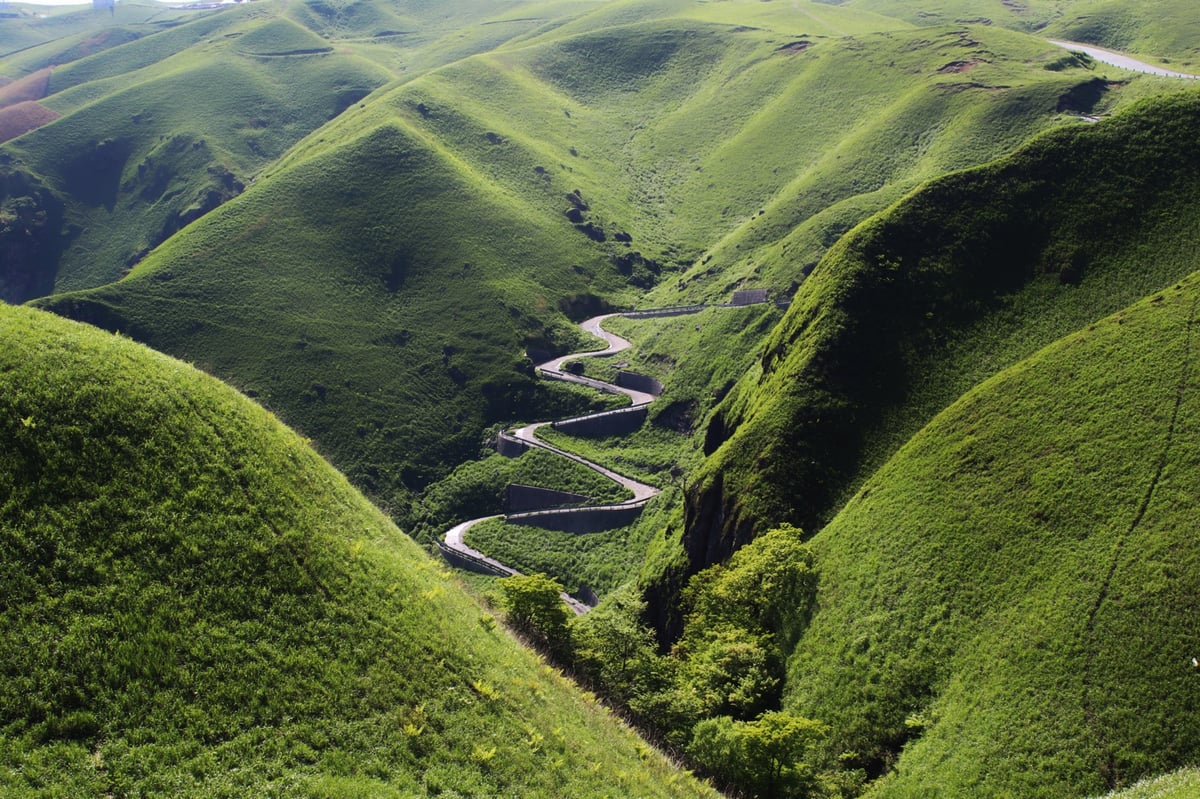
Image credit: Mount Aso by Tom Vining, the Fab Lab in the story above is located just north of there.
Superb notebooks recording 30 years of meals through gorgeous illustrations. “Kobayashi’s pen has accounted for every last spring onion and grain of rice, for the sheer pleasure of tasting life twice.”
Dutch court rules against welfare surveillance

The creation and adoption of surveillance systems based on Artificial Intelligence often feels like it’s widely outpacing the speed at which cities and countries can legislate any kind of control. So it’s always an encouraging sign when new well considered decisions are rendered and put the public good and human rights first.
One such decision is the Dutch courts’ ruling that a welfare surveillance system violates human rights.
A Dutch court has ordered the immediate halt of an automated surveillance system for detecting welfare fraud because it violates human rights … The case was seen as an important legal challenge to the controversial but growing use by governments around the world of artificial intelligence (AI) and risk modelling in administering welfare benefits and other core services.
It’s especially encouraging since disfranchised and minority populations are usually the ones facing the brunt of surveillance, with little recourse for corrections and / or without the means to pursue legal options.
Deployed primarily in low-income neighbourhoods, it gathers government data previously held in separate silos, such as employment, personal debt and benefit records, and education and housing histories, then analyses it using a secret algorithm to identify which individuals might be at higher risk of committing benefit fraud.
One hopes the decision will have repercussions far outside the Netherlands.
Alston predicted the judgment would be “a wake-up call for politicians and others, not just in the Netherlands”. The special rapporteur presented a report to the UN general assembly in October on the emergence of the “digital welfare state” in countries around the globe, warning of the need “to alter course significantly and rapidly to avoid stumbling, zombie-like, into a digital welfare dystopia”.
Image credit: Rotterdam at night by Joël de Vriend.
Dissolving realities in Vietnam
The overlap of gaming engines, movies, and reality is an intersection I find fascinating right now. A recent example is how The Mandalorian uses Epic’s Unreal engine to generate live background scenes, which are sometimes even kept in the final shots as is.
In the above video, it’s Ruben Fro mixing Unity (another game engine) with a “point cloud” derived from 360 videos. The resulting scene makes for an eery mix which wouldn’t feel out of place in a scifi film.
Via: Merzmensch Kosmopol thanks for the heads up!
A fabrication lab in Japan hopes to rejuvenate the local cedar industry

Over the last decade plus, Fab Labs have had some years of great growth and visibility. Recently, some have had a harder go of it and a growing number of people, including most of media, seem to have dismissed them.
Fab Lab Aso Minami-Oguni is one kind of project that can “keep the dream alive” and shows how local fabrication workshops can serve a number of functions and help different groups within a community.
Created by the companies Anai Wood Factory and Foreque Inc., the lab sits in a relatively remote village of 4000 people.
[B]uilt with the intention of developing new products with Oguni Cedar, a locally prized resource. Oguni Cedar is a fine-grained, high-quality wood, known for its lustre, texture and beautiful pink colour. The Fab Lab is affiliated with a shop called the FIL Store which sells tableware and furniture, from wooden plates and cups to tables, lounge chairs, and coat hangers, all made by Foreque Inc. under the FIL brand. All the products are made from Oguni Cedar, and their hallmark is the way in which the grain of the wood is incorporated into their design. Suzutani explains that the products symbolise the way the industry has changed over time.
It’s part of an effort to rejuvenate the exploitation of the local cedar and to help another generational shift, having gone from logs, to lumber, and hopefully now to more finished products.
The lab also caters to other audience in the village.
Fab Lab Aso Minami-Oguni attracts all kinds of people, from housewives who want to engage in craftwork, to newcomers to the village working on ambitious projects. But according to Suzutani, they expend their biggest efforts on primary school and junior high school students, aged 6 - 15. “Rural towns like this do not have many places for children to safely go and play on their own. Because of that, many of them go home after school just to play games on their phone for hours. You could even say that smartphones are their only connection to the outside world.”
Credits: The interview is a collaboration between Pop-Up City and MOMENT Magazine. Photo of Mount Aso by Takahiro Taguchi (Fab Lab Aso Minami-Oguni is just north of the mountain).
Database of old book illustrations
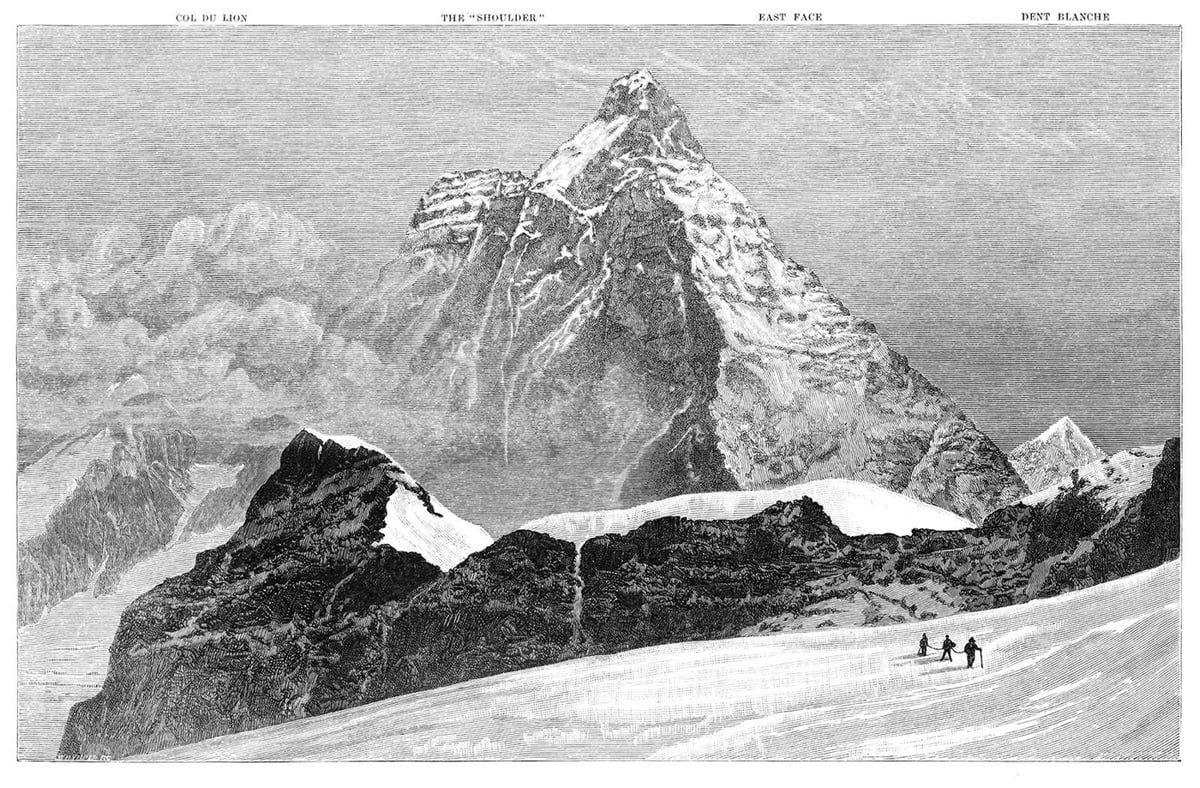
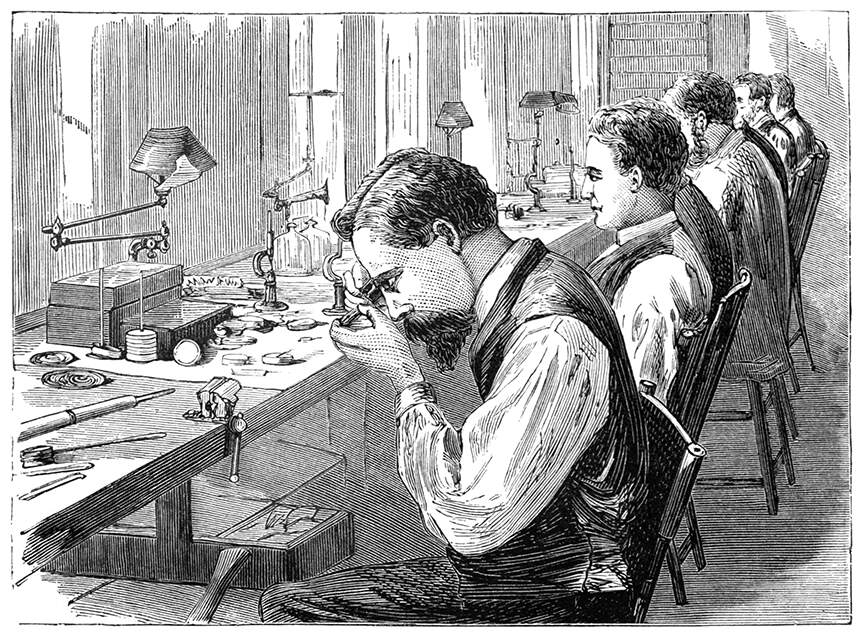
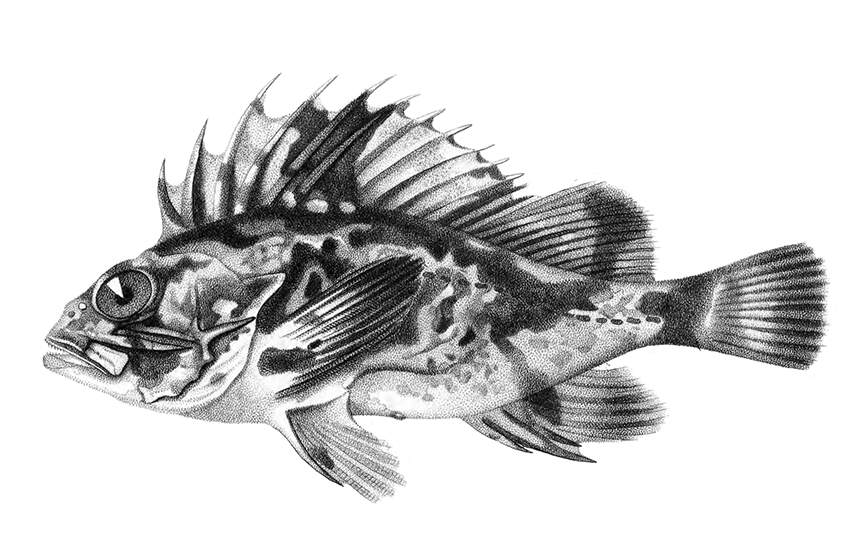
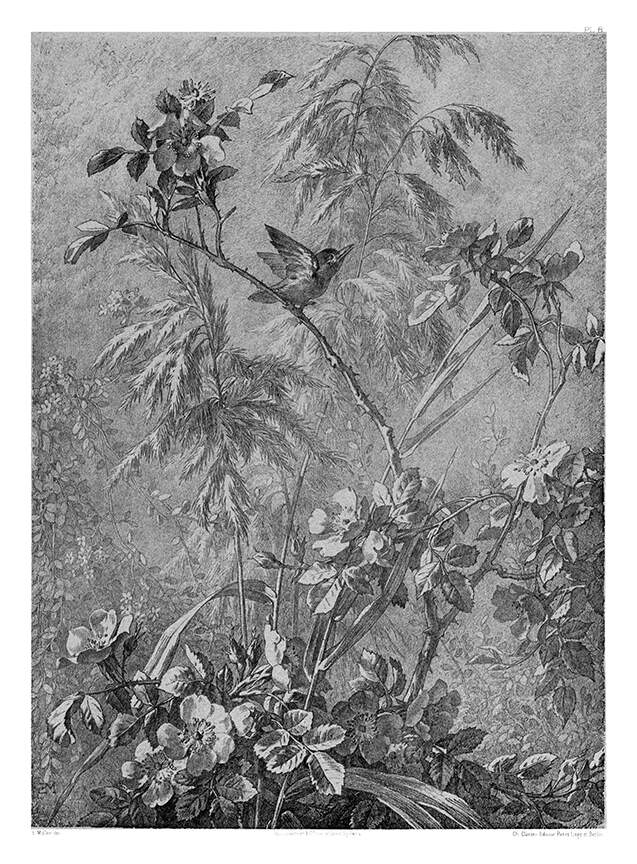
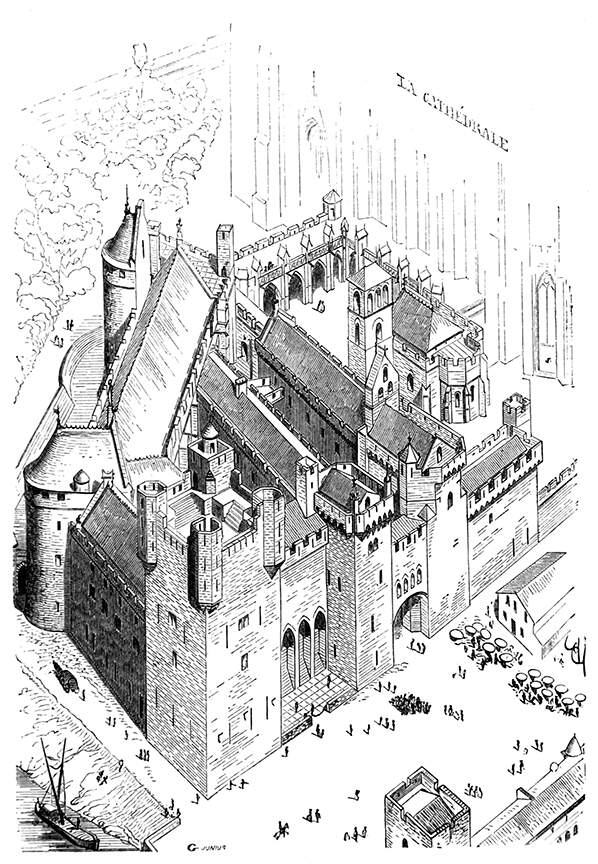
Here’s an enormous library of thousands of old book illustrations, with searchable name, artist, source, date, which book it was in, etc. There are also a number of collections to browse through, and each are tagged with multiple keywords so you can also get lost in there in that manner.
Though the team behind the site doesn’t specifically list the whole site as public domain, chances are a lot of the illustrations you’ll find are way out of copyright in most jurisdictions.
Beehives, “bee space,” and Le Corbusier
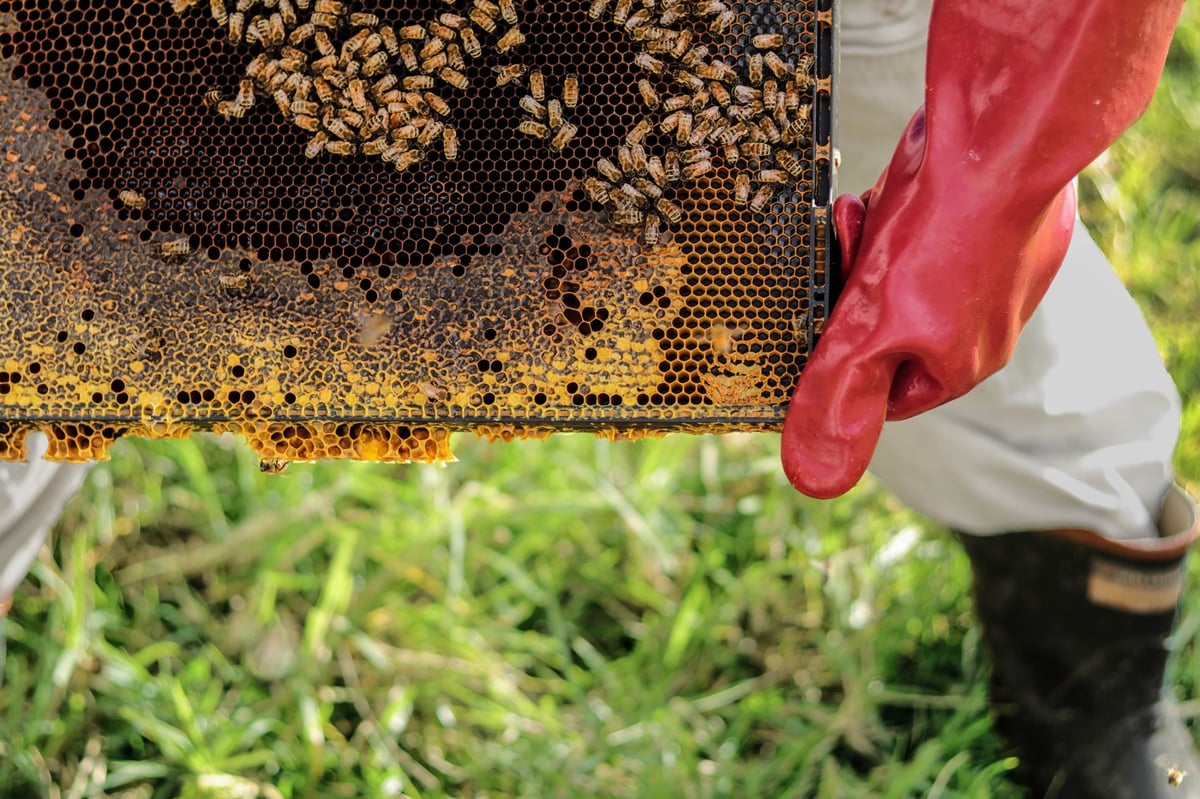
The beehive design most of us probably imagine when thinking of beekeeping are actually a relatively recent design, having been patented by the clergyman Reverend Lorenzo Lorraine Langstroth in 1852.
One of the reasons this design works is that he understood “bee space,” the gap between panels which allows bees to circulate while preventing them from filling in the whole and making the panels “stick.”
It’s because Langstroth understood “bee space.” Simply put, bee space is a gap of around 6 - 8mm. It is the space that is too large for the bees to fill with propolis, too small to fill with comb but just right for crawling around in. By designing a hive with this exact space between components - between the frames, the frames and the hive walls, and the frames and the roof - it became possible for the frames to remain unstuck and to therefore be removable. The bees built their comb inside the parameters of the wooden frame and regular inspections by the beekeeper kept the frames loose. So, modern beekeeping is premised on the very precise measurement of the body of a honeybee and how it uses space inside a hive.
The author proposes a parallel with architectural modernism, which although a bit stretched, has some value and is a good occasion to look into Le Corbusier’s unité d’habitation.
The fabrication of the hives, their replicability and ease of manufacturing is also an example of modern methods spreading worldwide and overshadowing older, often better adapted, methods.
We see this with the box hives too, as box beehives replaced traditional beekeeping practices in many cultures. In the West mass-produced beehive components are affordable but in many parts of the developing world, where development agencies push modern beekeeping, hive components can be expensive. Whereas making hives from locally sourced and affordable available materials, such a wicker, mud, plastic sheeting and dung is usually far more sustainable. In addition, traditional beekeepers selected apiary types and sites due to the success rates of hives in those locations. Traditional Ethiopian beekeepers, for example, keep hives suspended in trees and claim that there are fewer issues with diseases among the branches than in boxes on the ground. This type of beekeeping also requires healthy forests, so Ethiopian beekeepers know their forests well and are, in many cases, advocates for conservation and biodiversity.
The piece closes on a good question: is this kind of industrialized large-scale beekeeping part of the declining bee population in recent years?
A travel guide to Xbox destinations

There is now a Rough Guide to Xbox. If this turned out to be paid for by Microsoft, I wouldn’t be surprised. It kind of makes sense though, with the level of detail now available in games, with the time people spend in there, with the time spent just looking around instead of advancing a quest or mission, with “photography” happening from inside games, perhaps it’s time for a travel guide to the most gorgeous creations.
That distinction has now been eroded. Game graphics are so immersive and all-consuming, you don’t just experience the gameplay - you experience the very world in which the gameplay unfolds. That thrilling feeling of being somewhere new is no longer the exclusive domain of real-world travel. (Quote from the Rough Guides site)
There already are Discovery Tours in Assassin’s Creed Origins, and Fortnite is used as a social space, maybe it’s not that surprising that a travel guide of this kind would be published.
The history and futures of work since the 50s
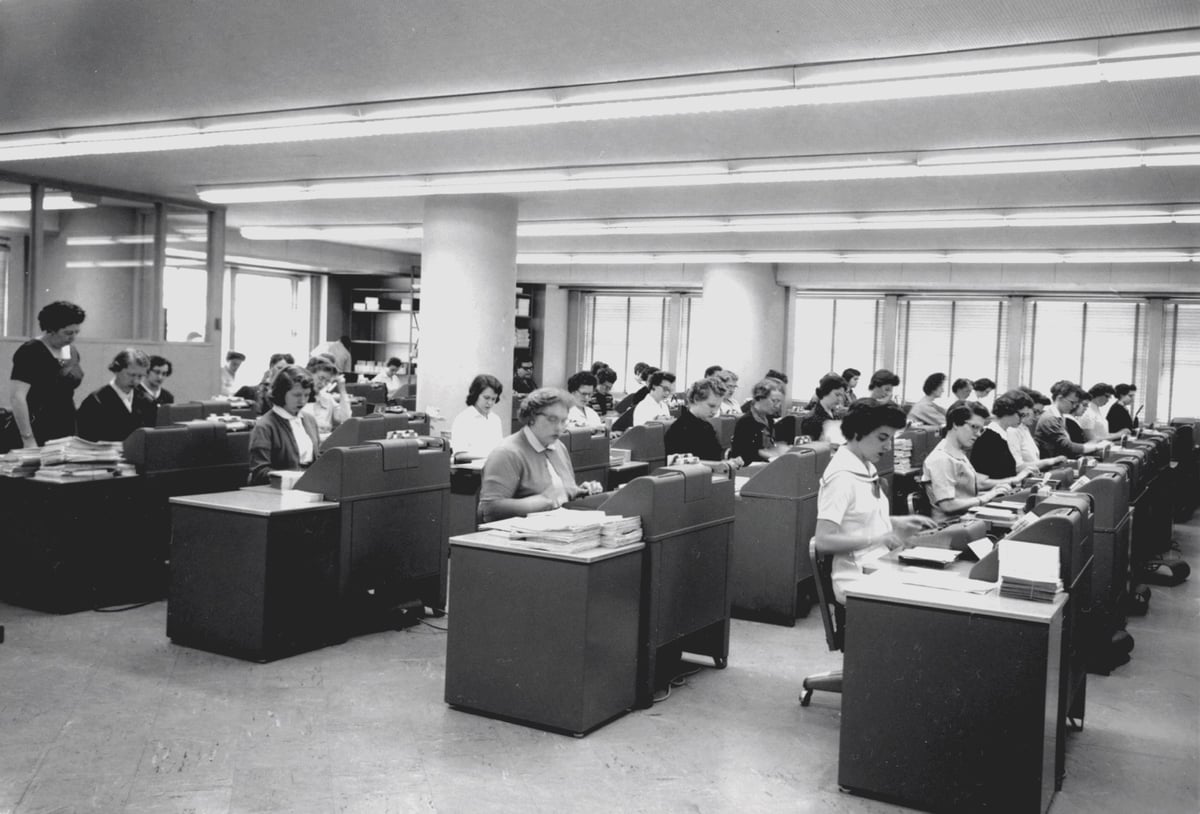
Quite interesting and well designed retrospective on the History of Work at Atlassian, looking at every decade starting in the 50s; what office work looked like, technological innovations, and how the future of work was imagined during each decade.
In a 1964 interview with the BBC, science fiction writer Arthur C. Clarke nailed almost all of his predictions for the year 2014. He predicted the use of wireless communications, making us “in instant contact with each other, wherever we may be,” as well as robotic surgery, only missing his prediction that workers would no longer commute to their offices and travel “only for pleasure.”
When office work and life-long hopes of employment started losing some of it’s potential and appeal:
Employees increasingly had doubts about the value of long-term company loyalty and started putting their own needs and interests above their employers’. “Office Space” debuted in 1999 and humorously brought this idea to life, satirizing the banal, everyday work of office denizens and their incompetent, overbearing bosses.
This has been featured on the blog in the past but it’s always fun and very impressive to see Justin Obeirne’s super detailed looks at Apple map expansions. This time the Jan 30th update which now covers 99.8% of the U.S.
Un-recyclable wind turbine blades sent to landfills

Two steps forward one step back? Not thinking about second-order consequences? The type of thing the face-palm emoji was invented for? Call it what you will but, as more and more of energy generation switches to renewables, some of the equipment, in this case wind turbines, is already aging and old parts piling on. The problem here is what happens to the blades doesn’t seem to have been thought through.
Tens of thousands of aging blades are coming down from steel towers around the world and most have nowhere to go but landfills. In the U.S. alone, about 8,000 will be removed in each of the next four years. Europe, which has been dealing with the problem longer, has about 3,800 coming down annually through at least 2022, according to BloombergNEF. It’s going to get worse: Most were built more than a decade ago, when installations were less than a fifth of what they are now.
So where do they go? Landfills.
Built to withstand hurricane-force winds, the blades can’t easily be crushed, recycled or repurposed. That’s created an urgent search for alternatives in places that lack wide-open prairies. In the U.S., they go to the handful of landfills that accept them, in Lake Mills, Iowa; Sioux Falls, South Dakota; and Casper, where they will be interred in stacks that reach 30 feet under.
Image: Not a landfill from the linked article but rather wind turbine blades in a laydown yard in Pasco, Washington in 2009.
Date-palms sprouted from 2,000-year-old seeds

Seems I’m on a bit of a nature and trees streak this week, I hope you’ll indulge me. A team led by Sarah Sallon, a doctor at Hadassah Medical Center, has been finding millennia old seeds from archeological sites and sprouting some of them into viable date-palm trees.
It’s kind of fascinating to contemplate the age of those seeds by considering where they come from and the events they were contemporary too.
Five of the six seeds that ultimately sprouted came from either Masada, the site of a famous siege in 74 b.c. that is said to have ended with the mass suicide of Masada’s defenders, or the Qumran Caves, best known as the site of the Dead Sea Scrolls. (A sixth came from caves at Wadi Makukh.) At 2,000 years old, the seeds are in fact contemporaries of these ancient events. Around the time Romans were laying siege to Masada and the Dead Sea Scrolls were being written, these seeds were being formed.
Perhaps other types of old seeds can be used and their genetic heritage tapped into to face our current challenges.
The fact that the team has done it not just once but now seven times suggests that ancient seeds could be used to resurrect genes that disappeared after thousands of years of breeding. “These ancient seeds might represent lost genetic diversity we don’t see any more,” Pérez-Escobar says. As date-palm growers adapt to climate change and battle pests and diseases, they might want to tap into the pool of ancient genes hidden in archaeological archives.
Image credit: Balaram Mahalder on WikiMedia Commons (not one of the trees planted from 2,000-year-old seeds).

New study estimates U.S. climate migrations

Climate migrations are already happening across the world, although not always talked about in those words and often having more to do with droughts and famine. With sea level rise and worsening weather, those migrations are bound to multiply and accelerate, including intra country, especially in a large country with a lot of coasts.
Bistra Dilkina, a computer scientist at the University of Southern California, led a study to try and predict how sea level rise might drive U.S. migration patterns in the future. They based their estimates on the movements of displaced residents following Hurricanes Katrina and Rita, used analysis from the National Oceanic and Atmospheric Administration (NOAA) on the effects of sea level rise, and then “trained a machine-learning model to predict where coastal populations will move when forced to leave their homes—and how that, in turn, affects the migration of non-coastal residents.”
Dilkina is careful to describe the study as only an “approximation” of how sea level change might drive migration patterns, not a precise picture of where people will actually move. “There’s still a lot of need for understanding different drivers and externalities.”
Other factors will have an impact, which means a lot more work and more data will have to go into these models so they can be used to plan appropriate measures in the coming years.
For one thing, sea level rise is just one effect of climate change. Heat waves will drive people north—and could make make cities like Duluth and Buffalo “climate havens.” Urban flooding will reshuffle populations within a city. And extreme storms will move people in yet other ways. Meanwhile, as in Paradise, “forest fires are going to have dramatic effects on the West Coast, including the Pacific Northwest,” says Keenan. “All of those things are changing land economics, housing economics, and public finance.”
Image credit: Modeling migration patterns in the USA under sea level rise report, under a Creative Commons Attribution 4.0 International licence.
Stopping time by sitting in a forest for 24 hours

Mark O’Connell felt like his life was getting busier, faster, he felt constantly short of time, which might sound familiar to many of us. He decided to try a natural treatment by spending 24 hours alone in the forest doing… nothing. Which is exactly the point of this “ritual whereby you stepped out of the flux of the world, in order to gain some perspective on the flux, and your place within it.”
At some point in my late 30s, I recognised the paradoxical source of this anxiety: that every single thing in life took much longer than I expected it to, except for life itself, which went much faster, and would be over before I knew where I was. […]
But it was also the sheer velocity of change, the state of growth and flux in which my children existed, and the constant small adjustments that were necessary to accommodate these changes.
Perhaps unsurprisingly, wilderness retreat groups exist, starting with a week in the woods with the group, and ending with a “wilderness solo” alone with your thoughts and as little as possible to do, some even forgoing meals so they don’t use the prep and eating as distraction.
There was an extraordinary transformative power, he insisted, in the practice of sitting and doing nothing, and thereby slowing your mind and body to a meditative rhythm in nature. […]
And as you become untethered from your accustomed orientation in time - from always knowing what time it is, how long you have to do the thing you’re doing, when you have to stop doing it to do the next thing - you begin to glimpse a new perspective on the anxiety that arises from that orientation. Because this anxiety, which amounts to a sort of cost-benefit analysis of every passing moment, is a quintessentially modern predicament.
A recommend read to see how O’Connell acclimated to the stillness, to observing leaves and running water, and how in just that 25 hour, he saw a change in his perception of time and boredom.
Header image: Jesse Gardner on Unsplash.
The Booksellers
I’m very much here for this! “A behind-the-scenes look at the New York rare book world.” Includes interviews with Fran Lebowitz, Susan Orlean, Kevin Young and Gay Talese.
Antiquarian booksellers are part scholar, part detective and part businessperson, and their personalities and knowledge are as broad as the material they handle. They also play an underappreciated yet essential role in preserving history. THE BOOKSELLERS takes viewers inside their small but fascinating world, populated by an assortment of obsessives, intellects, eccentrics and dreamers.
From the trailer:
The people that I see reading actual books in the subway are mostly in their twenties, it’s one of the few encouraging things you will ever see int he subway.
Troubling. “Essentially, we’re taking terra firma and making it terra soupy.”
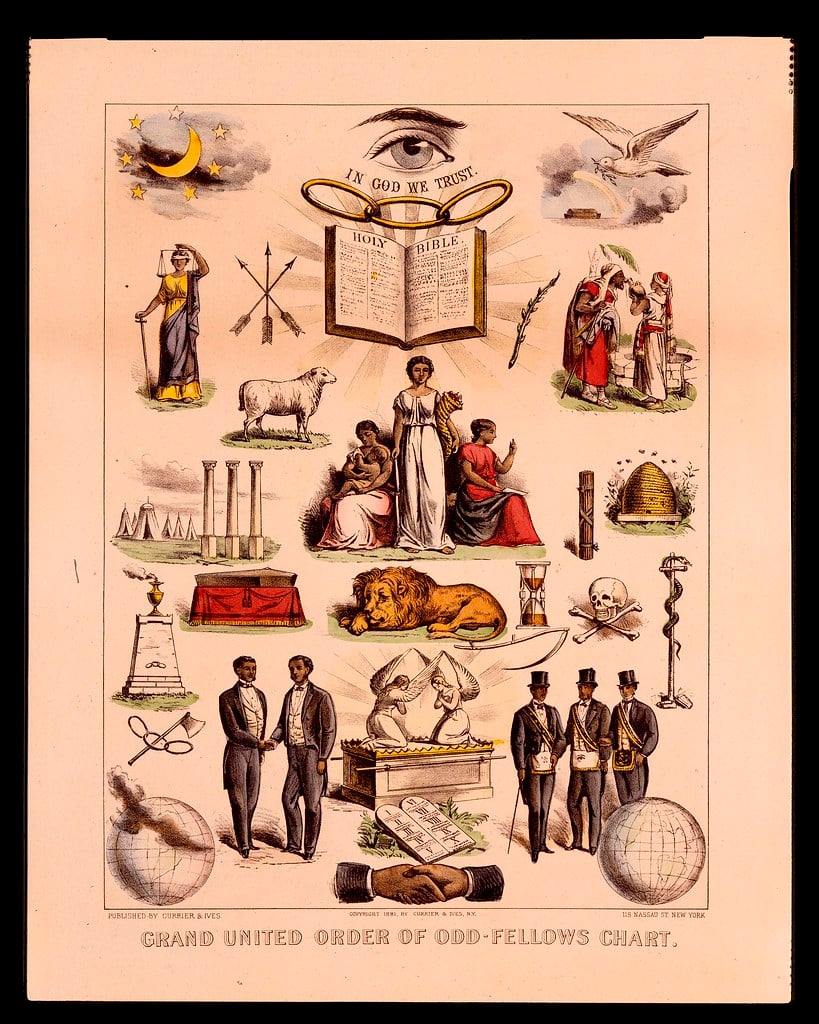
The odd history of the Odd Fellows
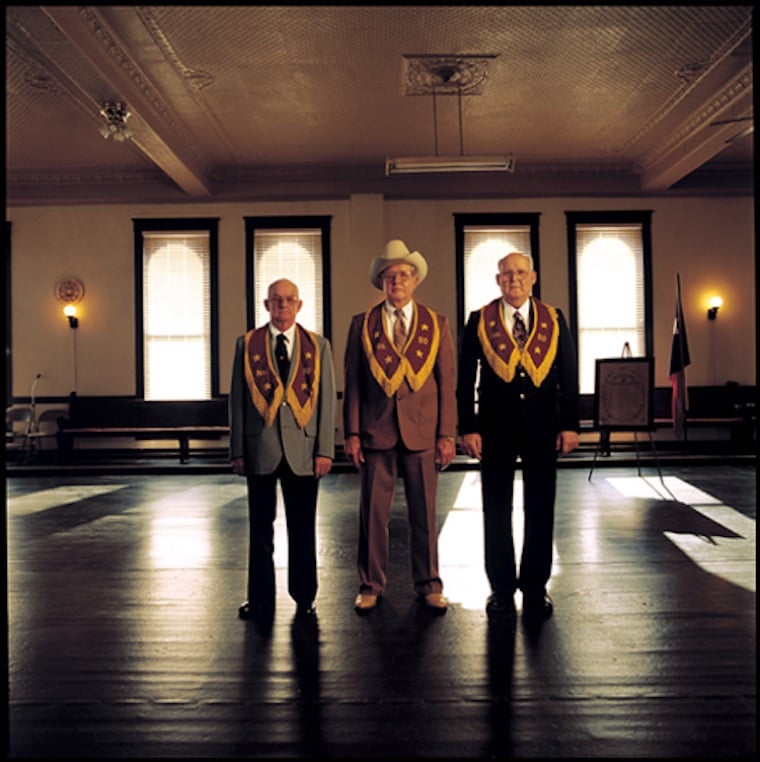
A centuries-old secret society which counted among it’s members the likes of Charlie Chaplin, P.T. Barnum, Charles Lindbergh, Wyatt Earp and Al Pinkerton? Do tell! As this deeper dive in their history mentions, how very Wes Anderson. Or, depending on which visuals and bits of history you focus on, perhaps very Jules Verne? Either way, The Independent Order of the Odd Fellows weren’t necessarily “odd” in today’s sense but in a rather more friendly one.
For as long as records show, this has been an organisation solely aimed towards charity and helping the less fortunate. One of its most prominent symbols known as the “Triple Links” alludes to its motto, “Friendship, Love and Truth” - three words that aren’t hard to get behind in modern civil society. But not so long ago, such noble values were rare to come by…
In the 18th century, with the beginning of industrialization, it was indeed considered “odd” to commit oneself to the principals of charity and communal welfare. It’s been suggested that founding members might have been branded as odd due to the apparent strangeness of following noble values such as fraternalism, benevolence and charity.
Or perhaps they simply had were considered odd or rare careers at the time. Several British pubs’ names suggest a past affiliation, and the American chapter went through multiple splits including post civil war where “the whites-only order staying in one camp and a new branch, open to people of any race, in the other,” while a number of chapters internationally had parallel women’s organizations.
The kids are alright. “Teenagers are using group accounts to flood Instagram with random user data that can’t be tied to a single person.”
Coyote and badger hunting as a team
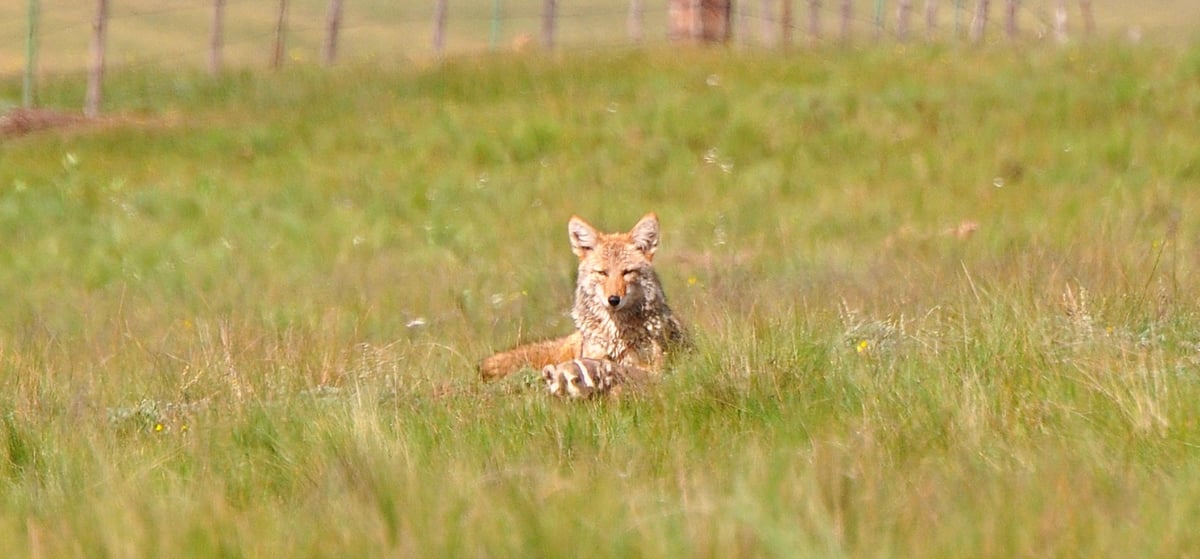
A cute video of a coyote waiting for a badger before using a culvert together to cross under a California highway has been making the rounds on Twitter. A well known behaviour for these two species but previously unobserved in the Bay Area.
They hunt together for efficiency, occupying the surface and underground, each using its own strengths.
When coyotes and badgers team up, the pairs track small, burrowing animals such as prairie dogs and ground squirrels. If the prey is above ground, the coyote usually chases it down, and the badger takes over the hunt if the prey descends underground. And not only do they find food together, but coyotes also have more success in this partnership than if they go it alone. Coyotes with badger cohorts catch an estimated one-third more ground squirrels than solo coyotes
There are some great pictures of such a hunting pair hanging out together on the U.S. Fish & Wildlife Service’s site, and articles in a number of places documenting their collaboration, like here on National Geographic who also mention this unsurprising bit of historical context:
Of course, the interaction between the two animals has long been recognized by Native Americans, like the Navajo and Hopi, who have countless stories about the coyote (the trickster) and the badger (the long-clawed, clever digger) hunting and sharing meals together.
Header image credit: Larry Lamsa on Flickr under a Creative Commons Attribution 2.0 Generic licence.
Breathtaking botanical animation with a hint of old-school encyclopedia illustrations. “Growing, blooming, rooting. Soil aeration, pollination. Enduring wind, rain, and pollution, dispersing seeds, and growing anew.”
Collaboration in nature
Darwin’s theory was of its time, born in “the heyday of classical liberalism, dominated by thinkers like Adam Smith, David Hume, and Thomas Malthus, who valorized an unregulated market.” And so, in itself and in multiple interpretations of the work through the years, was seen through a lens of competition. “Survival of the fittest” has become shorthand for his work and used time and again to “prove” the value of competition in evolution and in day to day human endeavours. But what if collaboration actually occupies a much more prevalent place?
Similarly, collectively owned spaces or institutions (like communal land trusts or co-ops) are often presumed short-lived or inefficient, doomed to suffer the “tragedy of the commons” as the innate self-interest of each member leads to an overuse of collective resources—a thesis that has been debunked again and again since its first articulation by Garrett Hardin in 1968. To put it simply, we have let Darwinism set the horizon of possibility for human behavior. Competition has become a supposed basic feature of all life, something immutable, universal, natural.
There have been numerous research projects in various fields trying to get us away from that focus on competition, notably biologist Lynn Margulis’s paper in 1967:
Rather than competition, it was collaboration, she argued, that constituted the origins of eukaryotic cells, which is to say, all complex life on planet Earth. Though her paper was rejected by as many as 10 journals before it was published in the Journal of Theoretical Biology, Margulis’ endosymbiont theory for the origin of eukaryotic cells is now the scientific consensus.
Since then, again and again, microbial species have shown us collaboration and interdependence in multiple settings, including our own digestive tract.
The National Institutes of Health recently found that over 10,000 microbial species occupy what they call “the human ecosystem,” outnumbering human cells 10 to 1 and doing diverse kinds of work at almost every level of the body’s processes. Bacteria, for instance, may make as much as 95 percent of the serotonin in our bloodstreams, meaning you have a diverse symbiont community to thank for your pleasant mood.
We can also look at mycorrhizal fungi, which collaborates with trees and various other plants in ways we are just starting to understand, like shown in the work of ecologist Suzanne Simard.
These are just some examples of a resurgence of understanding for collaboration in nature, instead of relying on our human focus on competition.
Darwin’s legacy aside, though, one critical takeaway from all this is that we must learn to recognize the impulse to naturalize a given human behavior as a political maneuver. Competition is not natural, or at least not more so than collaboration.
Fun public space claims in China

Little details of habits or unique uses of space and devices always draw my attention. These rollerbladers-in-training in Chongqing, China, spotted by Square Inch Anthro are exactly that, a day to day use of public space somewhat unique to a place.
On weekend mornings starting in late spring, this section of public square located in Chongqing’s central Shapingba district is taken over by somewhat the opposite end of the demographic spectrum: a trio of instructors and a gaggle of elementary school-aged rollerbladers-in-training. Dividing students by age and ability, instructors lay out various configurations of small orange cones and guide/coax their charges through them.
(You can also have a look at the communal dancers.)
Tintin, under-appreciated dresser

The first thing that comes to mind is that Tintin was always dressed the same, but he did actually dress a whole bunch of different ways and Tayler Willson takes us through a few of the stylistic choices Hergé made for his legendary character.
His most iconic outfit - and his most high-end look, too - is best probably described as sleek, West End, hipster journalist. Like a Fashion Editor at a tabloid paper. It’s a rig that consists of a beige knee-length pea coat, a wide-legged pair of pin-rolled rust pants, with high white socks and a pair of clean, brown Paraboots. The perfect autumnal outfit if ever we’d seen one.
Reading this, I also realized that, although I doubt he would have read the magazine, Tintin would have been right at home in many a Monocle fashion spread.
Such was his versatility though, Tintin came into his own in colder climates. Arguably his best - and certainly most DeckOutand~About - look saw him sport a large, padded ski jacket with a drawstring bow at the neck, a mountain backpack clipped and secured across his chest and a mustard yellow beanie, like something from a Berghaus handbook. It’s known as ‘technical outerwear’ on the streets nowadays, but we still like to call it Big Coat Weather. It’s the kind of outfit you’d see at the peak of Mount Snowdon, or in the smoking area of your local boozer on a Saturday night.

That ninety degree scenery thing

Some quite stunning work by Cream Electric Art created for an ad campaign for United Airlines in Australia. These are quite made-up by assembling two different landscapes in a dreamlike 90° angle but I’m posting them here to take us back to a favorite movie of mine, Inception, and the architect scene in Paris where Ellen Page’s character Ariadne bends the dream in a similar fashion. Less well known but even more interesting because it bent an actual map’s perspective was the dearly departed BERG’s Here & There project.
The projection works by presenting an image of the place in which the observer is standing. As the city recedes into the (geographic) distance it shifts from a natural, third person representation of the viewer’s immediate surroundings into a near plan view. The city appears folded up, as though a large crease runs through it. But it isn’t a halo or hoop though, and the city doesn’t loop over one’s head. The distance is potentially infinite, and it’s more like a giant ripple showing both the viewers surroundings and also the city in the distance.
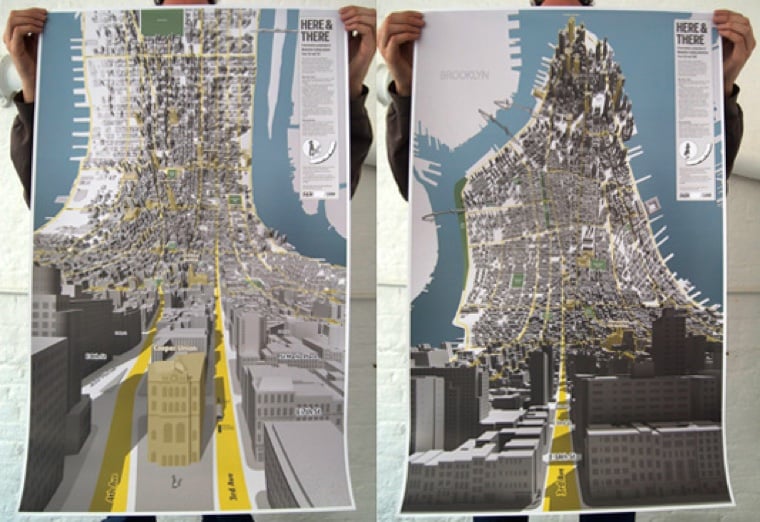
That whole piece is a great read for a tour of perspectives from Alfred Wainwright’s hand-drawn walking maps, to China, to GTA and SimCity.
Social anxiety manifested using melty plasticine
In this short multi award-winning film, Sam Gainsborough uses “a hybrid of claymation, pixelation and live action to paint a visceral portrait of internal struggle.” Beautiful and yet haunting. If you’ve struggled with these kinds of bouts with anxiety, this might ring some uncomfortable bells but worth a viewing for sure.
Sam says he wanted to create a film that resonated with people who struggle with anxiety, or often feel isolated from others. “[It’s] about a character who struggles to interact with other people,” he tells It’s Nice That. “The main character is someone who has learned to repress his emotions. If he feels sad or angry, his skin physically restricts him from showing these emotions. This means his skin is constantly swirling and transforming, meaning he can never be truly comfortable in his own skin.”
Meditation Barbie. Really. “Can it be those things? Yes. Do we need to feed kids a message that self-care looks a certain way or comes with expensive bath bombs, at an age when they’d be just as satisfied playing with the box Barbie came in? Probably not.”
“Park in a Truck” fast-tracks green space development across Philadelphia
Kim Douglas, director of Thomas Jefferson University’s landscape architecture program in Philadelphia, and her colleague Drew Harris, a professor of public health at Jefferson, put together the “park in a truck” program. There are approximately 40,000 vacant lots in the city, the projects wants to make the process of turning these lots into parks much simpler and quicker.
“The Park in a Truck idea is simple: Give local residents the resources and training to design, build and maintain parks on unused land in their own neighbourhoods, they decide whether it’s a place to grow vegetables, a setting to show off local art and culture, a space for child play, or simply a green place for rest and relaxation.”
By building on top of the ground, with no fencing, footings, or foundations, the process doesn’t require permits or special licenses. Once residents have agreed on what kind of park they want to build, a truck drops off the “kit” of components, like simply constructed benches, tables, plant beds and red gravel walkways, and they can get to work, building with their neighbours.
“It’s easy, sort of preassembled … you look at the options, you say ‘I’ll have an Art Park,’ you get a box, and you bring it to the site,” explains Douglas. “[We] provide what I call ‘puzzle pieces,’ these interchangeable park components that people can mix and match and organize.”
Fossilized action snapshot

Did pterosaurs eat squid? Perhaps by flying low and grabbing them out of the water? In a fascinating glimpse at wildlife from millions of years ago, experts are studying what might prove to be a fossilized predator-prey relationship. Though their conclusion is highly speculative, researchers are using techniques such as ultraviolet light—which can differentiate between sediment and formerly living tissue—to determine what might have happened to produce this fossil, and deduct some hints of the species’ behaviour.
The specimen, which was found in Germany’s Solnhofen fossil beds, is an 11-inch-long coleoid cephalopod, a precursor to today’s squids, octopuses and cuttlefish. It is preserved well enough that its ink sac and fins are readily visible, as is the very sharp-looking tooth stuck just below its head.

Hacking Google, a red handcart for red roads
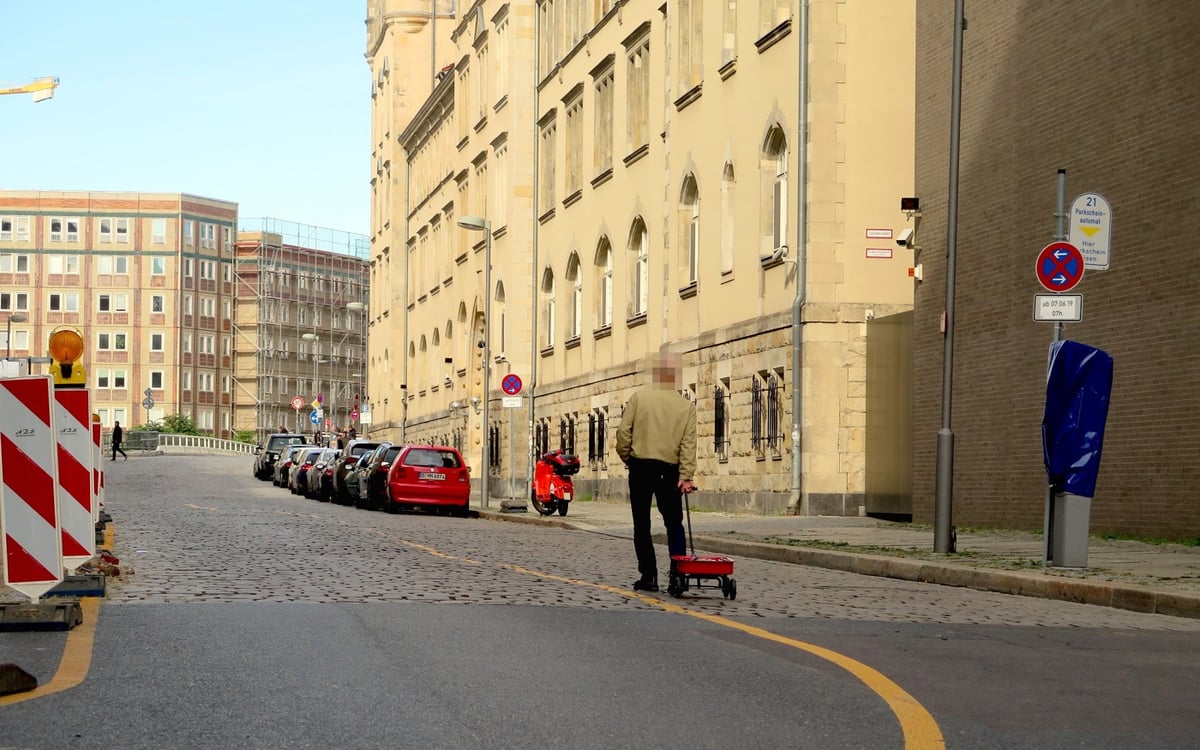
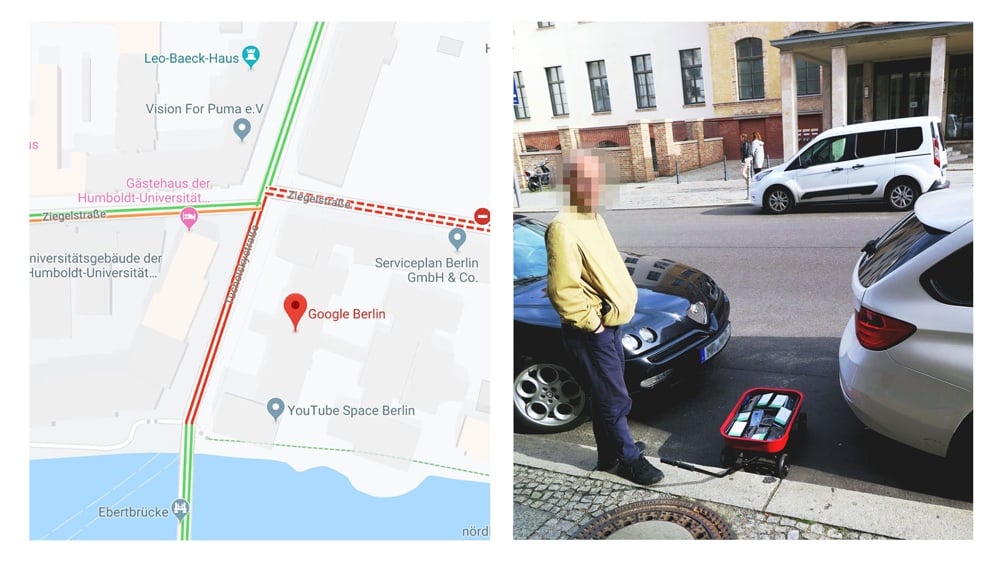
You’ve got to love little artistic hacks like this. Simon Weckert put 99 second-hand smartphones in a red handcart and walked around a few blocks in Berlin. Each phone was running Google Maps and being tracked for trafic measurements. Their presence and slow rolling around the streets caused Google to display a traffic jam.
The advent of Google’s Geo Tools began in 2005 with Maps and Earth, followed by Street View in 2007. They have since become enormously more technologically advanced. Google’s virtual maps have little in common with classical analogue maps. The most significant difference is that Google’s maps are interactive - scrollable, searchable and zoomable. Google’s map service has fundamentally changed our understanding of what a map is, how we interact with maps, their technological limitations, and how they look aesthetically.
My Culture Is Not Super Bowl Entertainment. “Chiefs fans will don headdresses and mark themselves with red paint to perform the ‘tomahawk chop’”. We’ve seen the best and absolute bottom-feeding worst of sports fandom this week.
Shake: A Typeface with Parkinson’s Disease
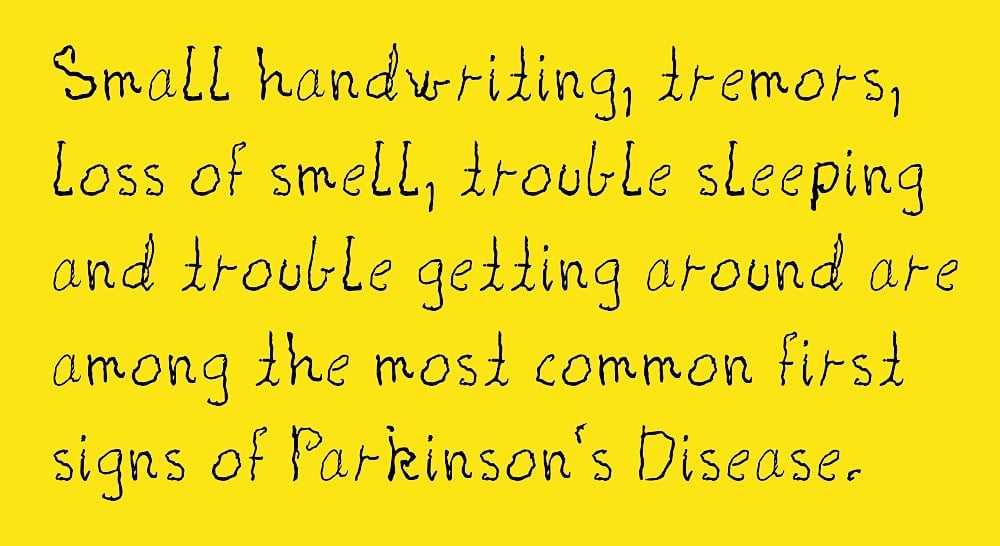
Shake is a typeface made from the real handwriting of a person living with Parkinson’s disease. Creative director Morten Halvorsen:
My mother was diagnosed with Parkinson’s eight years ago. And her handwriting has changed in the years since. I created this font to preserve her handwriting, and enable her to continue to write with her own letters.
A new version of the font will be available each year to capture his mother’s worsening condition. Donate a few dollars (or more!) to download the font — all proceeds go to finding a cure. You can also download a template so that you can document the handwriting of a loved one living with Parkinson’s — for a fee (donated to Parkinson’s research), Halvorsen will turn it into a font for you. (thx, kevin)
Story Time from Space
The Story Time from Space program aims to promote language and STEM literacy by having astronauts read educational bedtime books from low-Earth orbit on the International Space Station to kids on Earth. Here’s astronaut Kate Rubins reading Rosie Revere, Engineer:
And Ada Twist, Scientist read by Serena Auñón-Chancellor:
What a cool idea. Check out the rest of the available videos in their library.
Enemy of All Mankind, Steven Johnson

Steven Johnson (Ghost Map, How We Got to Now) is out with a new book in May called Enemy Of All Mankind: A True Story of Piracy, Power, and History’s First Global Manhunt. The book combines the story of a pirate with the beginnings of global capitalism and the end of an empire in Johnson’s polymathic fashion.
At its simplest, Enemy Of All Mankind is the story of a rogue pirate and his sensational crime. While piracy is an ancient profession, the most famous pirates of history would not take the stage until two decades or so after the voyage of the Fancy. But that “golden age” generation — Blackbeard, Samuel Bellamy, Calico Jack — was very much inspired by Henry Every’s crimes and the legends that spun up around them. While Every is not as famous today as those iconic figures from the golden age, he had a more significant impact on the course of world events than Blackbeard and his peers. Enemy Of All Mankind is an attempt to measure that impact, to chart its boundaries. It tells the story of the individual lives caught up in the crisis that erupted after the mutiny of 1694, but also the stories of a different kind of character, one step up the chain: forms of social organization, institutions, new media platforms. One of those institutions was as ancient as piracy itself: the autocratic theocracy of the Mughal dynasty. The others were just coming into being: the multinational corporation, the popular press, the administrative empire that would come to dominate India starting in the middle of the next century.
One Guy Gets Entire Park to Sing Bon Jovi
(Wait for it, wait for it…) One guy, singing Bon Jovi’s Livin’ On A Prayer, gets an entire park to sing along with him. I know this was a tough week for many, but if this doesn’t brighten your day, I do not know what will.
See also Leadership Lessons from the Dancing Guy, which I swear is related. (via open culture)
Socials & More