


The Morals That Determine Whether We’re Liberal, Conservative, or Libertarian. The first embedded video is a nice short intro to moral foundations theory.

Advertise here with Carbon Ads
This site is made possible by member support. 💞
Big thanks to Arcustech for hosting the site and offering amazing tech support.
When you buy through links on kottke.org, I may earn an affiliate commission. Thanks for supporting the site!
kottke.org. home of fine hypertext products since 1998.
Beloved by 86.47% of the web.
Entries for October 2019
Dissatisfied with a series of eye exams and suboptimal glasses, Oliver Eidel ordered his own optician kit for 190€ online and did his own eye exam. “This was hands-down the best pair of glasses I ever had.”
Yellowstone National Park’s Sound & Video Libraries Are Free for Anyone to Use
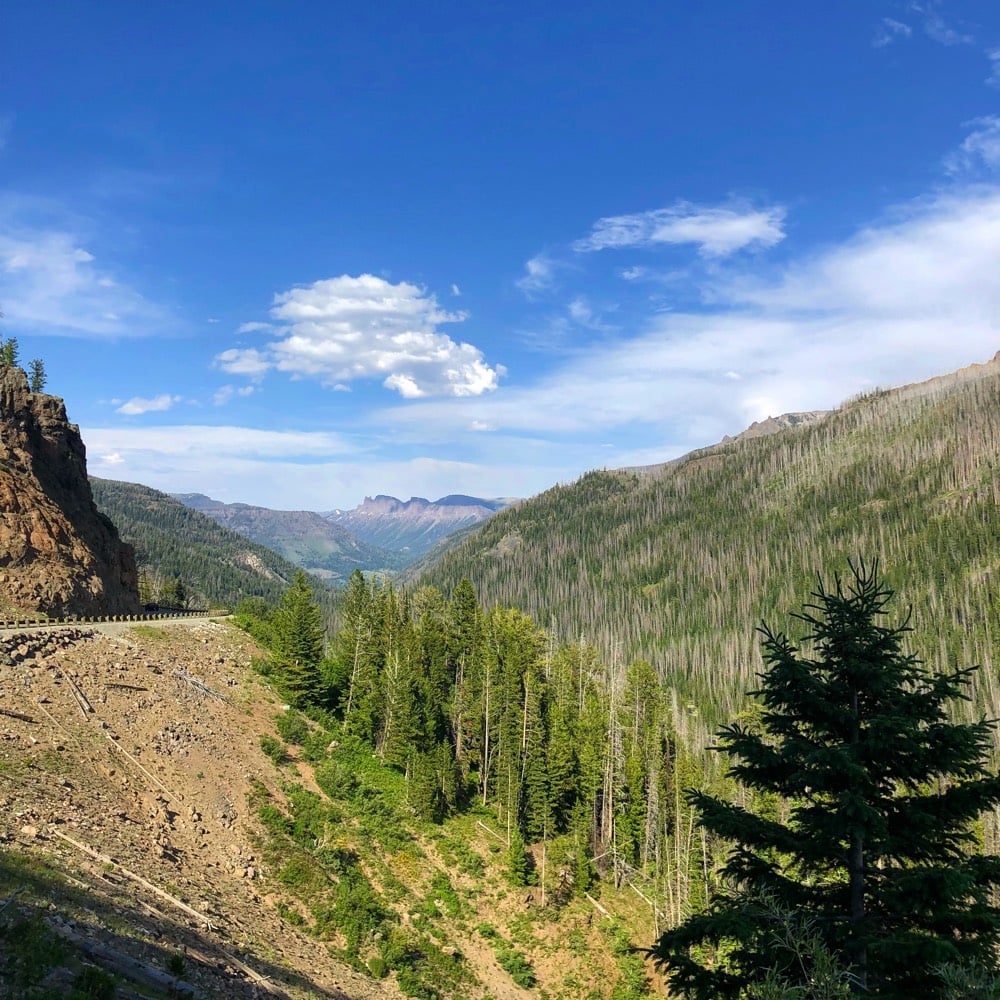
Yellowstone National Park maintains a collection of sounds and videos taken in the park that are in the public domain and free for anyone to use. The collection includes the sights and sounds of birds, geysers, bison, bubbling mud pots, fish, wolves, falling snow, storms, and all sorts of other ambient noises and videos.
Photos of the 1904 St. Louis World’s Fair. It’s wild that they brought in people from around the world and essentially put them on display in a human zoo.
How Motorcyclists Think People React When They Drive By
YMMV, but I laughed really hard at this (sound on, obvs). Good clean Friday fun.
Sweater weather is here! “The moment when your rain boots and your flip-flops cross paths on your shoe rack long enough for a shoe high-five.”
Wicker Musical Chairs
I bet you don’t think about wicker furniture that much, but Estelle Caswell does. In this video, which proves that almost anything can be interesting if the right person looks at it from the right angle, she explores how the peacock wicker chair became an unlikely pop culture icon.
The golden age of album cover design doesn’t have a specific start and end date, but many regard the late 1960s to 1970s as one of the field’s most exciting times. From the psychedelic rock covers of the ’60s to glistening airbrush covers of the ’70s, the era was a kaleidoscope of colors worthy of placement in modern art museums.
But there’s one genre of cover so ubiquitous it almost flew under the radar. The covers typically featured a wide shot of the artist sitting on a throne-like wicker chair, like a king or queen. Usually, the artist looked casual and relaxed; sometimes props would sit around them to decorate the scene. No matter what, the oversized woven chair was the main feature. This was the peacock chair album cover, and it was everywhere: Dolly Parton, Al Green, and Cher all sat in it.
It’s time to ban cars from Manhattan. “Instead of small steps, we need to take one big leap: ban cars.”
Poll: You can insert the word “fucking” into the William Carlos Williams poem “This is Just to Say” exactly once. Where would you put it?
In the “red zones” of Christchurch, NZ, suburbs rendered uninhabitable by earthquakes, nature has reasserted itself in the absence of humans. The before/after photos are wild.
1917, a WWI Thriller Presented In Real-Time as a Single Continuous Shot
Master cinematographer Roger Deakins has teamed up with director Sam Mendes on 1917, a WWI thriller that follows two soldiers tasked to deliver a message to the front lines to save the lives of thousands of men. To create a more immersive feeling, they decided to present the action of the movie in real-time and pieced together many long takes to make it seem as though the film is a single continuous 2-hour-long shot. In the video above, the filmmakers give us a behind-the-scenes look at how that impressive undertaking was accomplished.
With the emphasis on time as the film’s organizing principle, it’s not difficult to see the influence of Christopher Nolan’s Dunkirk here. Even the watch-ticking music in the trailer for 1917 is similar to Hans Zimmer’s score for Dunkirk. (via @jayjrendon)
Thermal video footage of dancer Kylie Shea. “We filmed this late one night on a tennis court in the freezing cold to watch and study how my body heats up when I dance. My core was the first to fire up…”
The Songs of 1979, 1980, 1981, 1982 & 1983
Chicago mashup masters The Hood Internet have been pretty quiet lately — their last mixtape was released more than two years ago. But in the west, a shadow stirs… In the same vein as their 40 Years of Hip Hop video, the duo has released a musical tribute to 1979, combining 50 songs released that year into a tight 3-minute mix.
Their plan is to release a new video each week in October that will cover the subsequent four years, 1980-1983.
Update: Here is their video for 1980. I’ll share the rest of them as they post.
Here are 1981, 1982, and 1983:
How to Get Away With Gerrymandering. “A leaked audio recording reveals how [Republican] state lawmakers are taught to trash evidence, avoid the word gerrymander, and create an appearance of bipartisanship.”
Lizzo vs. The Aristocats
A chap named Brendan Carey took footage from the 1970 animated movie The Aristocats and dubbed over Lizzo’s Truth Hurts to make this tiny masterpiece.
See also what is arguably the best video of this genre, Bert & Ernie doing M.O.P.’s Ante Up.
J.D. Salinger’s Spider-Man. “Where I want to start telling is the day I got bit by a radioactive spider at Midtown High School.”
How Japan Became a Pizza Hotspot. “I’ve eaten at Seirinkan probably 200 times since it opened. I’ve never seen anyone else besides Kakinuma touch the pizza.”
Pixar’s Fake Real Cameras
Pixar is always trying to push the envelope of animation and filmmaking, going beyond what they’ve done before. For the studio’s latest release, Toy Story 4, the filmmakers worked to inject as much reality into the animation as possible and to make it feel like a live-action movie shot with real cameras using familiar lenses and standard techniques. In the latest episode of Nerdwriter, Evan Puschak shares how they did that:
As I learned when I visited Pixar this summer,1 all of the virtual cameras and lenses they use in their 3D software to “shoot” scenes are based on real cameras and lenses. As the first part of the video shows, when they want two things to be in focus at the same time, they use a lens with a split focus diopter. You can tell that’s what they’re doing because you can see the artifacts on the screen — the blurring, the line marking the diopter transition point — just as you would in a live-action film.
They’re doing a similar thing by capturing the movement of actual cameras and then importing the motion into their software:
To get the motion just right for the baby carriage scene in the antique store for TS4, they took an actual baby carriage, strapped a camera to it, plopped a Woody doll in it, and took it for a spin around campus. They took the video from that, motion-captured the bounce and sway of the carriage, and made it available as a setting in the software that they could apply to the virtual camera.
Now, this is a really interesting decision on Pixar’s part! Since their filmmaking is completely animated and digital, they can easily put any number of objects in focus in the same scene or simply erase the evidence that a diopter was used. But no, they keep it in because making something look like it was shot in the real world with real cameras helps the audience believe the action on the screen. Our brains have been conditioned by more than 100 years of cinema to understand the visual language of movies, including how cameras move and lenses capture scenes. Harnessing that visual language helps Pixar’s filmmakers make the presentation of the action on the screen seem familiar rather than unrealistic.
Q: How do you know when someone has recently visited Pixar?
A: Oh don’t worry, they’ll tell you.↩
The 20 best films of Aardman Animations. Chicken Run takes the top spot while my personal favorite The Wrong Trousers is #3.
How Accurate Is Your Listening?
In a 2010 interview with the BBC, Alan Rickman talked about the importance of listening as an actor:
You only speak because you wish to respond to something you’ve heard. So the notion of an actor going away and looking at a speech they have in their bedroom alone at night is a complete nonsense to me. What you have to say is completely incidental. All I want to see from an actor is the intensity and accuracy of their listening. And then what you have to say will become automatic.
I love that — “the intensity and accuracy of their listening”. It seems like good advice not only for actors but for other professions and personal relationships. How accurate is your listening? (via @tedgioia)
Will Trump Ever Leave the White House?
In an opinion piece for the NY Times, Thomas Edsall asks the provocative question: How and when will President Trump leave the White House? In the course of attempting to define and then answer the question, he talks with a number of political experts about how a successful impeachment or a 2020 election defeat could play out. When he asked “eminently reasonable scholar” David Leege about it, Leege said:
We should not assume that either a 2020 election defeat or impeachment/conviction will remove Trump from the White House.
Both before Trump was elected in 2016 and during his term, he has made frequent references to “my 2nd Amendment friends”’ and increasingly the “patriots” who constitute the military.
As president, Trump has resisted any effort to curb citizen access to guns and ammo. He puts on a modest show of concern when a particularly bad gun massacre occurs but, in the end, he sees armed citizens as a significant personal asset.
And if the 2020 election is at all close, you’d might see something like what happened in 2000 with Bush/Gore, except way worse, given today’s hyper-partisan political atmosphere. Here is Harvard’s Steven Levitsky:
It is possible that Republicans would close ranks behind Trump, resulting in a constitutional crisis. If right-wing media and the G.O.P. politicians were to remain solidly behind Trump, as they largely have thus far in previous scandals, there would be no easy constitutional exit.
I’ve had a bad feeling about just this possibility for a few years now. From a post I wrote in Sept 2017:
But watching Trump as President over the past few months, is it really that difficult to imagine him going full OJ here when confronted with losing his powerful position? Instead of Simpson being driven around LA in the white Bronco by Al Cowlings followed by a phalanx of police cruisers, on January 20, 2021, it’ll be Trump locked in the White House with Senator Kid Rock, taunting the military via Twitter to come in and get him. That sounds more plausible than Trump genteelly hosting the incoming Democratic President for tea in what USA Today calls “the 220-year-old ritual that has become a hallmark of American democracy: The orderly transition of power that comes at the appointed hour when one president takes the oath of office and his predecessor recedes into history”. Aside from “power”, not a single other word in that sentence even remotely describes anything Trump has ever cared about.
It will indeed be interesting and terrifying to see what happens here.
In 1976, Kodak developed an experimental 8mm movie camera that fit into a pocket and filmed continuously. “The design goal was to develop an automatic, pocketable movie camera to encourage filmmaking.”
Advice gleaned from Anna Wintour’s Masterclass on creative leadership. “On feedback, make it fast and make it direct.”
The First Photograph of the Far Side of the Moon from 1959
With the launch of Sputnik in 1957, the Soviet Union kicked off the Space Race and for the first several years (arguable up until the Moon landing in ‘69), they dominated the United States. One of their “firsts” in the early years was taking the first photo of the far side of the Moon 60 years ago this month.

Astronomer Kevin Hainline wrote a fascinating account of how the Soviet’s Luna 3 spacecraft took the photo and then transmitted it back to Earth.
First off, Luna 3, the first three-axis stabilized spacecraft, had to reach the Moon to take the pictures, and it had to use a little photocell to orient towards the Moon so that now, while stabilized, it could take the pictures. Which it did. On PHOTOGRAPHIC FILM.
And it gets WILDER because these photos were then moved to a little CHEMICAL PLANT to DEVELOP AND DRY THEM. That’s right, Luna 3 had a little 1 Hour Photo inside. Now you’re thinking, well, how do you get those actual photos back to the Earth?
How indeed? The spacecraft faxed the photos to Earth. A few years later, when the Soviets’ Luna 9 took the first photo on the Moon’s surface and went to transmit it back to Earth, a group in the UK was able to read the signal with a fax machine and the resulting image was published the next day on the front page of the Daily Express.
The Birth of American Music
I’ve been slowly making my way through various aspects of the NY Times’ ambitious 1619 Project spearheaded up by Nikole Hannah-Jones, including the excellent podcast. In the third episode of the podcast (and in a related article), Times critic Wesley Morris shares an impressionistic and informative timeline of how black music became the sound of America, from the minstrel performers of the 1800s to Motown.
Blackness was on the move before my ancestors were legally free to be. It was on the move before my ancestors even knew what they had. It was on the move because white people were moving it. And the white person most frequently identified as its prime mover is Thomas Dartmouth Rice, a New Yorker who performed as T.D. Rice and, in acclaim, was lusted after as “Daddy” Rice, “the negro par excellence.” Rice was a minstrel, which by the 1830s, when his stardom was at its most refulgent, meant he painted his face with burned cork to approximate those of the enslaved black people he was imitating.
In 1830, Rice was a nobody actor in his early 20s, touring with a theater company in Cincinnati (or Louisville; historians don’t know for sure), when, the story goes, he saw a decrepit, possibly disfigured old black man singing while grooming a horse on the property of a white man whose last name was Crow. On went the light bulb. Rice took in the tune and the movements but failed, it seems, to take down the old man’s name. So in his song based on the horse groomer, he renamed him: “Weel about and turn about jus so/Ebery time I weel about, I jump Jim Crow.” And just like that, Rice had invented the fellow who would become the mascot for two centuries of legalized racism.
That night, Rice made himself up to look like the old black man — or something like him, because Rice’s get-up most likely concocted skin blacker than any actual black person’s and a gibberish dialect meant to imply black speech. Rice had turned the old man’s melody and hobbled movements into a song-and-dance routine that no white audience had ever experienced before. What they saw caused a permanent sensation. He reportedly won 20 encores.
Rice repeated the act again, night after night, for audiences so profoundly rocked that he was frequently mobbed during performances. Across the Ohio River, not an arduous distance from all that adulation, was Boone County, Ky., whose population would have been largely enslaved Africans. As they were being worked, sometimes to death, white people, desperate with anticipation, were paying to see them depicted at play.
Morris’s article is excellent and covers more ground than the podcast, but the music clips make the podcast episode a must-listen.
This to That is an internet classic: it offers advice on how to glue different materials together. The submit button reads “Let’s Glue!”
Designing the Baseball Stadium of the Future
I really enjoyed this piece by architect Scott Hines on how he would design the next generation of baseball stadiums. He starts by talking about greater community buy-in:
Fans want to feel that the club has bought into them, and a bolder model of fan engagement could give them a real stake in the club’s success. One of the most promising recent trends in North American sports is the way soccer clubs are emulating their European counterparts by developing dedicated supporters’ groups. These independent organizations drive enthusiasm and energy in the ballpark, and make sure seats stay filled.
Instead of just acknowledging and tolerating the supporter group model, we’re going to encourage and codify it in the park’s architecture by giving over control of entire sections of the ballpark to fans. Rather than design the seating sections and concourse as a finished product, we’ll offer it up as a framework for fan-driven organizations to introduce their own visions.
This bit about better integrating stadiums into the fabric of the city particularly caught my eye:
We’re going to take a different approach: we’re throwing open the gates, and offering the stadium up to the street. Instead of simply using design touches to emulate surrounding buildings, we’ll erase the distinction between stadium and surround, and put the backs of those supporters’ sections towards the street. We can’t have cars on a concourse, so a series of pedestrianized streets — like those that have been successfully implemented in urban developments like Las Vegas’s Fremont Street, Kansas City’s Power and Light District, or Louisville’s Fourth Street Live — can place the park smack-dab in the middle of a vibrant, multi-use entertainment district, developed with the same open-handed, community-led process as the park itself.
Will some people be able to catch a glimpse of the game without buying a seat? Sure. The club can make money back by leasing land to the businesses drawn in by that activity. And on slow game days, the district can support the ballpark by bringing in people who might decide to catch a couple innings over a beer after dinner at a nearby restaurant. When the ballpark is bursting at the seams for a playoff game? The crowd can flow through the entire district, expanding the ballpark’s capacity greatly.
If you do a Cmd-F on the piece however, you’ll discover that “parking” or “public transportation” is not mentioned anywhere. If you’re trying to smartly weave a stadium into a city, how people get there is a huge consideration. Massive parking lots and gameday traffic tend to disrupt sleek architectural plans and neighborhoodish feeling while many cities don’t have the public transportation infrastructure to support getting a majority of fans to the game without a car.
Some Dazzling Early Entries from the 2020 Sony World Photography Awards
The World Photography Organization has shared some of the early entries for the 2020 Sony World Photography Awards with In Focus. Here are a couple of my favorites (from Khanh Phan and F. Dilek Uyar respectively):


Pros and amateurs alike can enter the competition on the WPO site…deadlines are in January 2020. And check out their blog for more of their favorite early entries.
Gross Domestic Product: Banksy’s New Homewares Store
Artist Banksy has opened a storefront in the South London borough of Croydon called Gross Domestic Product. It’s literally a storefront and not a store…you can’t go in and buy anything. Here’s a quick tour:
The impetus behind the store, aside from the artist’s continuing discourse with capitalism, is to help settle a legal dispute with a greeting card company:

This post from Colossal has a bunch more information on the project.
The temporary installation, which will be on view for two weeks in the Croydon neighborhood, incorporates multiple window displays for a shop that is not in fact open to passersby. However, some of the items on display are available for purchase in GDP’s associated online store including the welcome mats, which Banksy hired refugees in Greek detainment camps to stitch; all proceeds go back to the refugees. Revenue from sales of the doll sets will also support the purchase of a replacement boat for activist Pia Klemp, whose boat was confiscated by the Italian government. The product line is rounded out with such oddities as disco balls made from riot gear helmets, handbags made of bricks, and signed — and partially used — £10 spray paint cans.
No fooling, I would love to cop one of those used spray paint cans.
p.s. Does anyone remember Grot, the shop Reggie opens in The Fall and Rise of Reginald Perrin? For some reason, Banksy’s shop reminds me of that.
The Global Mega-Colony of Ants
Ants are fascinating. They’re small and individually dumb, but together they can form very complex societies capable of activities like farming and altering entire ecosystems. In this video, Kurzgesagt shows how the Argentine ant became one of the most numerous and successful species of ant in the world, forming a single mega-colony across the entire Earth, from Argentina to the US to Japan.
“The enormous extent of this population is paralleled only by human society,” the researchers write in the journal Insect Sociaux, in which they report their findings.
However, the irony is that it is us who likely created the ant mega-colony by initially transporting the insects around the world, and by continually introducing ants from the three continents to each other, ensuring the mega-colony continues to mingle.
“Humans created this great non-aggressive ant population,” the researchers write.
Boris Johnson, Shady SEO Master?
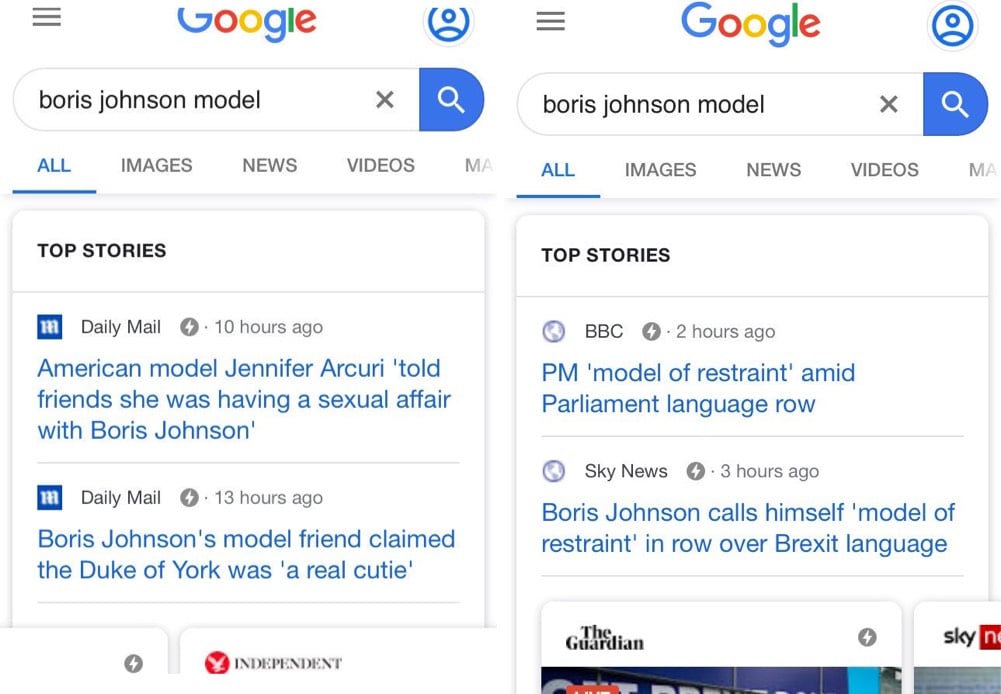
UK Prime Minister Boris Johnson appears to be strategically using particular words and phrases in speeches and appearances as SEO bait to bury unfavorable news about himself in Google’s search results. My pal Matt Webb has collected three examples of this devious practice over the past month.
Not only has Boris used his infamous ‘dead cat strategy’ to move the conversation away from him and Carrie Symonds and his plans for Brexit, he’s managed to push down his past mistakes on Google, too — making it more difficult for people to get a quick snapshot of relevant information. He’s not just controlling the narrative here — he’s practically rewriting it. And judged by the standards of an SEO campaign, it’s hard to describe it as anything other than a resounding success.
In the latest instance, Johnson used the phrase “model of restraint” in a TV appearance, which then came up in search results for “boris johnson model” instead of articles about the allegations that he’d had a sexual relationship with a former model whose business he funneled money & favors to while mayor of London.
Wired has more information on the PM’s potential SEO scam.
His speech in front of the police was meant to distract from reports that the police were called to the flat he shared with girlfriend Carrie Symonds following an alleged domestic dispute, while the kipper incident was meant to downplay connections with UKIP (whose supporters are called kippers). The claim about painting buses, finally, was supposedly intended to reframe search results about the contentious claim that the UK sends £350 million to Europe branded on the side of the Brexit campaign bus.
“It’s a really simple way of thinking about it, but at the end of the day it’s what a lot of SEO experts want to achieve,” says Jess Melia of Parallax, a Leeds-based company that identified the theory with Johnson’s claim to paint model buses.
“With the amount of press he’s got going on around him, it’s not beyond the realm of possibility that someone on his team is saying: ‘Just go and talk about something else and this is the word I want you to use’,” says Melia.
Update: If you didn’t click through to the Wired article by Chris Stokel-Walker, the piece presents a number of reasons why Johnson’s supposed SEO trickery might not work:
For one thing, Google search results are weighted towards behavioural factors and sentiment of those searching for terms — which would mean that such a strategy of polishing search results would be shortsighted. The individual nuances of each user are reflected in the search results they see, and the search results are constantly updated.
“What we search for influences what we find,” says Rodgers. “Not all search results are the same. That front page of Google, depending on what I’ve searched for in the past. It’s very hard to game that organic search.”
Current searches for the terms in question show that any effect was indeed short-lived. On Twitter, Stokel-Walker says that “No, Boris Johnson isn’t seeding stories with odd keywords to reduce the number of embarrassing stories about him in Google search results” (and calls those who believe Johnson is doing so “conspiracy theorists” (perhaps in mock frustration)) but the piece itself doesn’t provide its readers such a definitive answer,1 instead offering something closer to “some experts say he probably isn’t deliberately seeding search keywords and others disagree, but even if he is, it is unlikely to work as a long-term strategy”. Since we don’t really know — and won’t, unless some Johnson staffer or PR agency fesses up to it — that seems like an entirely reasonable conclusion for now.
And this is on purpose! Stokel-Walker isn’t writing an opinion piece here; he’s writing a news article about current events. He quotes reasonable experts on both sides of the debate. That’s what journalists do.↩
Socials & More