Entries for August 2019
From a 1972 episode of Mister Rogers’ Neighborhood, Mister Rogers demonstrates how to make a record using a machine called a record cutter (also referred to as a “record lathe”). Says Rogers, apparently living his best life: “When I was a little boy, I thought the greatest thing in the world would be to be able to make records.” (via open culture)
Listen in as Anthony Vincent covered Metallica’s classic Enter Sandman in 20 different musical styles, ranging from yodeling to The Eurythmics to Hans Zimmer to Lil Uzi Vert to John Denver.
Working from remains discovered during archaeological excavations, sculptor and archaeologist Oscar Nilsson combines his two disciplines to reconstruct the faces of people who lived hundreds, thousands, and even tens of thousands of years ago.
This Neanderthal woman lived 45-50,000 years ago:
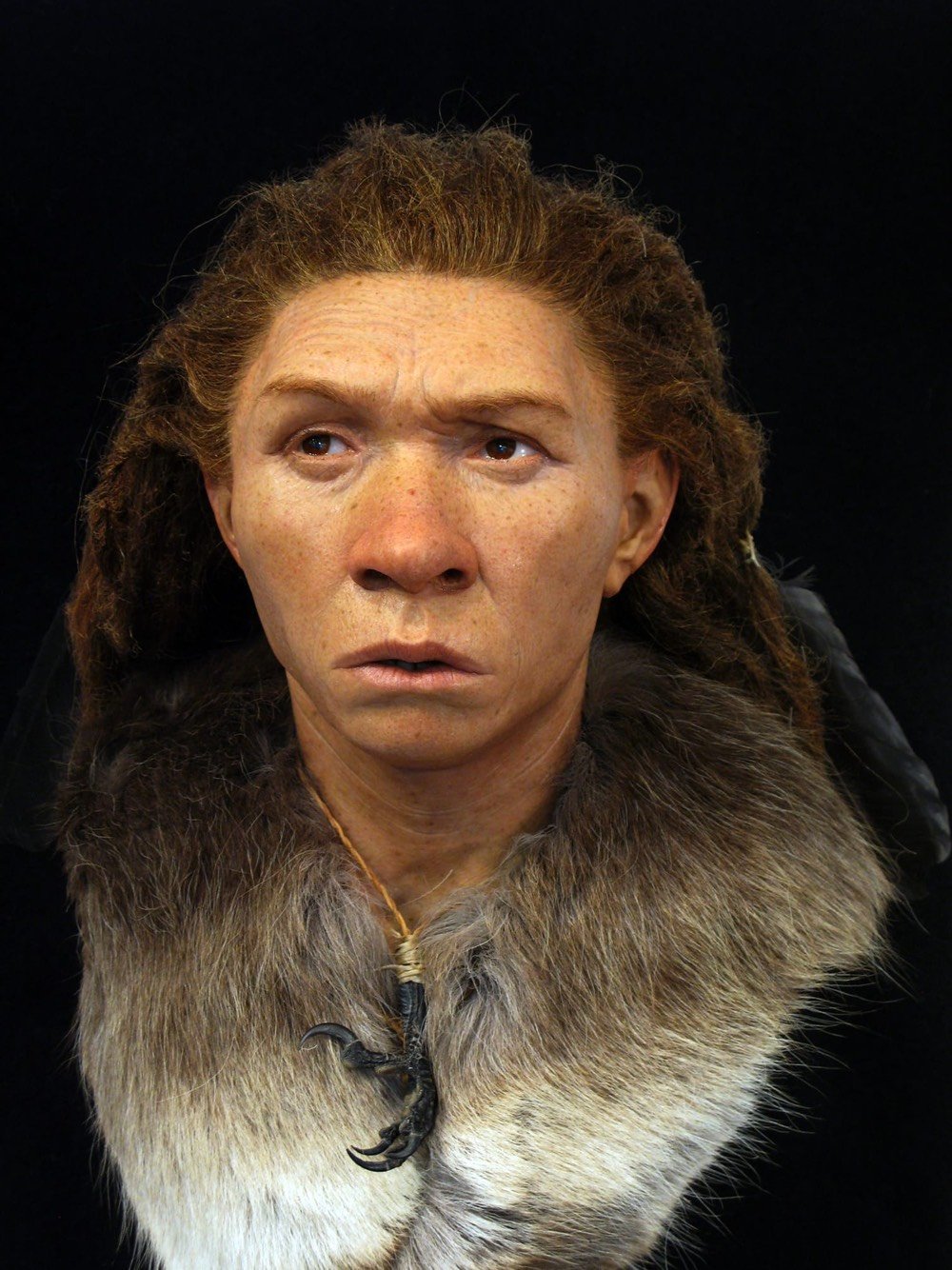
This young woman lived in what is now Britain about 5500 years ago. DNA evidence shows that the skin color of the region’s inhabitants at the time was quite dark, akin to that of modern North Africans.

This man was around 20 when he died in northern Switzerland 1300 years ago. His skull was unusual in that it contained a full set of perfect teeth.
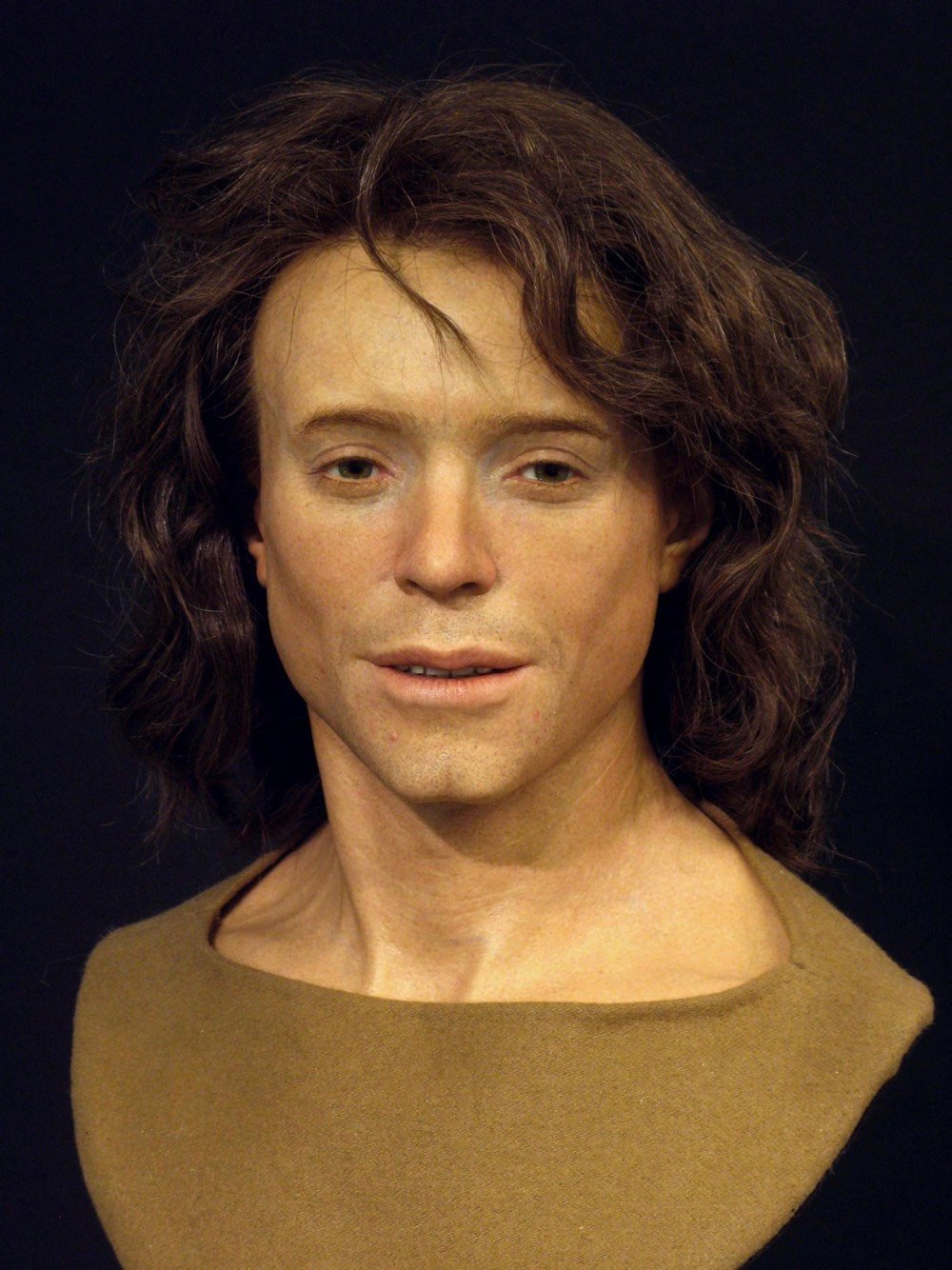
You can read more about Nilsson’s restorations at Facebook and National Geographic.
Nilsson’s forensic technique starts with an exact 3D replica of the original skull, scanned, printed, and then modeled by hand to reflect bone structure and tissue thickness based on the individual’s origin, sex, and estimated age at death.
Recent genome studies of ancient European populations enable Nilsson to outfit his reconstructions with reasonably accurate estimates of skin, hair, and eye color. The Neolithic population that the 5,600-year-old Whitehawk woman belonged to, for instance, generally had lighter skin and darker eyes than earlier occupants of Britain such as Cheddar Man, but were darker than the exhibit’s Ditchling Road man, who arrived on the island in the first wave of light-skinned, light-eyed Beaker people from continental Europe around 4,400 years ago.
I love crab rangoon; here’s where it came from. “The history of crab rangoon leads back to tiki culture.”
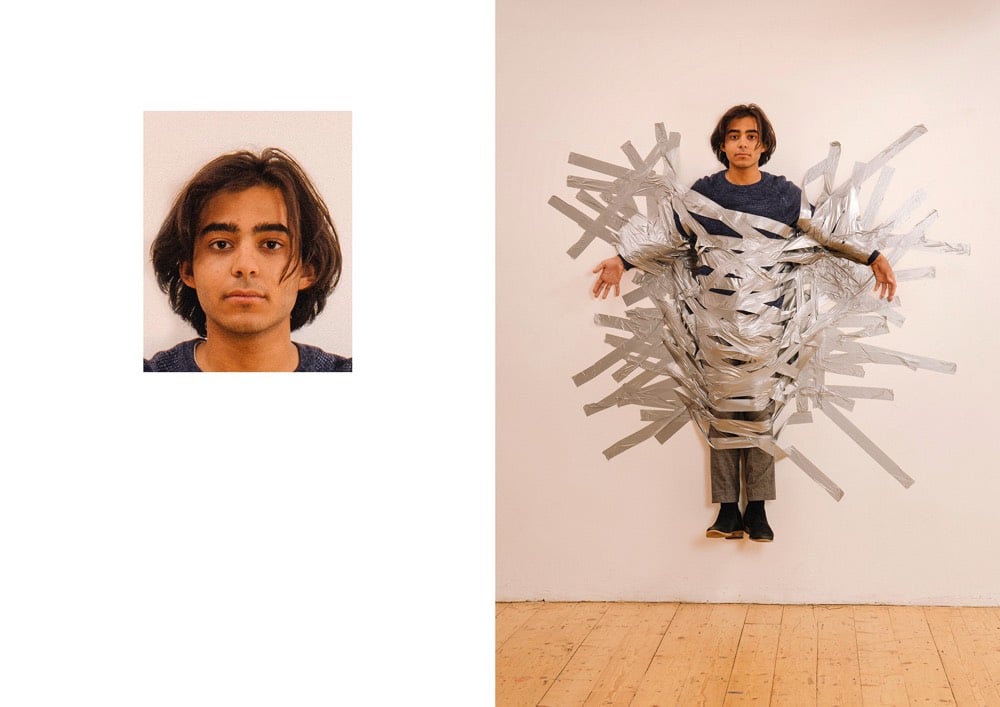
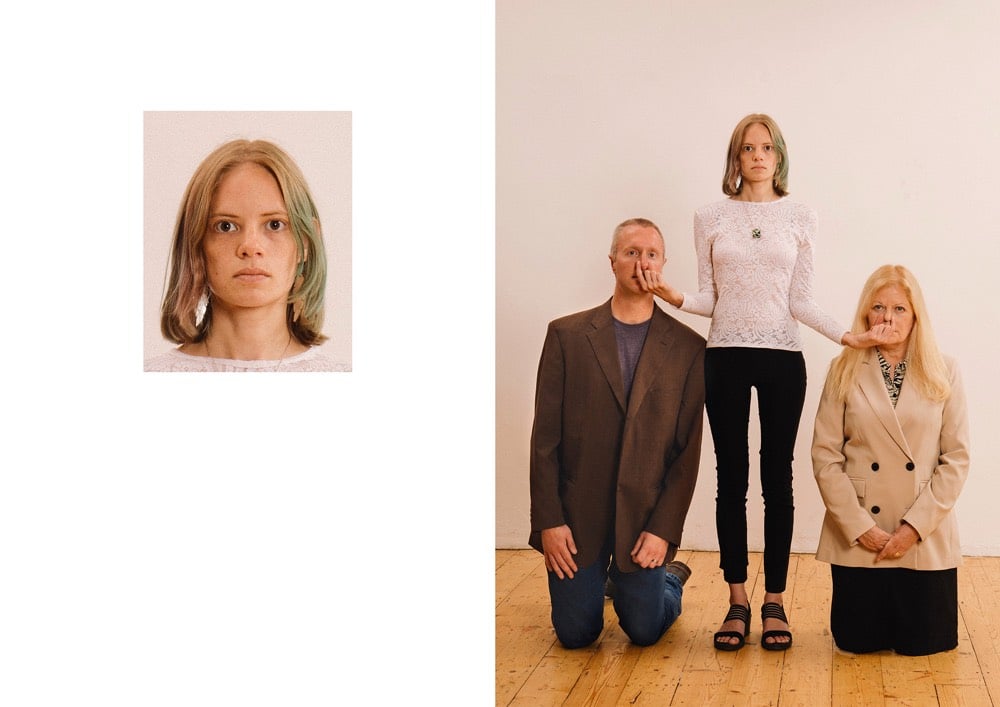

Passport photos are subject to an extensive list of guidelines and restrictions — for instance, the background has to be “plain white or off-white” with no pattern, you can’t wear glasses or hats, and the photo must be tightly cropped on your face. Max Siedentopf’s Passport Photos project imagines what might have been going on outside of that carefully controlled frame when the photos were taken. (via colossal)
In this fun BMX video, Tate Roskelley uses all sorts of props — car tires, milk crates, trees, tennis balls — to perform all kinds of street tricks and stunts. Watch until the end…his last maneuver is probably the best. (thx, matt)
From the folks that produced the NYC Transit Authority Graphics Standards Manual and the NASA Standards Manual comes a new book, Parks, about the art, maps, and printed materials produced to support American’s national parks.


From the book’s introduction by Lyz Nagan-Powell:
If, as Wallace Stegner famously declared, the national parks are “America’s best idea,” how can we explore this idea? There is the historical aspect: America invented the concept of nationally owned and operated parks in 1872, when Ulysses S. Grant signed Yellowstone National Park into existence. But there is more to Stegner’s sentiment than just the invention of the parks. The rest of the quote goes on to say that the parks are “Absolutely American, absolutely democratic, they reflect us at our best rather than our worst.”
The national parks story isn’t simple or easy. It’s full of splendor and glory, as well as greed and exploitation. For every person who loves one of the parks like it’s their own home, there is another who resents the federal government for owning it. Even before Yellowstone became the first national park, park history was fraught with tension. Tension between preservation and use, between indigenous people and white explorers, between local rights and federal oversight, between wild freedom and human control, between park purists and park recreationists, and between commercial exploitation and historic value.
With this tense backdrop, or maybe because of it, art, imagery, writing, and design have played a vital role in the history of the national parks. Compelling creative materials that celebrated the land — including books, paintings, performances, and advertisements — have marked developments and milestones. These items have brought the rich landscapes and their scientific and historical significance to life.
Perhaps together, the tension and celebration make the National Park System - parks, monuments, natural areas, historic sites, and more - the perfect embodiment of America itself, and what the “best idea” of the parks is really all about.
Parks is out in October but you can pre-order it now.
In the 1960s, Haddon Salt built up a small empire of fish & chips shops in North America — they eventually had more than 500 stores. That attracted the attention of Kentucky Fried Chicken, then flush with cash after their IPO. And then…
An initial Google search revealed that this shop was the last gasp of a once-sprawling fish-and-chips empire with hundreds of locations that started with an immigrant’s secret family recipe, flourished into an eight-figure deal with Colonel Sanders and ended in collapse.
It took several years and the research help of friends to track down Mr. Salt. We found him in a remote retirement community in Southern California’s desert. The rest you can see in the film before you.
For every icon there are those who were almost famous. And perhaps they, even more than their conqueror, have the lessons we need to hear.
See also when Colonel Sanders badmouthing KFC: For the Colonel, It Was Finger-Lickin’ Bad.
A global map of the orientation of airport runways. Wind and geography are factors in runway direction, but “most runways are aligned on the north-south axis”.
Le Corbuffet was a series of performances by artist Esther Choi that sought to bring together food with notable artists and designers, along with a healthy dose of puns. A cookbook based on the project will be out in October: Le Corbuffet: Edible Art and Design Classics. Here’s the page for Quiche Haring:

Other dishes include Rhubarbara Kruger Compote, Shigeru Banchan Two Ways, Yokonomiyaki, Rem Brûlée, and the Robert Rauschenburger. Here’s the full menu/table of contents:

Says Choi about where the idea for the project came from:
In 2014, I stumbled across an elaborate menu crafted by László Moholy-Nagy. The multi-panelled bill of fare was for a dinner held in tribute to the Bauhaus founder and architect, Walter Gropius, in 1937. Inspired by the menu for Gropius’s dinner, and the questions that it raised about the elitism of cultural production, I decided to conduct a social experiment a year later.
The music video for Anna Meredith’s latest song, Paramour, is a single-take journey of a toy Lego train through a group of musicians playing cellos, drums, and tubas, from the perspective of a camera mounted on the front of the train. This has some definite Star Guitar + Wallace & Gromit vibes. (via colossal)
Li Ziqi is a woman who lives in Sichuan province in China with her grandmother, preparing food and making clothing from scratch without the use of modern technology (mostly). Her YouTube channel has more than 5.7 million subscribers. In this video, she makes a purple wool cloak for the winter:
Her practice of shooting the videos herself, her reliance on traditional techniques, and her editing style is strongly reminiscent of the Primitive Technology channel — her videos are meditative in the same way. I watched this video of her making jam this morning and was left both hungry and relaxed, an unusual combination:
(via @juririm)
Update: Jackie Luo writing about Li Ziqi:
but one persistent thought has lingered at the back of my mind with every video i’ve watched, starting from that very first one. if she lives this way, how am i watching her?
the sheer amount of time that goes into production is obvious as you see watermelons bloom from seeds, seasons passing, constantly shifting angles seamlessly stitched together. her apparent solitude, removed from the modern world, is contradicted by the existence of a cameraperson and, well, us — the viewers. much of her life must happen in front of a computer, but there’s rarely a trace of even basic electronics inside the home of her videos. months of work vanish with everything we don’t see, everything that went into producing this digital artifact that works to erase any evidence that it had to be produced at all.
Andy Bailey is a stop-motion animator at Laika who worked on Kubo and The Boxtrolls. In this video, he shares his process while making a 658-page flipbook called The Return of Grumpy Cloud that took him 35 work-days over three months to complete. The end result (skip ahead to ~14:25) is pretty impressive given the lo-fi medium. Bailey sells kits for making your own flipbooks, but the store was down for maintenance when I checked.
An engaging account of the excavation of a secret site in Wyoming teeming with fossils. “There’s probably enough dinosaur material here to keep a thousand palaeontologists happy for a thousand years.”
In 2016, Benjamin Grant published Overview, a book of high-definition satellite photos of the Earth that were drawn from his site, Daily Overview (also on Instagram). This fall, a version for younger readers is coming out: Overview, Young Explorer’s Edition: A New Way of Seeing Earth.

When astronauts look down at our planet and see its vibrant surface shining against the blackness of space, they experience the Overview Effect — a sense of awe, an awareness that everything is interconnected, and an overwhelming desire to take care of our one and only home.
This is a no-brainer pre-order…my kids often pull Overview off the shelf just to look at the photos. I’m also adding this to the list of Adult Nonfiction Adapted for Younger Readers.

Circuses, like children, are always both charming and creepy. Make it a children’s circus, i.e., like Greenboro, Vermont’s Circus Smirkus, where the stars of the circus are themselves children, and the charm and creepiness both get double-baked in.
Erin Clark for The Boston Globe took these photographs, and they were featured at The Big Picture.


This last might be my favorite. It’s not a circus kid, per se; just a kid, bored, grumpy, and uncaring who knows about it. Even the circus can be like that, kid. Maybe especially the circus. Worth filing away.
Gizmodo has a pretty cool theme this week: the Alternate Internet. Not, like, the internet where they play Stone Temple Pilots b-sides — although, cool idea. No, like, the internet of alternate universes, different pasts and futures, where things went differently and like, Yahoo doesn’t ruin all it touches. That’s my kind of party.

The story on alternate social media networks offers a nice media archaeology of all these sites; how they were covered and explained in the moment. Check out this explanation of Friendster in SF Weekly from August 13, 2003:
“Your induction into Friendster starts out innocently enough: You receive an e-mail invitation from a friend. It doesn’t cost anything to join, so you give it a whirl. You answer questions about your profession, favorite books, movies, music, and other interests, then upload a digital photo of yourself.
Thumbnail versions of your friends’ photos appear on your profile page like a collection of trading cards. Clicking on their pictures takes you to their pages, where you can see all of their friends, and so on. Even with only a few friends, you find that — through friends of friends — you suddenly have access to a social network of thousands of people.”
It’s a pretty common story what happened to all these sites; either they took the money, and got mismanaged, driving off whatever users they had in the first place, or they didn’t take the money, which meant they could never stay usable enough to support all of the users they were taking on.
A few other common threads: a fear of porn, other lewd behavior, and Yik Yak -style harassment. In short, it’s hard to make a social media site actually go big. You need money, a vanilla rep, ruthlessness, and more money. In the end, Facebook really was in the right place at the right time.
The one thing this doesn’t do is some deep left-field speculating, like, what if Google had seen what it had in Blogger to create Facebook before Facebook? Or Yahoo had figured it out with version X of whatever asset Yahoo had? There are social networks, real or latent, bigger than the social media graveyeard — some of the pieces are still here.

One of the troubles with interviewing Ira Glass is that Ira Glass has a lot of thoughts about interviews.
Claudia Dreifus: When we first discussed doing this, you asked if I had heard a recent Terry Gross interview with Howard Stern. Why was that?
Ira Glass: Because it was an interviewer interviewing an interviewer. It was interesting to hear him appreciate her moves. He also clearly had no idea who she is. He admitted, “I sort of looked you up last night.” Whereas I know Terry has been listening for years.
To be clear: he’s an excellent interviewer. Part of the pleasure was hearing these two iconic radio voices talking to each other. Stern clearly admired the interview she was doing. She did such a good job of pointing him to things, being appropriately critical of the way that he talks about women, but also being appropriately admiring.
If I were to interview him, I’d feel intimidated.
Really?
Yeah. He’s a bossy sort of presence. I don’t like interviewing famous people. They make me nervous. I’ve always tried to avoid interviewing famous people.
Is that because they are usually over-interviewed or because they arrive at an interview with impenetrable masks?
All of these things.
It’s just more difficult. To get them to say anything real, you have to find an angle on their experience that will open them up. And there are things famous people want to keep private, things they’re tired of talking about, things they’ve told so many times that they have no interest in telling them again—but will tell again in exactly the same words they’ve used in the past…
Can I go back to something? And feel free to edit this any way you like. I’m already editing this interview in my head because I’m a crazy person and can’t stop myself. This idea of not wanting to interview famous people, that’s one of the things that led to the work I’m doing today. I knew in my twenties, while at NPR, that the thing I wanted to do was document regular people’s lives. The question then was, “How do you do that?”
It is weird to me that Ira Glass in his sixties. (He just turned 60 in March.) All this time, Ira Glass was less than a year younger than Prince.
Ira Glass has a lot of thoughts about podcasts that he doesn’t seem ready to share. You can see it, he kind of schtums up and falls back on generalities and a few broad compliments. I don’t know. Maybe that’s all he’s got, maybe that’s all we can have.
Ira Glass says he borrowed and borrows a lot from Roland Barthes’ S/Z when trying to get interviewees to structure a story, but I don’t really see it. This line made me laugh though.
At college, we were assigned Barthes’s S/Z , which made me understand what I could do in radio.
Really? How did the French semiotician help shape your journalism? Frankly, a lot of people find semiotics to be…
—this incredibly pretentious literary theory that takes as its thesis that narrative is part of the general conspiracy of language to imprison us in our place in society. I ignored that.
Ira Glass should find more ways to tell stories about what working in radio was like in the seventies. There’s something there. He doesn’t catch it all.
The servers at The Restaurant of Mistaken Orders, a series of pop-up restaurants in Tokyo, are all living with dementia, which means that you might not receive what you ordered.
All of our servers are people living with dementia. They may, or may not, get your order right.
However, rest assured that even if your order is mistaken, everything on our menu is delicious and one of a kind. This, we guarantee.
“It’s OK if my order was wrong. It tastes so good anyway.” We hope this feeling of openness and understanding will spread across Japan and through the world.
At the first pop-up, 37% of the orders were mistaken. This video explains a bit more about the concept and shows the restaurant in action.
For the past year, a group of teens in Nigeria called the Critics Company have been uploading short sci-fi films to their YouTube channel. Using a smartphone with a busted screen, makeshift equipment, open source 3D tools like Blender, and green sheets hung on walls, the self-taught group has produced some professional-grade special effects. Check out this 10-minute short they uploaded in January, Z: The Beginning.
Here’s a breakdown of how they did some of the visual effects for their short called Chase:
The group has attracted some media attention; here’s a news report with some further behind-the-scenes details (see also similar reports by Reuters and Al Jazeera):
As he does every so often, President Obama shared a list of the books that he’s reading this summer in this Facebook post. I am not ashamed to admit that Obama’s recs have pushed me to read quite a few books, including Pachinko and the Three-Body Problem trilogy, and not once have I been disappointed. This time around, he recommends anything and everything by Toni Morrison and a few other things.
Exhalation by Ted Chiang is a collection of short stories that will make you think, grapple with big questions, and feel more human. The best kind of science fiction.
Wolf Hall, Hilary Mantel’s epic fictionalized look at Thomas Cromwell’s rise to power, came out in 2009, but I was a little busy back then, so I missed it. Still great today.
Lab Girl by Hope Jahren is a beautifully written memoir about the life of a woman in science, a brilliant friendship, and the profundity of trees. Terrific.
I still recommend Wolf Hall (and her follow-up, Bring Up the Bodies) to almost everyone who asks me what they should read next and am looking forward to tackling Chiang’s collection soon.
Cows contribute heavily to climate change but seaweed can help. “When added to cow feed at less than 2% of the dry matter, [it] completely knocks out methane production.”
This is lovely and sweet. “When the local roller rink closed early this year, Doolady went and bought five extra pairs of skates ‘hoping that someone would skate with me.’”
In most time lapse videos you see of the night sky, the stars wheel through the sky as the heavens revolve around the Earth. But that perspective is really only valid from our particular frame of reference standing on the Earth. What’s actually happening is that our tiny little speck of dirt is twirling amid a galactic tapestry that is nearly stationary. And in the video above, you see just that…the Earth rotating as the camera lens stays locked on a motionless Milky Way. Total mindjob.
See also the fisheye views of the Earth rotating about the stabilized sky in this video.
Update: Another time lapse of the Earth rotating underneath the stars:
Trailer for A Hidden Life, directed by Terrence Malick. It’s the story of an Austrian farmer who refused to fight for the Nazis in WWII under threat of execution.


Photos by Daehyuk Im of the Coney Island amusement rides and other structures, framed against the sky. Looking back through some photos I’ve taken of various amusement rides, this is also my favorite way of capturing them. (via moss & fog)
The first Africans to be brought as slaves to British North America landed in Port Comfort, Virginia in 1619. Thus began America’s 400-year history with slavery and its effects, which continue to reverberate today. With The 1619 Project, the NY Times is exploring that legacy with a series of essays and other works that “aims to reframe the country’s history, understanding 1619 as our true founding, and placing the consequences of slavery and the contributions of black Americans at the very center of the story we tell ourselves about who we are.” The Columbia Journalism Review explains:
Contributors consider various modern quandaries — rush hour traffic, mass incarceration, an inequitable healthcare system, even American overconsumption of sugar (the highest rate in the Western world) — and trace the origins back to slavery. Literary and visual artists drew from a timeline chronicling the past 400 years of Black history in America; their work is presented chronologically throughout the magazine. Taken together, the issue is an attempt to guide readers not just toward a richer understanding of today’s racial dilemmas, but to tell them the truth.
Nikole Hannah-Jones, who came up with the idea for the project, writes in an essay:
The United States is a nation founded on both an ideal and a lie. Our Declaration of Independence, signed on July 4, 1776, proclaims that “all men are created equal” and “endowed by their Creator with certain unalienable rights.” But the white men who drafted those words did not believe them to be true for the hundreds of thousands of black people in their midst. “Life, Liberty and the pursuit of Happiness” did not apply to fully one-fifth of the country. Yet despite being violently denied the freedom and justice promised to all, black Americans believed fervently in the American creed. Through centuries of black resistance and protest, we have helped the country live up to its founding ideals. And not only for ourselves — black rights struggles paved the way for every other rights struggle, including women’s and gay rights, immigrant and disability rights.
Without the idealistic, strenuous and patriotic efforts of black Americans, our democracy today would most likely look very different — it might not be a democracy at all.
Bryan Stevenson writes about America’s criminal justice system:
The 13th Amendment is credited with ending slavery, but it stopped short of that: It made an exception for those convicted of crimes. After emancipation, black people, once seen as less than fully human “slaves,” were seen as less than fully human “criminals.” The provisional governor of South Carolina declared in 1865 that they had to be “restrained from theft, idleness, vagrancy and crime.” Laws governing slavery were replaced with Black Codes governing free black people — making the criminal-justice system central to new strategies of racial control.
These strategies intensified whenever black people asserted their independence or achieved any measure of success. During Reconstruction, the emergence of black elected officials and entrepreneurs was countered by convict leasing, a scheme in which white policymakers invented offenses used to target black people: vagrancy, loitering, being a group of black people out after dark, seeking employment without a note from a former enslaver. The imprisoned were then “leased” to businesses and farms, where they labored under brutal conditions.
And Jamelle Bouie on power in America:
There is a homegrown ideology of reaction in the United States, inextricably tied to our system of slavery. And while the racial content of that ideology has attenuated over time, the basic framework remains: fear of rival political majorities; of demographic “replacement”; of a government that threatens privilege and hierarchy.
The past 10 years of Republican extremism is emblematic. The Tea Party billed itself as a reaction to debt and spending, but a close look shows it was actually a reaction to an ascendant majority of black people, Latinos, Asian-Americans and liberal white people. In their survey-based study of the movement, the political scientists Christopher S. Parker and Matt A. Barreto show that Tea Party Republicans were motivated “by the fear and anxiety associated with the perception that ‘real’ Americans are losing their country.”
Update: The Pulitzer Center has a study guide to go with The 1619 Project, including a free download of the entire magazine issue (no subscription necessary).
Update: The 1619 Project is now a podcast series as well.
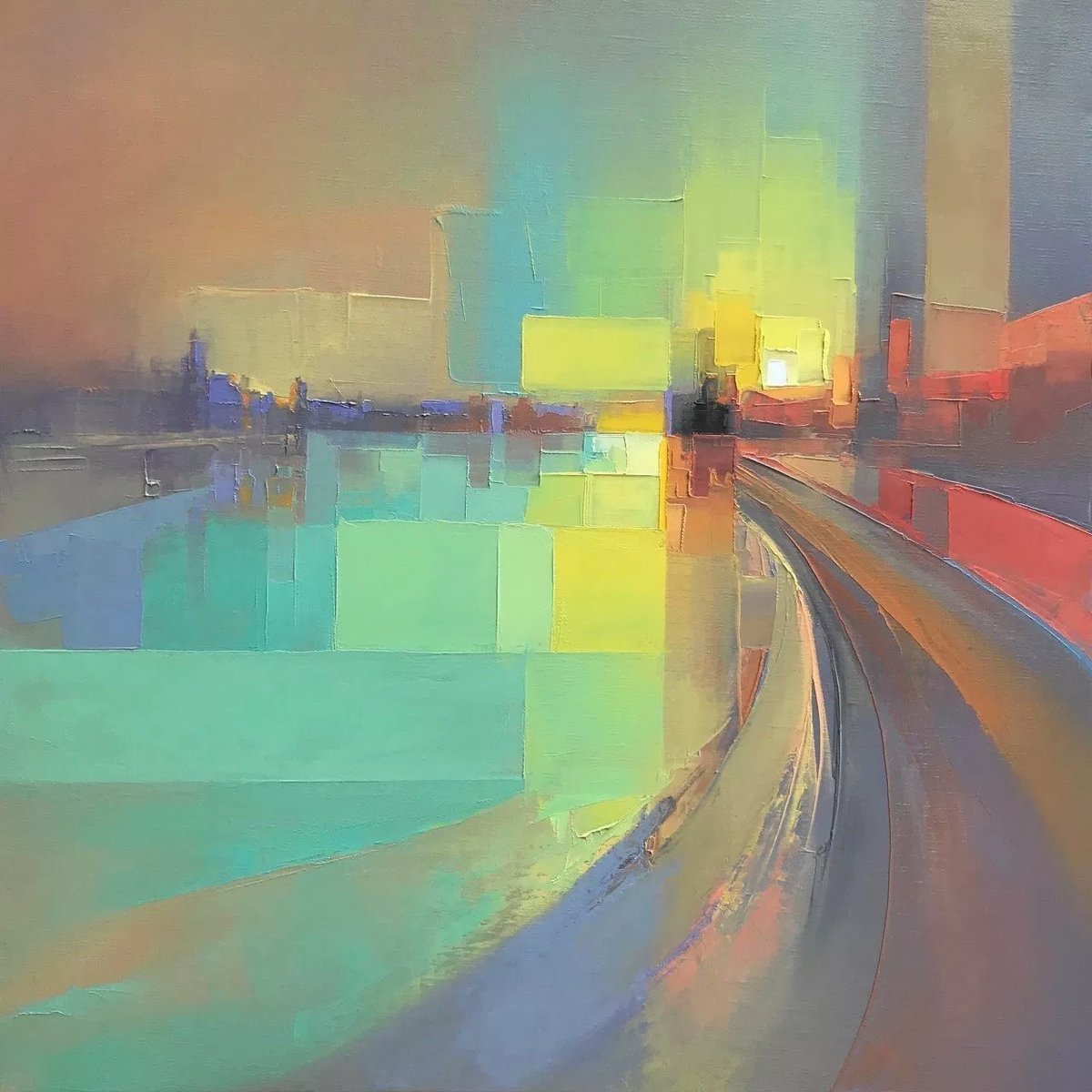
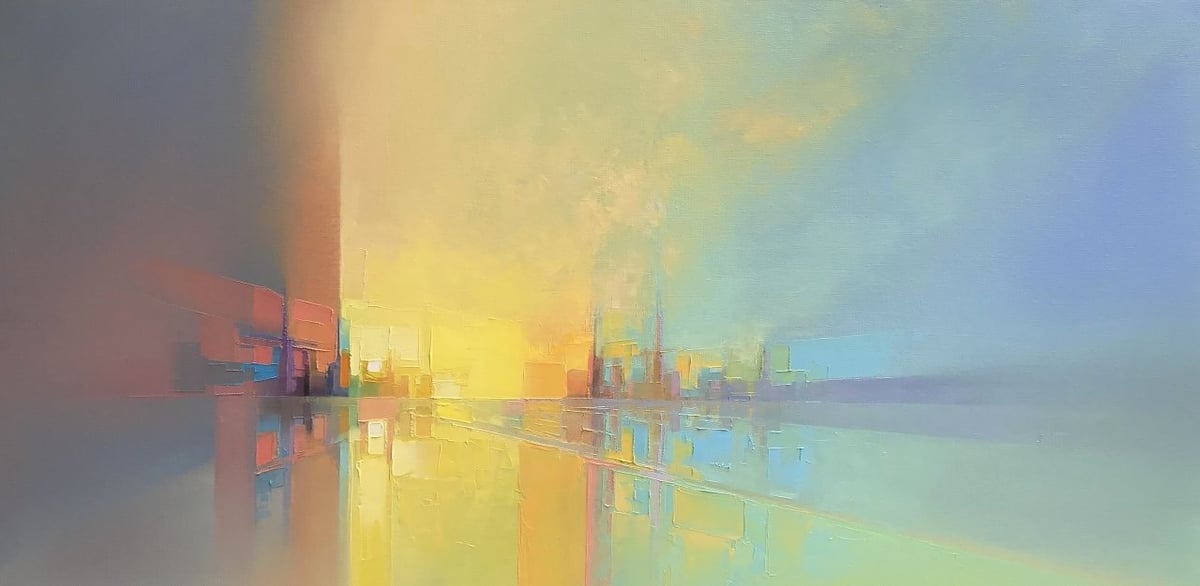
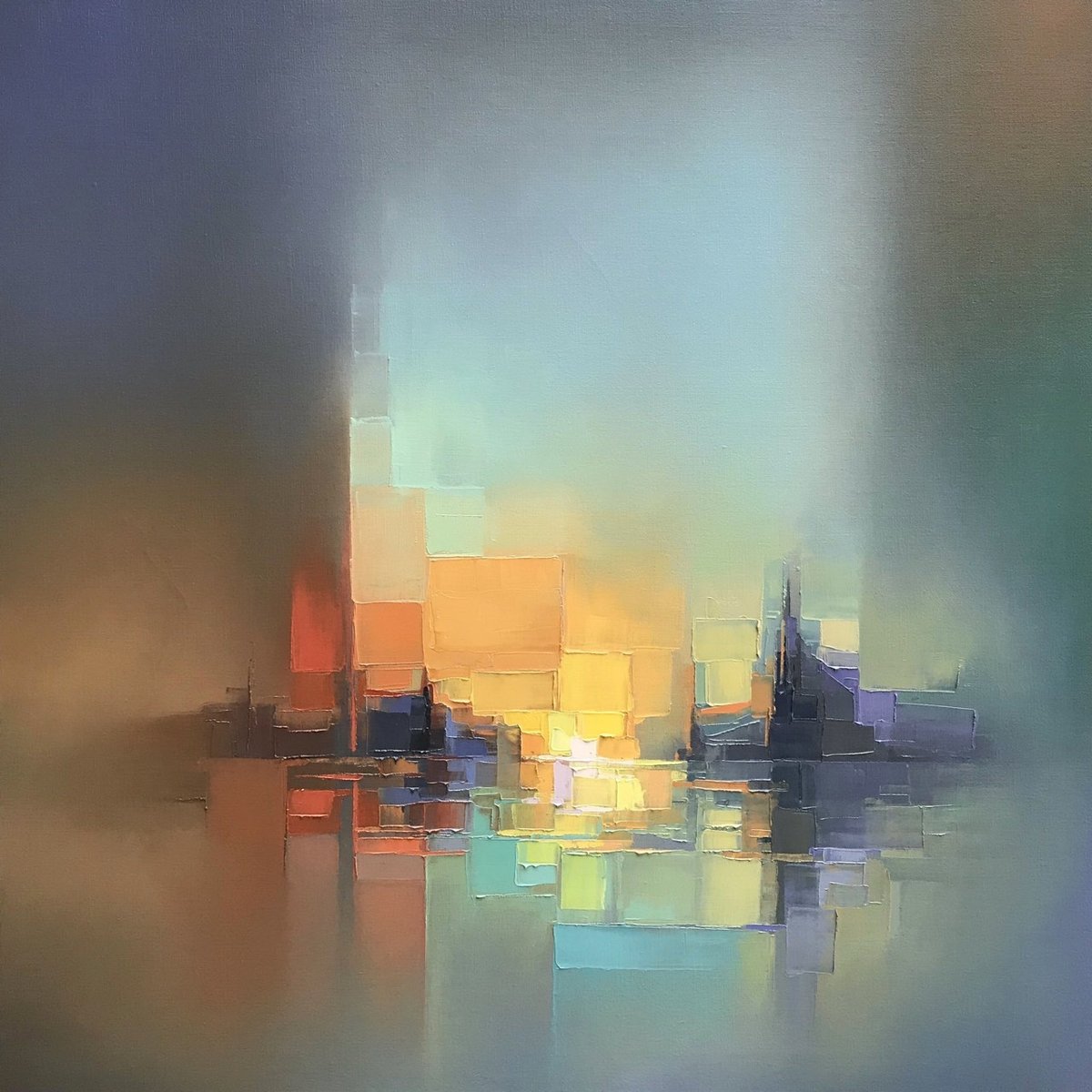
Oh, I love these abstract oil paintings by Jason Anderson. They are analog and organic but also more than a little pixel-y. Every time I see something like this, I want to get out my paints, stretch a canvas, and try it out. Note: I do not own any paints nor have I ever built any canvases. These “chunky” abstracts (see also Joseph Lee’s work) always make me curious about how much abstraction you can get away with and still have it look like something the viewer can recognize. Abstraction also always makes me think about Scott McCloud. (via colossal)
Newer posts
Older posts

Socials & More