



Last week, I was honored to be a guest on Brian McCullough’s Internet History Podcast. Surprise!…we talked about the olden days.

Advertise here with Carbon Ads
This site is made possible by member support. 💞
Big thanks to Arcustech for hosting the site and offering amazing tech support.
When you buy through links on kottke.org, I may earn an affiliate commission. Thanks for supporting the site!
kottke.org. home of fine hypertext products since 1998.
Beloved by 86.47% of the web.
Entries for May 2018
Street photos of NYC from 1969 to 2006


“Urban observer” Jeff Rothstein has been wandering the streets of NYC taking B&W photos since the early 1970s. Among the photos, you can find snaps of John and Yoko, Bob Dylan, and Muhammad Ali. What’s interesting is because they are black & white and the look of NYC’s streets haven’t changed that much (from some angles at least), you can’t often tell when a particular photo was taken unless you look closely at clothing styles or signage in the background. And even then…NYC kids have been wearing Adidas kicks for more than 30 years.
You can buy his book, Today’s Special: New York City Images 1969-2006, right here on his website. (via craig mod)
Apple today is almost a $1 trillion company. But if not for the iMac 20 years ago, the company might have been a historical footnote.
An online collection of high-res scans of M.C. Escher’s prints


The Boston Public Library has digitized their collection of M.C. Escher prints; browse the whole collection here. The level of zoom you can get to with these images is amazing.
Traveling to Spain in 1936, Escher visited the Alhambra for the second time and visited the mosque in Córdoba. The renewed exposure to Arabic design occasioned an important change in his work — he became fascinated with geometry and symmetry and how those abstract design elements could be incorporated into his representations of the natural world. The images in his later prints are created from within his mind rather than representations of the physical world. He explored how to represent people, animals, and objects rising from the flat page and then returning, as well as how to represent the endlessness of infinity.
Browsing through these takes me back to my college days. I don’t know what the situation is now, but when I was in school, it was almost a requirement that 50% of the dorm rooms on any given floor had to have an M.C. Escher poster hanging on the wall. (via @john_overholt)
Tired old ideas with a fresh lick of paint. “Intellectual Dark Web” is too generous a name for this – *vomiting noise* – movement. How about The Regressives?
Cobra Kai is a new TV series that takes place 30+ years after the events of The Karate Kid starring the original cast. The down-and-out Johnny restarts the Cobra Kai dojo and successful Daniel opposes him.
Old school NYC diner Eisenberg’s has been sold to new owners. “Eisenberg’s will be running just as is.”
Are Kids the Enemy of Writing? “Don’t have children, a great writer once told Michael Chabon. Each one represents a novel you’ll never publish.”
The Great American Read: a list of America’s 100 best-loved novels
The Great American Read is an upcoming eight-part PBS series about books and reading. The show is built around a national survey that asked a group of “demographically and statistically representative” Americans what their most-loved English language work of fiction was. Here’s the trailer:
The full list of available books is on the web site. Along with the usual suspects of Great Literature™ (The Catcher in the Rye, 1984, Little Women) and beloved children’s classics (the Harry Potter series, Where the Red Fern Grows, Charlotte’s Web), there are some interesting and not-so-surprising choices as well: The Coldest Winter Ever by Sister Souljah, the Fifty Shades of Grey series, Jurassic Park by Michael Crichton, The Picture of Dorian Gray by Oscar Wilde, Gone Girl by Gillian Flynn, Things Fall Apart by Chinua Achebe, and Another Country by James Baldwin.
Avengers: Infinity War - Wizards vs. The Prophet
Last week, I was under the rock that everyone talks about and didn’t get to see Avengers: Infinity War until a couple of days ago. (Mild spoilers follow.) There’s a lot to like about the movie — I personally loved watching it — but the thing that surprised the hell out of me was how closely the motivations of Thanos and the Avengers echoed the subject of Charles Mann’s The Wizard and the Prophet.
Prophets look at the world as finite, and people as constrained by their environment. Wizards see possibilities as inexhaustible, and humans as wily managers of the planet. One views growth and development as the lot and blessing of our species; others regard stability and preservation as our future and our goal. Wizards regard Earth as a toolbox, its contents freely available for use; Prophets think of the natural world as embodying an overarching order that should not casually be disturbed.
Thanos is a prophet and the Avengers are wizards…both are even specifically referred to using those exact words at different points in the movie. More specifically, Thanos is a Malthusian…he wants to cut the population of the galaxy in half to up everyone’s quality of life. From the book, a description of economist Thomas Malthus’ ideas:
Human populations will reproduce beyond their means of subsistence unless they are held back by practices like celibacy, late marriage, or birth control. But the reproductive urge is so strong that people at some point will stop restricting births and have children willy-nilly. When this happens, populations inevitably grow too large to feed. Then disease, famine, or war step in and brutally reduce human numbers until they are again in balance with their means of subsistence — at which stage they will increase again, beginning the unhappy cycle anew.
Jeremy Keith noticed the same thing and I echo his amazement: “I was not expecting to be confronted with the wizards vs. prophets debate while watching Avengers: Infinity War”.
The Summer of ‘78, NYC in photos


In the summer of 1978, eight NY Times staff photographers, who had some time on their hands because of a newspaper strike, set out to document people using NYC’s parks. They took almost 3000 photos, which were recently rediscovered in a pair of cardboard boxes, forgotten and unseen for decades.
The infamous wretched New York of the 1970s and 1980s can be glimpsed here, true to the pages of outlaw history.
But that version has never been truth enough.
The photos speak a commanding, unwritten narrative of escape and discovery.
“You see that people were not going to the parks just to get away from it all, but also to find other people,” said Jonathan Kuhn, the director of art and antiquities for the department.
The NY Times has a selection of the photos and there’s an exhibition featuring the photos on view at The Arsenal Gallery in Central Park until June 14.
“I’m Not Black, I’m Kanye”
Kanye West has a new solo album coming out soon (as well as a collaborative album with Kid Cudi) and so has been out in the world saying things, things like expressing his admiration for Donald Trump and suggesting that slavery was a choice. In a piece at The Atlantic, Ta-Nehisi Coates, an admitted fan of his music, writes that West’s search for white freedom — “freedom without consequence, freedom without criticism, freedom to be proud and ignorant” — is troubling.
Nothing is new here. The tragedy is so old, but even within it there are actors — some who’ve chosen resistance, and some, like West, who, however blithely, have chosen collaboration.
West might plead ignorance — “I don’t have all the answers that a celebrity is supposed to have,” he told Charlamagne [Tha God]. But no citizen claiming such a large portion of the public square as West can be granted reprieve. The planks of Trumpism are clear — the better banning of Muslims, the improved scapegoating of Latinos, the endorsement of racist conspiracy, the denialism of science, the cheering of economic charlatans, the urging on of barbarian cops and barbarian bosses, the cheering of torture, and the condemnation of whole countries. The pain of these policies is not equally distributed. Indeed the rule of Donald Trump is predicated on the infliction of maximum misery of West’s most ardent parishioners, the portions of America, the muck, that made the god Kanye possible.
Coates suggests that Kanye, also like Trump, has been telling us who he is all along:
Everything is darker now and one is forced to conclude that an ethos of “light-skinned girls and some Kelly Rowlands,” of “mutts” and “thirty white bitches,” deserved more scrutiny, that the embrace of a slaveholder’s flag warranted more inquiry, that a blustering illiteracy should have given pause, that the telethon was not wholly born of keen insight, and the bumrushing of Taylor Swift was not solely righteous anger, but was something more spastic and troubling, evidence of an emerging theme — a paucity of wisdom, and more, a paucity of loved ones powerful enough to perform the most essential function of love itself, protecting the beloved from destruction.
Big thanks to @inevernu for editing @kottke last week. He wrote about some of what he covered in the lastest issue of Sentiers, his weekly newsletter.
The Best Podcasts of 2018 (So Far). My fave Slow Burn is on there, and I’m looking forward to trying Caliphate.
This Is America
Over the weekend, Childish Gambino (aka Donald Glover) released a video for his new song, This is America. If you watch it — and you should if you haven’t, even though it isn’t the most Monday morning thing in the world — please know there’s some upsetting scenes…which is the whole point. There’s a lot going on in the video (here’s one thread by LK that explains some of the imagery), but the aspect that jumped out to me is white America’s exuberant acceptance (and co-option) of African American culture and entertainment — hip hop, rap, NBA, movies, TV (like Glover’s own Atlanta), social media memetics — while turning a blind eye to racial injustice and violence inflicted upon black America. As Jon Spence succinctly noted on Twitter:
The fact that Childish Gambino’s “This is America” tackles police brutality, gun violence, media misdirection, and the use of African Americans as a brand shield, all while dancing in Jim Crow-style caricature, shows a transcendence of mere performance and demands attention.
Update: Nereyda wrote a short thread about why they didn’t like the video.
As someone very into Diasporic dance, which literally saved my life, Glover’s video misses its mark completely for me. Graphic images of mass Black murder layered over by Black dance as a minstrel distraction? That’s what y’all are getting from this? Issa no for me dawg.
(via @tsell89/status/993609185223938048)
Update: From Spencer Kornhaber’s take on This is America (italics mine):
The defining of a nation is the essential task of politics, and Glover’s definition has now been made clear. America is a place where black people are chased and gunned down, and it is a place where black people dance and sing to distract — themselves, maybe, but also the country at large — from that carnage. America is a room in which violence and celebration happen together, and the question of which one draws the eye is one of framing, and of what the viewer wants to see.
Why humans need stories

There’s a tendency these days to disregard the idea of “storytelling.” Like so many terms it’s been overused, its meaning stretched to within an inch of its life. We watch a lot of Netflix and obsess over some stories in the news but we don’t read as many books and we don’t gather around the fire to tell stories so much. But they have been part of our lives forever. In Our fiction addiction: Why humans need stories, the author takes us through some of the oldest stories we tell and why evolutionary theorists are studying them.
One common idea is that storytelling is a form of cognitive play that hones our minds, allowing us to simulate the world around us and imagine different strategies, particularly in social situations. “It teaches us about other people and it’s a practice in empathy and theory of mind,” says Joseph Carroll at the University of Missouri-St Louis. […]
Providing some evidence for this theory, brain scans have shown that reading or hearing stories activates various areas of the cortex that are known to be involved in social and emotional processing, and the more people read fiction, the easier they find it to empathise with other people. […]
Crucially, this then appeared to translate to their real-life behaviour; the groups that appeared to invest the most in storytelling also proved to be the most cooperative during various experimental tasks - exactly as the evolutionary theory would suggest. […]
By mapping the spread of oral folktales across different cultural groups in Europe and Asia, some anthropologists have also estimated that certain folktales - such as the Faustian story of The Smith and the Devil - may have arrived with the first Indo-European settlers more than 6,000 years ago, who then spread out and conquered the continent, bringing their fiction with them.
The author also says this; “Although we have no firm evidence of storytelling before the advent of writing.” He then goes on to write about the paintings in Lascaux which seem to be telling stories, so he’s aware of some examples. Randomly today I also happened on this about Australia’s ancient language shaped by sharks which talks about the beautiful history of the Yanyuwa people and their relationship with the tiger shark. They’ve been “dreaming,” telling stories, for 40,000-years!
This forms one of the oldest stories in the world, the tiger shark dreaming. The ‘dreaming’ is what Aboriginal people call their more than 40,000-year-old history and mythology; in this case, the dreaming describes how the Gulf of Carpentaria and rivers were created by the tiger shark.
And then there’s this incredible aspect of their culture:
What’s especially unusual about Yanyuwa is that it’s one of the few languages in the world where men and women speak different dialects. Only three women speak the women’s dialect fluently now, and Friday is one of few males who still speaks the men’s. Aboriginal people in previous decades were forced to speak English, and now there are only a few elderly people left who remember the language.
Stories are taking over

The inimitable Ian Bogost with some thinking on how stories are overtaking social media and how they are perhaps the first true smartphone media format. First, what are stories in this context?
“Story” is a terrible name for this feature, because it’s so broad as to descend into meaninglessness. In ordinary parlance, a story is a generic name for a narrative account of something. But a Story, of the Instagram and Snapchat sort, is something much more specific. It’s a collection of images and short videos, with optional overlays and effects, that a user can add to over time, but which disappears after 24 hours. Users view a Story in sequence, either waiting out a programmed delay between images or manually advancing to the next.
Then this pearl of a quote I’ll be stealing and reusing:
That name is vestigial now, because it’s only incidental that an iPhone or a Pixel is a telephone. Instead, it’s a frame that surrounds everything that is possible and knowable. A rectangle, as I’ve started calling it. (Emphasis mine.)
The rectangle now frames experience. Information is rectangle-shaped, retrieved from searches in Google or apps or voice assistants. Personal communication comes in the form of a list of bubbles spilling down a rectangle. The physical world can be accessed by a map scaled to the boundaries of the rectangle, which can also provide way-finding through it. Music, movies, and television appear on these screens, and increasingly there alone. The rectangle is also an imaging device, capable of capturing a view of the world in front of it and the operator behind it.
Stories are clearly from rectangles, using the vertical 9:16 aspect ratio for better or for worse. I was not aware of this:
Screenshots from the apps where people spend more and more of their time, in messaging conversations, for example, also take this shape. In fact, this tendency drove one of Facebook’s newly announced features: a software integration for Stories that would allow direct posting from an app. A song playing in Spotify, for example, will be able to be inserted into a Story natively, with a link back to the track in question. […]
Stories is not a technology, nor is it a feature. It is a media format, or even a genre, in the way that a magazine or a murder mystery or a 30-minute television program is.
Side notes: as much as I hated stories originally (and as I kind of despise Instagram), I now find myself spending more time swiping through stories than I do scrolling down “classic posts.” I also end up following accounts and using the app purely as a visual distraction and discovery instead of anything truly social, because the algorithm is just not that good at surfacing the friendly posts which used to make it a social space.
Think about this next quote for a bit:
The liveness of smartphone-authorship, combined with the ephemerality of the Story format, makes it a catalog of the experience of holding and looking through a rectangle almost all the time. […]
Likewise, a Story is the illusion of what your smartphone saw. Or better, of what the hybrid you-and-your-smartphone saw—as if there was a you without a smartphone, anymore.
I wonder which other uses will be born from this “rectangle nativity” in 9:16? Medium used to have “Series” which could be seen as the text based version of stories but are they even findable anywhere? I can still post some but where do I find others’? Any other examples?
Incredible. “Study reveals how bacteria communicate in groups to avoid antibiotics.”
Multiplicity

This is beautiful and fascinating, a representation of Paris through the photos shared online. The creator, Moritz Stefaner, used millions of Instagram pictures to create his Multiplicity installation. From those millions he selected 25K, then analyzed and classified them using neural networks and various processing tools. Presented on large screens, it offers touch and joystick control to dive into, pan and zoom through the clusters of images.
Today, we collectively and continuously document our city experience on social media platforms, shaping a virtual city image. Multiplicity reveals a novel view of this photographic landscape of attention and interests. How does Paris look as seen through the lens of thousands of photographers? What are the hotspots of attraction, what are the neglected corners? What are recurring poses and tropes? And how well do the published pictures reflect your personal view of the city?

The projected display seamlessly zooms from the cloudy overview map over a gridded version of the cloud to a full grid. This layering allows to understand the clustering and neighborhood structure well in the zoomed out view, while providing a tidy and efficient image display in zoomed views.


The interplay between automatic analysis, inspection of the results — what does the machine suggest and conclude — and my own actions — (in terms of layout, content selection, parameter tweaking…) was inspiring to explore.
As a design hint, the use of handwriting for the map annotations hints at the involvement of me as an active author and a subjective sense-making process.
The final result emerged from a dialogue between me and the city, the image contents and the algorithms, which actually managed to surprise and inspire me throughout the project.

The linked article provides a lot more details, including the process of placing the images and the software Stefaner used. The installation is part of the 123 data exhibition in Paris.
(Via @nicolasnova.)
Athanasius Kircher, “the master of hundred arts”
I’m always up for a good polymath bio but I didn’t know about Athanasius Kircher. The Public Domain Review takes us through John Glassie’s book about one of Kircher’s great masterworks Mundus Subterraneus. A two-volume tome of atlas-like dimensions, intended to lay out “before the eyes of the curious reader all that is rare, exotic, and portentous contained in the fecund womb of Nature.”

The “prodigious volcanoes and fire-vomiting mountains visible in the external surface of the earth do sufficiently demonstrate it to be full of invisible and underground fires,” he wrote. “For wherever there is a volcano, there also is a conservatory or storehouse of fire under it…. And these fires argue for deeper treasuries and storehouses of fire, in the very heart and inward bowels of the Earth.”
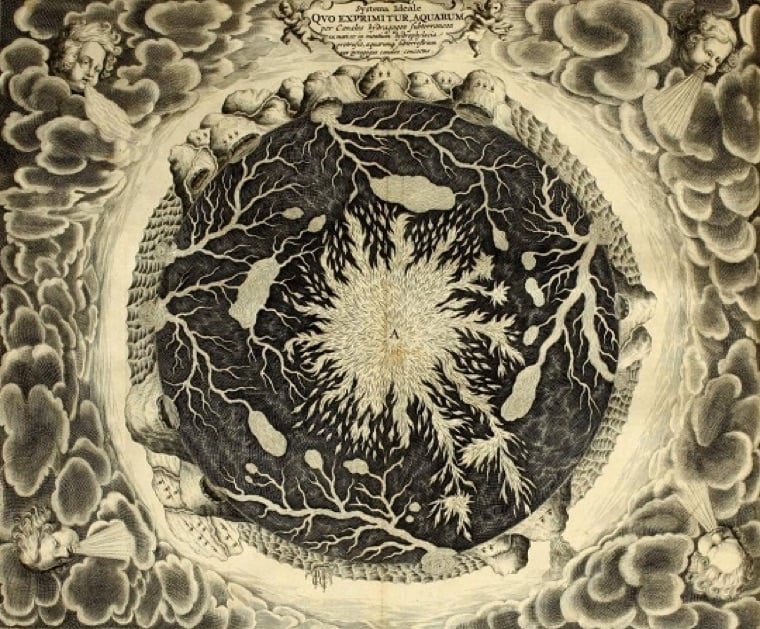
More than once, Kircher compares the movement of the earth’s water to the circulation of the blood in the body as described by William Harvey. The water of the oceans follows its “secret motions” up and around the globe toward the North Pole.
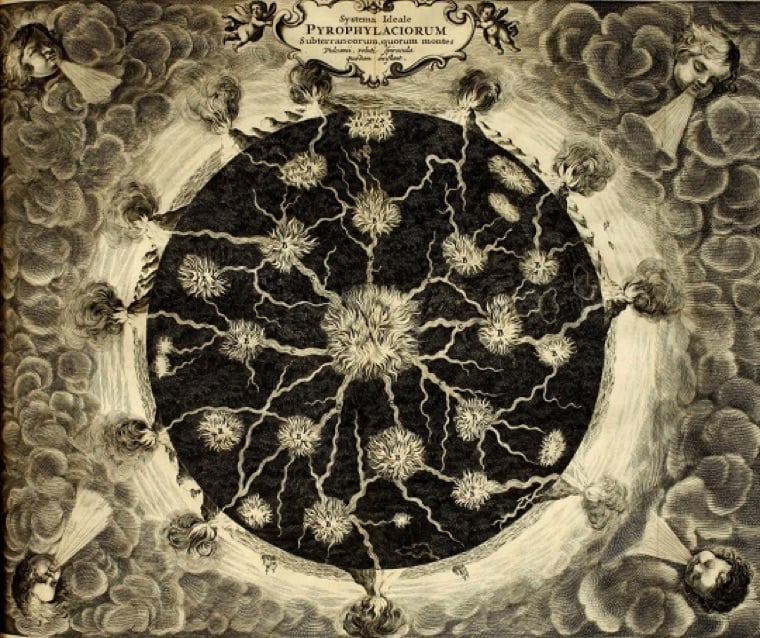
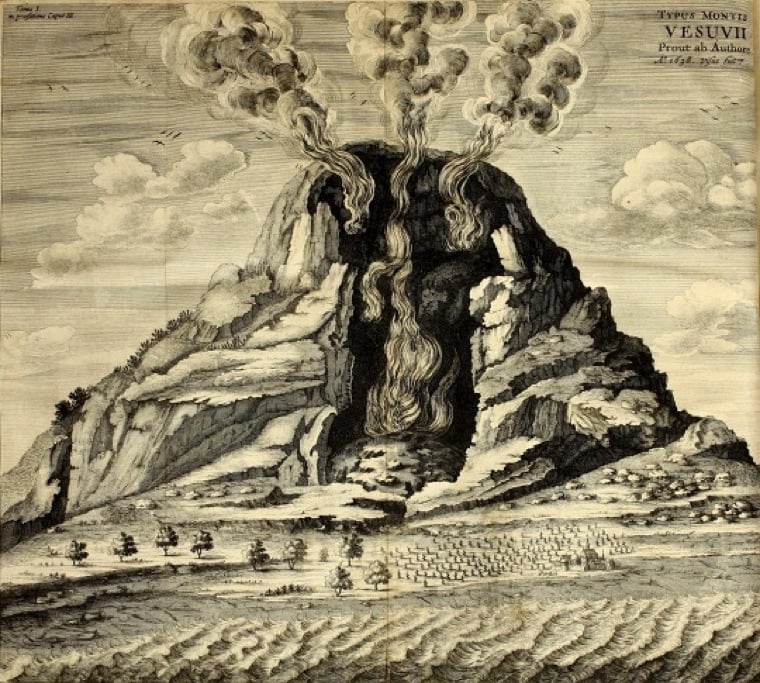
His fascination with volcanoes and the underworld took him to Malta, Sicily, Calabria, and the Vesuvius.
“After having diligently searched out the incredible power of Nature working in subterraneous burrows and passages,” he wrote, “I had a great desire to know whether Vesuvius also had not some secret commerce and correspondence with Stromboli and Aetna.”
Gang Drones swarm FBI hostage raid
Criminals are often at the forefront of new technologies, early adopters at the very least. This piece at Defense One, A Criminal Gang Used a Drone Swarm To Obstruct an FBI Hostage Raid, provides a few examples of drones being used by gangs.
Mazel said the suspects had backpacked the drones to the area in anticipation of the FBI’s arrival. Not only did they buzz the hostage rescue team, they also kept a continuous eye on the agents, feeding video to the group’s other members via YouTube. “They had people fly their own drones up and put the footage to YouTube so that the guys who had cellular access could go to the YouTube site and pull down the video” […]
Some criminal organizations have begun to use drones as part of witness intimidation schemes: they continuously surveil police departments and precincts in order to see “who is going in and out of the facility and who might be co-operating with police,” he said. […]
In Australia, criminal groups have begun have used drones as part of elaborate smuggling schemes, Mazel said. The gangs will monitor port authority workers. If the workers get close to a shipping container that houses illegal substances or contraband, the gang will call in a fire, theft, or some other false alarm to draw off security forces.
Law enforcement and military are working on counter measures and their own drone solutions, while the FAA works on legal amendments to try and limit drone use.
(Via @bldgblog.)
Connecticut silk
Did you know Connecticut nearly had a silk production industry? Atlas Obscura has a short history of that silk adventure, from mulberry trees, to attics, speculative bubbles and lumpy thread.
By 1826, three out of every four households in Mansfield, Connecticut, were raising silkworms, and by 1826, Congress commissioned a report on the potential for a U.S. silk industry. By 1840, Connecticut outpaced other states in raw silk production by a factor of three. Within the next two decades, however, the industry would collapse, leaving the country to wonder what went wrong.

One of the biggest triumphs for the early industry was figuring out how to adapt sericulture to cold weather. Such tactics included keeping silkworms warm by raising them in attics, and figuring out how to feed them in cold weather.

The product they ended up with was adequate for sewing thread, but not strong enough for the industrial-silk-manufacturing infrastructure that Connecticut had begun to build. According to one scathing assessment, “Connecticut women in 70 years have not improved their knowledge of reeling.” Another issue, Stockard says, was the expectation that women could reel silk “whenever leisure from other duties permitted.” In other words, women were supposed to wedge a high-skill, time-intensive task into their already full workloads, and the result was sub-par silk.
(Via @justinpickard.)
Divine Discontent
The always pertinent Ben Thompson considers Apple and Amazon (plus Facebook and Google) and how they each focus on customers. He starts by wondering which of these companies has the best chance at hitting the one trillion market cap first. Focusing on the first two, he offers this interesting comparison.
I mean it when I say these companies are the complete opposite: Apple sells products it makes; Amazon sells products made by anyone and everyone. Apple brags about focus; Amazon calls itself “The Everything Store.” Apple is a product company that struggles at services; Amazon is a services company that struggles at product. Apple has the highest margins and profits in the world; Amazon brags that other’s margin is their opportunity, and until recently, barely registered any profits at all. And, underlying all of this, Apple is an extreme example of a functional organization, and Amazon an extreme example of a divisional one.
Two very different business operating in very different ways.
Both, taken together, are a reminder that there is no one right organizational structure, product focus, or development cycle: what matters is that they all fit together, with a business model to match. That is where Apple and Amazon are arguable more alike than not: both are incredibly aligned in all aspects of their business. What makes them truly similar, though, is the end goal of that alignment: the customer experience.
I’ll skip over much of his section on disruption and Clayton Christensen but if you don’t already know about his take on the matter, have a look at his thorough analysis of Apple vs the disruption theory. Basically, the theory doesn’t account for user experience and Apple manages to not overshoot the price customers want to pay because it understands the value its superior user experience provides.
Apple seems to have mostly saturated the high end, slowly adding switchers even as existing iPhone users hold on to their phones longer; what is not happening, though, is what disruption predicts: Apple isn’t losing customers to low-cost competitors for having “overshot” and overpriced its phones. It seems my thesis was right: a superior experience can never be too good — or perhaps I didn’t go far enough. (Emphasis mine.)
Thompson then looks at Amazon’s focus on custom experience, including an important aspect which Bezos explained in his most recent letter to shareholders.
One thing I love about customers is that they are divinely discontent. Their expectations are never static — they go up. It’s human nature. We didn’t ascend from our hunter-gatherer days by being satisfied. People have a voracious appetite for a better way, and yesterday’s ‘wow’ quickly becomes today’s ‘ordinary’. […] (Emphasis mine.)
What is amazing today is table stakes tomorrow, and, perhaps surprisingly, that makes for a tremendous business opportunity: if your company is predicated on delivering the best possible experience for consumers, then your company will never achieve its goal.
By focusing on user experience, Amazon is constantly aiming higher and never overshooting what customers want to pay, thus making itself very hard to disrupt.
He closes with Facebook and Google who are focused on advertisers, which makes them less (end)user focused and less popular.
Both, though, are disadvantaged to an extent because their means of making money operate orthogonally to a great user experience; both are protected by the fact would-be competitors inevitably have the same business model.
Unknown twisted blood-red squid
Sometimes we must realize that what we know is that we don’t know that much. Earlier in April, the Okeanos Explorer crew, a research vessel run by the U.S. National Oceanic and Atmospheric Administration, saw a squid which they couldn’t identify. New species? New behaviour?
[A] blood-red squid with stubby arms, missing tentacles, and a knack for swimming like a nautilus. … “This one looks more like a vampire squid in color, but then it has this completely bizarre body pattern that just totally bowled me over. It almost looks like a nautilus in the way it’s swimming.” […]
Perhaps the unfamiliar submarine spooked the squid into scrunching up: Researchers say that it’s not unheard of for a squid to adopt a similar posture as a form of defense. However, this mystery squid stands out. “This one was real extreme,” says Vecchione. “A couple of the arms were folded right flat on the back, and a couple were folded underneath, and a couple were sticking out to the side.” […]
“On our planet, most of the living space is in the deep sea, and we know very, very little about what lives there,” says Vecchione. “Every time we go down there to look, we find something new.”
I wish I’d found this earlier because the ship has been broadcasting its adventures live but the feed ends today.
(Via The Kid Should See This.)
New Science from Jupiter
Since Juno’s 2016 arrival in orbit of Jupiter, we’ve been marvelling at the pictures of the astonishing cloud formations and colours. This week NASA released a new video, explaining some of what they are discovering or hypothesizing about the internal systems and working of the planet.
What’s striking about Jupiter’s polar storms is that there are actually multiple cyclones at each pole. So instead of having one polar vortex like Earth, Jupiter was observed to have as many as eight giant swirls moving simultaneously on its north pole and as many as five on its south pole.
Liquid metallic hydrogen!
Deep inside Jupiter, high temperatures and crushing pressures transform Jupiter’s copious supplies of gaseous molecular hydrogen into an exotic form of matter known as liquid metallic hydrogen. Think of it as a mashup of atomic nuclei in a sea of electrons freely moving about. Jupiter’s powerful magnetic field almost certainly springs from dynamo action in Jupiter’s interior, the process by which the motion of this electrically-conducting fluid is converted into magnetic energy. The exact location within the interior is a mystery that researchers are still working to solve.
Self-generated auroras.
Jupiter’s magnetic field is home to the biggest and most powerful auroras in the solar system. Unlike Earth, which lights up in response to solar activity, Jupiter makes its own auroras. It does this by tapping into power generated by its own spinning magnetic field. Induced electric fields accelerate particles toward Jupiter’s poles where the aurora action takes place.
Recent results from Juno’s Gravity experiment show that Jupiter’s iconic belts and zones rotate as a series of cylinders down to depths of about 3000-5000 km. Beneath this depth, it appears that Jupiter may be rotating as a rigid body.


Humble, it means humble!
This won’t turn into another GIF (hard G) vs GIF (soft G) battle but it comes as a big surprise to me, just like the soft G did when I first heard of this variation years and years ago. Thankfully, after Buzzfeed started the “debate” between humble and honest in “imho,” Alexis Madrigal swooped in with historical proof with a 1986 PC Magazine glossary and in 1993’s Jargon by Robin Williams.
This little acronym, IMHO, stands for in my humble opinion. It’s often used as a typing shortcut in online communication. When it is capitalized, you are shouting. You might also see the term imnsho, which stands for in my not-so-humble opinion.
The Bering Sea’s ice is falling off a cliff

After a much warmer than usual winter, the ice in the Bering Sea, between Alaska and Russia, is at less than 10% of what is considered normal.
The ice disappears every summer but never so early. It’s the latest sign of what scientists have been calling the New Arctic — a novel landscape that’s replacing the ecosystem that has existed at the top of the world for millennia. Arctic temperatures are rising at a rate twice that of the global average, which means that for the foreseeable future, the region will continue to showcase the effects of climate change at their extreme, with repercussions across the world.
I mean, just look at that chart!

Well, well, well. “Cambridge Analytica shuts down all offices amid ongoing Facebook crisis.”
Jeff Bezos sees space as the “only” option to spend his money on

Jeff Bezos is super rich, $131 billion kind of rich. Business wise, an admirable drive, some incredible ideas, and a very forward looking mind, playing three dimensional chess some might say. And yet, when considering what he might do with his fortune, he was a bit disappointing.
The only way that I can see to deploy this much financial resource is by converting my Amazon winnings into space travel. That is basically it, […] the most important work that I’m doing.
Blue Origin is expensive enough to be able to use that fortune, I am currently liquidating about $1 billion a year of Amazon stock to fund Blue Origin. And I plan to continue to do that for a long time. Because you’re right, you’re not going to spend it on a second dinner out.
Going to space is a great dream but I’m not sure it’s the only thing worth spending billions on. And I’m not the only one.
This is just depressing. Whatever people want to say about the Pierre Omidyar, the Gates couple and Warren Buffett, at least they are able to see issues & problems larger than themselves to solve for the vast bulk of humanity. Not for a tiny sliver for their entertainment. https://t.co/3UPMNG5YRQ
— Anjali Ramachandran (@anjali28) May 2, 2018
On a planet in crisis, with civilization itself at stake, a man with a $131 billion fortune decides glorified space tourism is the best way to spend his whole fortune.
— Alex Steffen (@AlexSteffen) May 1, 2018
“Converting my Amazon winnings into space travel. That is basically it.”https://t.co/LJs3EKfueW
Great discoveries have come out of our space dreams and accomplishments, I’m sure many more will. Just look at what Elon Musk has done in a few years. Bezos’ comment was, at the very least, tone deaf. If he’s such a great leader, he should also lead for the greater good now, not just for far away dreams of space.
Facebook announced some things, including Clear history

People at The Verge have taken the time to attend Facebook’s F8 and selected the five biggest announcements. Like more Instagram stories, a cheap Oculus Go headset (according to Fowler at the WashPo, it’s the one VR gadget you might buy), and Facebook dating.
Facebook will soon offer a dating feature that allows people to browse potential matches at inside groups or events you’re interested in attending. The feature will allow people to message each other using only their first names, and start conversations that are separate from the core Facebook or Messenger app.
I’m sure there will be no unintended consequences at all, since Facebook is always so reliably cautious about people and not breaking anything. Right?

By the way, not unexpectedly, Facebook is using our Instagram pictures to train AIs.
[U]sing Instagram images that are already labeled by way of hashtags, Facebook was able to collect relevant data and use it to train its computer vision and object recognition models. “We’ve produced state-of-the-art results that are one to two percent better than any other system on the ImageNet benchmark.”
WhatsApp will also be getting some minor updates like group video calls and stickers, while CEO Jan Koum is heading out to collect rare air-cooled Porsches, work on his cars and play ultimate frisbee.
The only announcement I’m truly interested in wasn’t mentioned in the piece though; the “Clear history” functionality. Zuck posted about it himself.
In your web browser, you have a simple way to clear your cookies and history. The idea is a lot of sites need cookies to work, but you should still be able to flush your history whenever you want. We’re building a version of this for Facebook too. It will be a simple control to clear your browsing history on Facebook — what you’ve clicked on, websites you’ve visited, and so on.
Praised be. “Hulu has renewed The Handmaid’s Tale for a third season”
Animated sketches to teach drawing
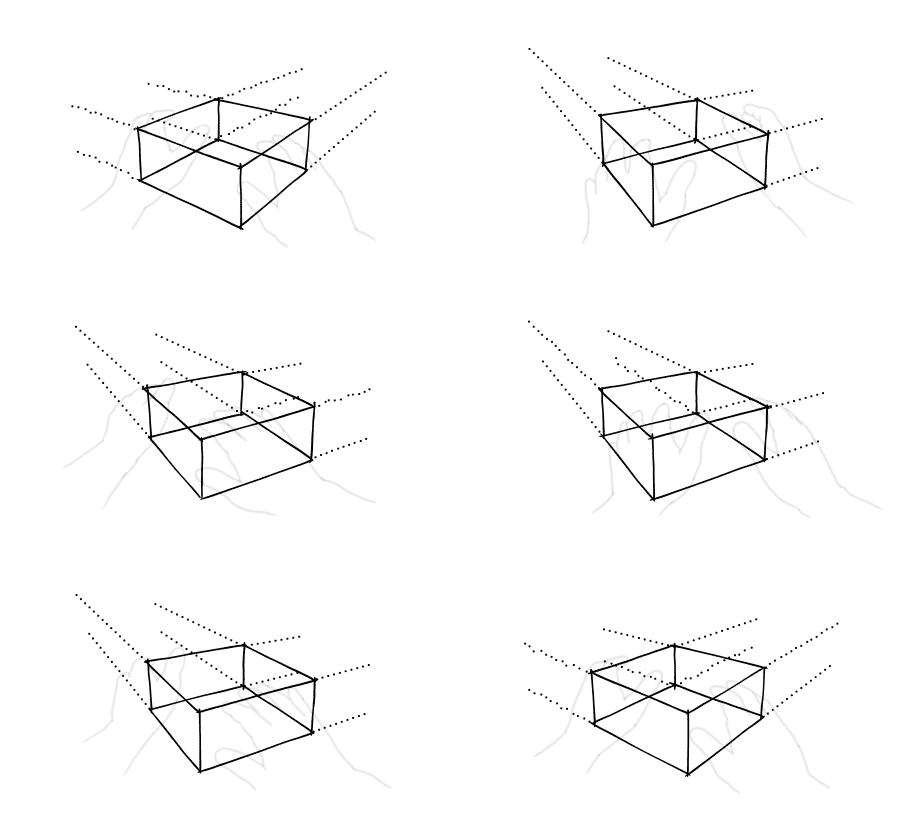
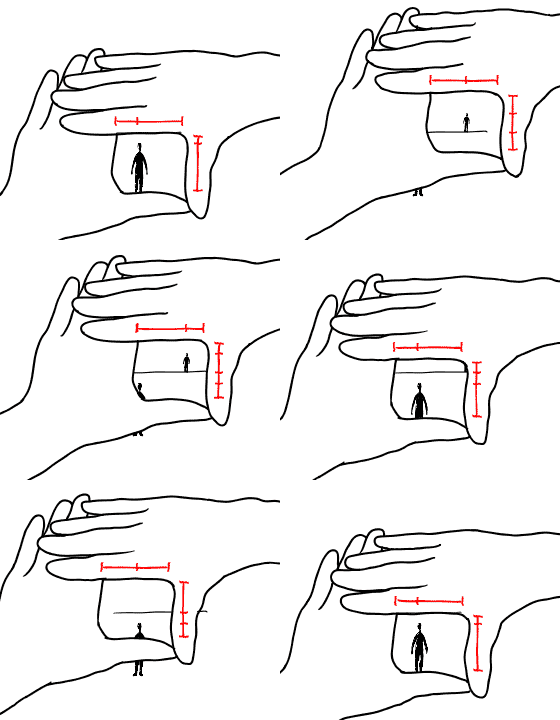
I’m not specifically learning to draw right now but I do love how Ralph Ammer builds his lessons. Split into short exercises, the best parts are the animations he draws and integrates in his lessons as gifs. Much lighter and more pleasant to watch than a video, they are very short and looping so you can easily grasp what he’s explaining. Here are a few images from his most recent lesson.
Dynamic drawing:

Rotating cube and vanishing points:
Perspective:
Charging speed is no longer an obstacle for electric cars

There’s a lot to learn about and ponder in this thread by Bloomberg Senior Reporter Tom Randall. He talks about how fast upcoming chargers will top up a battery, how larger capacity means quicker initial charges, extended ranges and more. (I only include a few tweets here, check out the whole thread.)
Imagine a world where 350 kW charging is the norm—200+ miles in 10 minutes. Would you feel grossly inconvenienced to stop for 10 minutes after every 3 hours of highway driving? There’s more 4/ pic.twitter.com/wYKWNskgtW
— Tom Randall (@tsrandall) April 30, 2018
Along with faster chargers, battery capacities are also rising. A lot of people don’t understand how that affects charging. Batteries charge fastest when they’re closer to empty and slower when they’re near full. So bigger batteries mean faster charging. Also 5/
— Tom Randall (@tsrandall) April 30, 2018
Sure, the Roadster is a $200k car, but it’s also Tesla’s goal post for where the market is headed. The original 2008 Roadster had a range of 244 miles. At the time that was bonkers—now the long-range Model 3 blows it away at half the price 9/ pic.twitter.com/SRuNw1rS52
— Tom Randall (@tsrandall) April 30, 2018
Obviously, electric cars aren’t perfect, you have to consider where the electricity is coming from, the production of batteries is polluting itself, and we should prioritize public transport and walkable / bikeable cities. Still, the speed at which renewables are being installed and the evolution of electric cars are a fascinating to watch.
Pure CSS Francine
This is kind of nuts. Diana Smith creates CSS-only hand coded “paintings.” Here are the rules she sets for herself.
- All elements must be typed out by hand
- Only Atom text editor and Chrome Developer Tools allowed.
- SVG use is limited, and all shapes can only use hand-plotted coordinates and bezier curves - without the aid of any graphics editor.

If you’ve ever done anything around web development / front end design, you’ll appreciate the craft in minutia that goes into these projects.
Awaken Akira
Awaken Akira was created by two friends, Ash Thorp and Zaoeyo (XiaoLin Zeng), who wanted to collaborate on a tribute to the iconic anime, Akira, by Katsuhiro Otomo. It’s creation took over a year…
Looks great and there’s a lot more on the project website, including multiple long videos about the process for each shot.
(via @Oniropolis )
Eternal text-cities
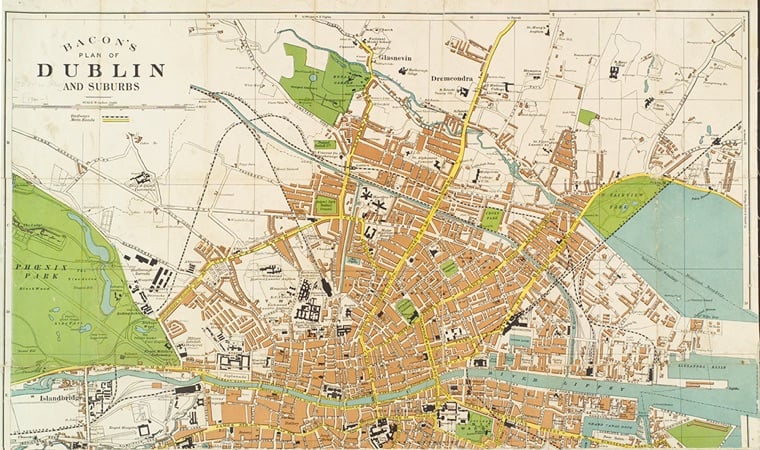
Sometimes, cities are not only the places where stories happen but characters in and of themselves. Here Tyler Malone explores the works of Joyce, Döblin, and Dos Passos and their city centred novels.
These three novels are modernist city novels of the interwar period that move beyond story and character to build structures and trace movements, reconstructing modern metropolises that a world war would soon change forever. Joyce, Dos Passos, and Döblin fashioned not novels but eternal text-cities in which the reader may witness, wander, get lost. […]
Cities are cement and furniture, building and bustle, things that stay still and things that move. Of course, things that stay still in a city can suddenly, and will eventually, move, grow, change, decay, disappear. Buildings crumble, stores go out of business, streets age, accumulating faultlines like faces. Things that move can and do also momentarily pause. A busker stares up at a pedestrian silhouetted by the sun, still as a statue, his last note lingering. The maelstrom of traffic often screeches to a halt.
In fact, those novels are not only city centred but text-cities in themselves:
In other words, Ulysses is not an atlas of Dublin, it is a Dublin; Berlin Alexanderplatz, likewise, is a Berlin. These are not novels; they are cities unto themselves, writ in text of stone and concrete. […]
For the reader-flâneur, linearity isn’t important; it’s about wandering through the text and seeing what one sees, letting the city speak.
—
Also on cities and books; Justin McGuirk reviews at length Richard Sennett’s Building and Dwelling: Ethics for the City on cities as communities, as buildings, and on his vision of open cities.
It also extends to the offices of tech giants like Google, which supply everything a neighborhood has to offer without employees needing to leave the building. Each of these is, for Sennett, a ghetto. Instead, he argues for a city that embraces difference, a place of porous membranes and spatial invitations. […] (emphasis mine)
[The book] has an almost Taoist attachment to harmony and balance. Give architects and planners too much control and the cité suffers; too much faith in the citizen and the ville withers.
(First article via @matthieudugal)
On Margins 005 with Jason

Jason is a humble guy so I’m not sure he’d post this. Good timing then that he’s on vacation and I’m writing here because I will! He’s the guest on the most recent episode of the excellent On Margins podcast by the equally excellent Craig Mod. Not everyone is a podcast listening person but still have a look, there’s a full transcript of the interview and you can also see some excerpts written up by Mod on Medium.
For those of us who have not just used the web but built on the web for decades, a place like kottke.org becomes almost physical in its emotional resonance. […]
These last few years have been tipified by a realization: I think we understand the brittle nature of our institutions a little more than we ever have.
These things we love in the world are not in this world, unless we continually put energy into them, supportive energy into them. I think we felt that really strongly in the last two years, especially. (Emphasis mine)
(Header image shamelessly lifted from Mod’s Medium post.)
Great job Slack! Always an important topic for companies but especially so in tech. “How Slack Got Ahead in Diversity”
Luxurious irony
Apple has been making a number of moves towards becoming more of a luxury and lifestyle brand (including hires from fashion mainstays like Yves Saint Laurent, and Burberry), as well as advancing its various media projects, like the recent purchase of Texture, the digital magazine distributor, in what many see as plans to be the Netflix of magazines. And then in this piece at The Guardian on those same media advances, comes this:
Rumors have even circulated that Apple is looking to buy parts or all of the troubled magazine publisher Condé Nast, a move that would further its push, initiated with the Apple Watch, to become a luxury fashion accessory, lifestyle and content brand.
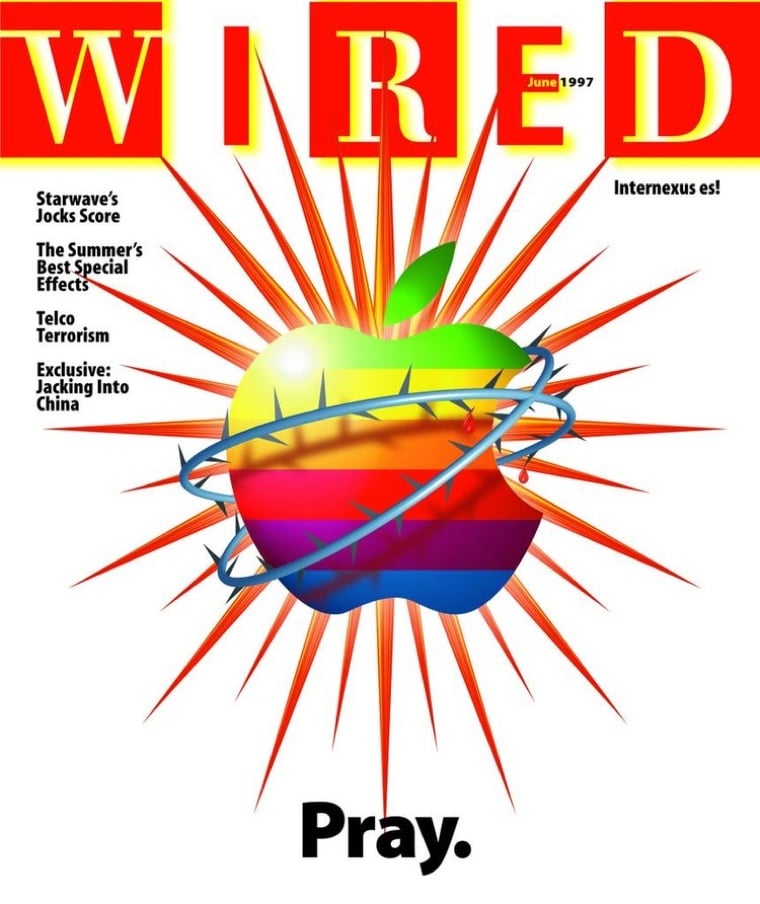
So Apple might be buying Condé Nast, publishers of… Wired. Remember this from 1997? Oh, the irony.
Socials & More