Entries for March 2016
UbuWeb is hosting a massive collection of electronic and electroacoustic songs from 1937-2001.
This is from a 62 CD set called “The History of Electroacoustic Music” that was floating around as a torrent, reputedly curated by a Brazilian student. It’s sketchy. The torrent vanished and the collection has long been unavailable.
It’s a clearly flawed selection: there’s few women and almost no one working outside of the Western tradition (where are the Japanese? Chinese? etc.). However, as an effort, it’s admirable and contains a ton of great stuff.
Take it with a grain of salt, or perhaps use it as a provocation to curate a more intelligent, inclusive, and comprehensive selection.
(via open culture)
Update: The tongue-in-cheek Flash-only interface is terrible, but if you get past that, Ishkur’s Guide to Electronic Music is an amazing resource. (via @xRageous)
A quickfire look at scenes from 20 movies (Gravity, The Revenant, Planet of the Apes) that were done with the help of green screens and computer animation. What, no Carol?!
Lighting 6000 closely grouped wooden matchsticks takes less than a minute, but waiting for the resulting fire to extinguish takes quite a bit longer and is surprisingly relaxing to watch. (Two is a trend, right…it is also surprisingly relaxing and satisfying to watch a tomato being unsliced. Is there an entire genre of videos like this out there?) (via digg)
Randall Munroe’s best-selling Thing Explainer, in which he explains scientific concepts using only the 1000 most common words, will be incorporated into the upcoming editions of some of Houghton Mifflin Harcourt’s high school science textbooks.
Mr. Munroe, 31, said the project appealed to him. He recalled as a child a foldout diagram showing different animals at the starting line of a race and then sprinting/flying/crawling to show the different speeds of different species. “For some reason, I fixated on that illustration,” he said. “It stuck with me my entire life.”
Mr. Munroe said he hoped his drawings would break up the monotony and pace of a typical textbook. “I’m hoping it will be, ‘Oh, here’s a kind of fun and unexpected component,’” he said.
I think Bill Gates would approve.
The American showman P.T. Barnum published a book of rules for making money called The Art of Money Getting. Here are the 20 rules from the book:
1. Don’t mistake your vocation
2. Select the right location
3. Avoid debt
4. Persevere
5. Whatever you do, do it with all your might
6. Depend upon your own personal exertions
7. Use the best tools
8. Don’t get above your business
9. Learn something useful
10. Let hope predominate but be not too visionary
11. Do not scatter your powers
12. Be systematic
13. Read the newspapers
14. Beware of “outside operations”
15. Don’t indorse without security
16. Advertise your business
17. Be polite and kind to your customers
18. Be charitable
19. Don’t blab
20. Preserve your integrity
The book is also available in a convenient paperback format.
P.S. If you find it difficult to believe that this book was written by the same man who said “there’s a sucker born every minute”, then you’ll be pleased to know that Barnum probably never said that.
A new paper by climate scientists, including ex-NASA scientist James Hansen, warns that our climate could dramatically change within decades, not centuries.
Virtually all climate scientists agree with Dr. Hansen and his co-authors that society is not moving fast enough to reduce emissions of greenhouse gases, posing grave risks. The basic claim of the paper is that by burning fossil fuels at a prodigious pace and pouring heat-trapping gases into the atmosphere, humanity is about to provoke an abrupt climate shift.
Non-linear systems, man. Gradually, then all at once.
Update: Slate’s Eric Holthaus has more on the paper and its potential implications.
In addition to the risk of “several meters” of sea level rise this century, which Hansen calls the most important finding, the final version of Hansen’s paper gives new emphasis to the possibility that the ocean’s heat circulation system may be in the process of shutting down. The circulation shutdown would precede the rapid increase in global sea levels. If the shutdown happens, simultaneous cooling of the waters near Greenland and Antarctica and warming in the tropics and midlatitudes could spawn frequent strong storms on the order of Hurricane Sandy or worse.
If that sounds a lot like the plot of The Day After Tomorrow to you, you’re not alone.
Hansen also released a 15-minute video about the paper:
It’s been awhile; let’s check in on what skateboarder Richie Jackson is doing. Oh, more incredibly creative and chill tricks? Niiiiiiice.
This is a fan edit of Star Wars: The Phantom Menace with all of the crappy bits removed and several other scenes reworked. Among the changes:
- Jar Jar is now a useful character instead of an annoying tag-along
- Queen Amidala’s voice is pitch-shifted back to her normal pitch
- Midichlorian references removed
- Anakin is edited to be a more deliberate hero instead of an accidental one
Pro tip: the best Star Wars prequel is still Triumph The Insult Comic Dog interviewing people standing in line for Attack of the Clones.
If you’ve been following along, various politicians at all levels of the government have basically been kicking the can down the road when it comes to taking responsibility for the water crisis in Flint, MI.
[Michigan Governor Rick] Snyder and [Environmental Protection Administrator Gina] McCarthy were both asked, strongly and repeatedly, to resign. The two officials, for their part, blamed each other: The governor faulted the EPA for its slow and “ineffective” response, while McCarthy took aim at state officials for obfuscating the poor water quality. Both also suggested they weren’t fully aware of the problem’s scope until far too late.
Dave Pell from Nextdraft says:
This is a common refrain we’ve heard from national, state and local officials. We’ve had hearings, debates, and nationally televised town halls. What we don’t have is a solution for the people bathing in bottled water. In times of war, we can get running water to the deserts of Iraq. But all we can get to Flint is politics as usual.
Also via Nextdraft, Erin Brockovich wrote about Flint and the other places around the country where similar things are happening.
Mathematicians have calculated pi out to more than 13 trillion decimal places, a calculation that took 208 days. NASA’s Marc Rayman explains that in order to send out probes and slingshot them accurately throughout the solar system, NASA needs to use only 15 decimal places, or 3.141592653589793. How precise are calculations with that number? This precise:
The most distant spacecraft from Earth is Voyager 1. It is about 12.5 billion miles away. Let’s say we have a circle with a radius of exactly that size (or 25 billion miles in diameter) and we want to calculate the circumference, which is pi times the radius times 2. Using pi rounded to the 15th decimal, as I gave above, that comes out to a little more than 78 billion miles. We don’t need to be concerned here with exactly what the value is (you can multiply it out if you like) but rather what the error in the value is by not using more digits of pi. In other words, by cutting pi off at the 15th decimal point, we would calculate a circumference for that circle that is very slightly off. It turns out that our calculated circumference of the 25 billion mile diameter circle would be wrong by 1.5 inches. Think about that. We have a circle more than 78 billion miles around, and our calculation of that distance would be off by perhaps less than the length of your little finger.
When was humanity’s calculation of pi accurate enough for NASA? In 1424, Persian astronomer and mathematician Jamshid al-Kashi calculated pi to 17 digits.
Lomography has a list of the Top Five Iconic Female Photographers. I had never heard of Julia Margaret Cameron before — you can check out some of her fantastic work here — but Diane Arbus, Margaret Bourke-White, Dorothea Lange, and Vivian Maier are all favorites of mine. Here’s a photograph from each:




There are some things that humans don’t need to survive anymore still hanging around on our bodies, including unnecessary arm muscles and vestigial tail bones.
If you left the house with a lemon, some copper clips, some zinc nails, some wire, and steel wool but somehow forgot your matches, you can still start a fire. I imagine if you had a large enough lemon and enough wire and metal bits, you could also jumpstart a car or a human heart. (via @kathrynyu)

Curated by Zach Davenport, this Pinterest board features all sorts of different letterforms, from A to Z.
Jenna Close and Jon Held recently shot a short video profile of Bruce Gardner, who practices the Japanese art of hikaru dorodango…making shiny balls out of mud.
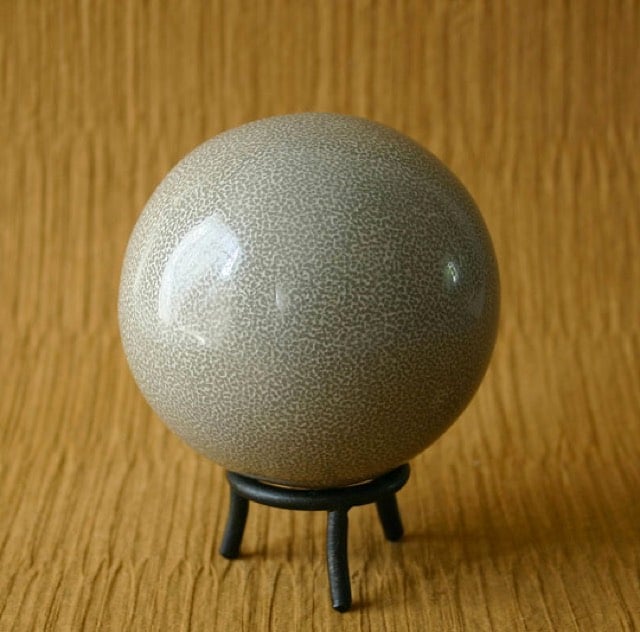
Ever since reading about them years ago, I’ve been making sand versions at the beach. No more excuses…I’m making a mud version this summer.
The PBS Ideas Channel talks to Brooklyn bar owner Ivy Mix about all the different kinds of glassware that cocktails are served in. The most interesting bits are about how factors other than taste influence how people enjoy drinks, as with wine. Men in particular seem to have a difficult time enjoying themselves with certain types of glassware and drink colors.
The latest video from Kurzgesagt is an explainer on antibiotics and superbugs (drug resistant bacteria).
What would you say if we told you that humanity is currently making a collaborative effort to engineer the perfect superbug, a bug that could kill hundreds of millions of people?
Even though I love watching videos of people who make things, you’ve got to admit that many of them share an aesthetic that can get a little tiresome.

Nicky Case built a tool for simulating systems with emoji. You populate your world with things (represented by emoji), add a few rules about how those things interact, and boom, you’ve got yourself a little world. The default simulation is of a forest fire, but others have made simulations of predator/prey cycles, animal skin patterns, and epidemics. Try making your own here.


For the Captured project, prison inmates drew pictures of people they felt should be in jail instead, “the CEOs of companies destroying our environment, economy, and society”. All 1000 books have sold out with the proceeds going to Bernie Sanders’ campaign.
The Custer wolf is dead. He was the master criminal of the animal world.
The common button or white mushroom, the crimini or brown mushroom, and the portobello mushroom are all the same species of mushroom.
Agaricus bisporus has increased in popularity in North America with the introduction of two brown strains, Portabella (sometimes also spelled portobello, portabello, or portobella) and Crimini. The three mushrooms you see to the right are all actually the same species. Portabella is a marketing name the mushroom industry came up with for more flavorful brown strains of Agaricus bisporus that are allowed to open to expose the mature gills with brown spores; crimini is actually the same brown strain that is not allowed to open before it is harvested.
See also the magical Brassica oleracea plant (cabbage, kale, broccoli, brussels sprouts, kohlrabi, collard greens, and cauliflower are all the same species of plant). (via @dunstan)
A team of researchers at Stanford built a small army of tiny robots that pulled a car across a concrete floor.
With careful consideration to robot gait, we demonstrate a team of 6 super strong microTug microrobots weighing 100 grams pulling the author’s unmodified 3900lb (1800kg) car on polished concrete.
As any good tug of war team knows, the trick was to ensure that the tiny bots all pulled together at the same time. (via ny times)

Questlove is coming out with a book about food and creativity next month called something to food about.
In conversations with ten innovative chefs in America, he explores what makes their creativity tick, how they see the world through their cooking and how their cooking teaches them to see the world. The conversations begin with food but they end wherever food takes them. Food is fuel. Food is culture. Food is history. And food is food for thought.
Love that cover.
As part of the Moby Dick Big Read project, dozens of people collaborated on an unabridged audiobook of Moby Dick. Each chapter has a different reader and the readers included Stephen Fry, David Attenborough, and Benedict Cumberbatch. Tilda Swinton started things off with chapter one:
(via @sampotts)
It’s so soothing and satisfying watching this person unslicing tomatoes. (via digg)

James Gleick, author of The Information, Chaos, and Genius, is coming out with a new book this fall called Time Travel. William Gibson has given it his thumbs up. Really excited for this one (it comes out on my birthday!) and curious to see how liberally he treats his subject…for instance, cameras are time machines.

Amos Dudley wanted to improve his smile but didn’t want to pay thousands of dollars for Invisalign, so he 3D printed his own orthodontic aligners.
I took a mold of my teeth with some cheap alginate powder, Permastone, and a 3d printed impression tray, to get a better picture of what was really going on. Notice LI-r (right lateral incisor) projected outward, and CI-r (right central incisor) depressed inward and overlapping.
At the time of writing this, I’m an undergrad, which means that a) I’m broke, and b) I have access to expensive digital fabrication tools - definitely an unusual dichotomy. I was researching [name brand clear-aligner treatment], and I ran across a photo that caught my eye.
Those look like the layer striations from a 3D print!
What is to stop someone, who has access to a 3D printer, from making their own orthodontic aligners?
Update: Unsurprisingly, orthodontists feel that DIY dentistry is not such a great idea.
Belli notes, “He moved these teeth in only 16 weeks. You can cause a lot of problems with that. If you move a tooth too fast, you can actually cause damage to the bone and gums. And if you don’t put the tooth in the right position, you could throw off your bite,” leading to additional damage and wear on the teeth.
Yesterday, in need of a chance to think, inspired by a friend’s recent long run, and in celebration of no longer being sick (mostly), I took the A train up to the last stop at 207th St, got out, and started walking down Broadway. Some observations:
When we first moved to NYC in late 2002, Meg and I did an “urban bushwhack” in Manhattan, very much like the one described here. We hiked around upper Manhattan for 15 miles — the heel on my right foot hurt for months afterwards — but it remains one of the best activities I’ve ever done in the city.
Broadway is the oldest north/south road in NYC. It was originally a Native American trail called Wickquasgeck. Today, even though it runs the length of the island, I’m not sure it’s in any way representative of Manhattan or NYC as a whole. As a main thoroughfare, it’s mostly businesses; there’s very little in the way of residential.
I walked past approximately 50,000 nail salons, most of them north of 125th St. Also a lot of tax prep places up there, although I don’t know if that’s seasonal or what.
I totally forgot to jog over a couple of blocks in the 140s to see the house from The Royal Tenenbaums and Alexander Hamilton’s house. :(
Times Square was the worst stretch of Broadway by a wide margin.
The weather was nice and for a stretch in the 120s, 130s, and 140s, people were out sitting on the sidewalks, eating, playing dominos, shooting the shit. I passed a group of guys talking about the Bulls/Knicks rivalry from the late 80s and early 90s, about whether Scottie Pippen was actually a good player.
The increasing number of chain stores and restaurants as you travel south is striking. Relatively speaking, Manhattan below 86th St. is all chains.
I ended up stopping at Houston…my legs were getting kinda sore and I didn’t want to push my luck. I walked home from there, which as I look at the map now, turns out to be about the same distance as if I would have walked the rest of the way down Broadway. Oh well. Perhaps next time. 200+ blocks and about 10.7 miles total.
It is the assertion of The Walk of Life Project that the Dire Straits song Walk of Life is the perfect thing to play at the end of movies. I have watched more than a dozen of these and they are all great, but I picked Lost in Translation, There Will Be Blood, and Terminator 2 to embed here.
I have been following with fascination the match between Google’s Go-playing AI AlphaGo and top-tier player Lee Sedol and with even more fascination the human reaction to AlphaGo’s success. Many humans seem unnerved not only by AlphaGo’s early lead in the best-of-five match but especially by how the machine is playing in those games.
Then, with its 19th move, AlphaGo made an even more surprising and forceful play, dropping a black piece into some empty space on the right-hand side of the board. Lee Sedol seemed just as surprised as anyone else. He promptly left the match table, taking an (allowed) break as his game clock continued to run. “It’s a creative move,” Redmond said of AlphaGo’s sudden change in tack. “It’s something that I don’t think I’ve seen in a top player’s game.”
When Lee Sedol returned to the match table, he took an usually long time to respond, his game clock running down to an hour and 19 minutes, a full twenty minutes less than the time left on AlphaGo’s clock. “He’s having trouble dealing with a move he has never seen before,” Redmond said. But he also suspected that the Korean grandmaster was feeling a certain “pleasure” after the machine’s big move. “It’s something new and unique he has to think about,” Redmond explained. “This is a reason people become pros.”
“A creative move.” Let’s think about that…a machine that is thinking creatively. Whaaaaaa… In fact, AlphaGo’s first strong human opponent, Fan Hui, has credited the machine for making him a better player, a more beautiful player:
As he played match after match with AlphaGo over the past five months, he watched the machine improve. But he also watched himself improve. The experience has, quite literally, changed the way he views the game. When he first played the Google machine, he was ranked 633rd in the world. Now, he is up into the 300s. In the months since October, AlphaGo has taught him, a human, to be a better player. He sees things he didn’t see before. And that makes him happy. “So beautiful,” he says. “So beautiful.”
Creative. Beautiful. Machine? What is going on here? Not even the creators of the machine know:
“Although we have programmed this machine to play, we have no idea what moves it will come up with,” Graepel said. “Its moves are an emergent phenomenon from the training. We just create the data sets and the training algorithms. But the moves it then comes up with are out of our hands — and much better than we, as Go players, could come up with.”
Generally speaking,1 until recently machines were predictable and more or less easily understood. That’s central to the definition of a machine, you might say. You build them to do X, Y, & Z and that’s what they do. A car built to do 0-60 in 4.2 seconds isn’t suddenly going to do it in 3.6 seconds under the same conditions.
Now machines are starting to be built to think for themselves, creatively and unpredictably. Some emergent, non-linear shit is going on. And humans are having a hard time figuring out not only what the machine is up to but how it’s even thinking about it, which strikes me as a relatively new development in our relationship. It is not all that hard to imagine, in time, an even smarter AlphaGo that can do more things — paint a picture, write a poem, prove a difficult mathematical conjecture, negotiate peace — and do those things creatively and better than people.
Unpredictable machines. Machines that act more like the weather than Newtonian gravity. That’s going to take some getting used to. For one thing, we might have to stop shoving them around with hockey sticks. (thx, twitter folks)
Update: AlphaGo beat Lee in the third game of the match, in perhaps the most dominant fashion yet. The human disquiet persists…this time, it’s David Ormerod:
Move after move was exchanged and it became apparent that Lee wasn’t gaining enough profit from his attack.
By move 32, it was unclear who was attacking whom, and by 48 Lee was desperately fending off White’s powerful counter-attack.
I can only speak for myself here, but as I watched the game unfold and the realization of what was happening dawned on me, I felt physically unwell.
Generally I avoid this sort of personal commentary, but this game was just so disquieting. I say this as someone who is quite interested in AI and who has been looking forward to the match since it was announced.
One of the game’s greatest virtuosos of the middle game had just been upstaged in black and white clarity.
AlphaGo’s strength was simply remarkable and it was hard not to feel Lee’s pain.
Watch as Orkestra Obsolete plays a version of New Order’s Blue Monday using only instruments that would have been available in the 1930s, including the diddley bow, the harmonium, the zither, the theramin, and the musical saw. (via @tcarmody)
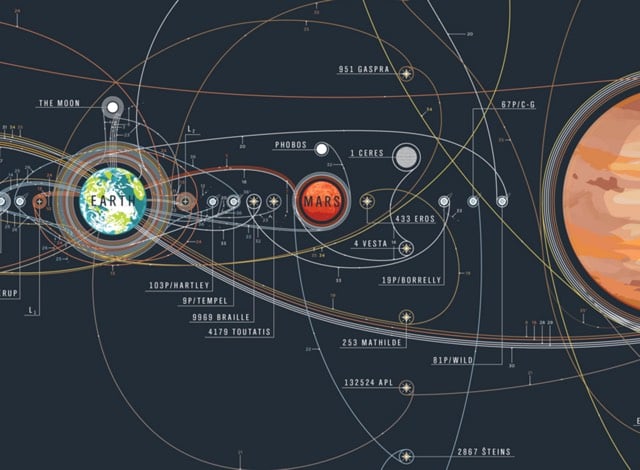
A new print from Pop Chart Lab “traces the trajectories of every orbiter, lander, rover, flyby, and impactor to ever slip the surly bonds of Earth’s orbit and successfully complete its mission — a truly astronomical array of over 100 exploratory instruments in all.” Awesome. Basically, I am a sucker for things with curvy lines and planets.
David W. Niven collected jazz records from as early as 1921 and with the help of the Internet Archive, copies of those records have been made available online…that’s 1000 hours of jazz.
My 20-year-old cousin introduced me to jazz when I was 10. It was a 10” 78 RPM OK recording of “My Heart” made in Chicago on November 12, 1925, by Louis Armstrong’s Hot Five with Kid Ory, trombone; Johnny Dodds, clarinet; Lil Armstrong, piano; and Johnny St. Cyr, banjo. On the reverse was “Cornet Chop Suey.”
(via @ftrain)
Newer posts
Older posts






Socials & More