Entries for July 2015
I went to the beach yesterday and it was the best thing ever. But today is slightly less great because my back is sunburned. I stupidly didn’t reapply after swimming. I need to do better. Shannon Palus of The Sweethome recently surveyed the sunscreen landscape and picked the best sunscreen: NO-AD Sport SPF 50.
At 56 cents per ounce, the NO-AD sunscreens cost half as much as their closest competitors. We liked this one best because it has no added fragrance, is water resistant, and consistently placed among the top three during blind application tests by our six-person panel.
But the main takeaway from the article is that people aren’t using enough sunscreen. We don’t apply it liberally enough nor do we reapply as often as you should.
Related: how to identify and avoid rip currents at the beach so you don’t die.
Update: On the other hand, EWG’s Guide to Sunscreens rates the NO-AD Sport very poorly, mainly because of chemicals that “pose a HIGH health concern”. They recommend buying something like Coola Classic Sport SPF 50 or Coppertone Sport Sunscreen Lotion, SPF 30 instead. The Sweethome review addresses such chemicals, saying that protection from the Sun is much more important:
If you are using a sunscreen that is paraben- or oxybenzone-free because you’re concerned about these chemicals, stop letting those be a factor in your decision-making. As we’ll explain in our ingredients section, there’s far too much alarm out there about the supposed harm sunscreens will do to you if you apply it to your skin. We will work through all the reasons why you shouldn’t be worried below. You should be much more worried about the sun exposure that can result from poor and infrequent application.
A couple of years ago, I bought a sunscreen listed on EWG’s guide. It was expensive, gross-feeling, and difficult to use…the bottle actually ended up breaking with about 1/3 of the contents still trapped inside. The Sweethome review hits on something that seems superficial but is really important: buying sunscreen that works, is affordable (so you will actually reapply), and that you’ll actually use is essential. Buying a more expensive sunscreen with fewer potentially harmful chemicals that feels gross, smells weird, and doesn’t make you want to reapply is going to result in skin damage that will far exceed any potential damage done by chemicals. (thx, brian & tom)
With the pace of the excellent Sherlock series slowing down a bit because of scheduling (Cumberbatch, Freeman, Moffat, and Gatiss are increasingly busy), they still somehow found time to shoot a Christmas special that will air in December 2015. Here’s a short teaser scene:
Update: A longer trailer. Makes it look a bit darker than the regular show, which I’m not sure is a good thing.
They showed this 3 minute 30 second behind the scenes video of Star Wars: The Force Awakens at Comic-Con yesterday.
Fans at San Diego Comic-Con’s Hall H were treated to a special look behind the scenes of Star Wars:The Force Awakens by director J.J. Abrams, producer and Lucasfilm President Kathleen Kennedy and writer Lawrence Kasdan. The filmmakers were joined on stage by cast members Daisy Ridley, John Boyega, Adam Driver, Oscar Isaac, Domhnall Gleeson, Gwendoline Christie, Mark Hamill, Carrie Fisher and Harrison Ford to the surprise and delight of fans.
At the end of the Hall H presentation, the entire Hall H audience of more than 6,000 fans were all invited to continue the celebration and join cast and filmmakers at a surprise Star Wars Fan Concert. The San Diego Symphony performed the classic Star Wars music from John Williams at the Embarcadero Marina Park South.
I have zero interest in Comic-Con, but that would have been pretty cool to see.
Psychologists Dacher Keltner and Paul Ekman served as scientific consultants during the production of Pixar’s Inside Out. Keltner studies the origins of human emotion and Ekman pioneered research of microexpressions. In this NY Times piece, they discuss the science behind the movie.
Those quibbles aside, however, the movie’s portrayal of sadness successfully dramatizes two central insights from the science of emotion.
First, emotions organize — rather than disrupt — rational thinking. Traditionally, in the history of Western thought, the prevailing view has been that emotions are enemies of rationality and disruptive of cooperative social relations.
…
Second, emotions organize — rather than disrupt — our social lives. Studies have found, for example, that emotions structure (not just color) such disparate social interactions as attachment between parents and children, sibling conflicts, flirtations between young courters and negotiations between rivals.
I’ve thought about Inside Out every day since I saw it. Pixar clearly did their homework on the emotional stuff and it paid off.
A company called Persistent Surveillance Systems has built a “pre-crime” surveillance system. The idea is that you fly a cluster of video cameras over an area that can be the size of a small city — using an airplane or even a drone — and you transmit the day’s activities of the entire city to a computer on the ground. When a crime is committed, a system analyst can scrub the video forward and backward in time to find out where the perpetrator came from and where they go after. Ideally, this happens minutes after the crime is committed so the perps can be apprehended. Radiolab recently had a great piece on this technology and its privacy implications.
The system also has other uses — like tracking traffic patterns — but yaaawn. In one of the trials of the technology described in the show, the surveillance video of a hit on a police officer in Juarez, Mexico by members of a drug cartel showed them driving back to what turned out to be the cartel’s headquarters. Another trial, in Dayton, OH, resulted in the capture of a burglar only a few blocks from where the crime was committed. Radiolab called this technology a superpower, like Batman hacking into all of the world’s cellphones or Superman hovering above the Earth listening to everyone’s conversations. Less imaginary comparisons would be to London’s network of CCTV cameras or the NSA’s recording of a large amount of the world’s electronic communications. Fascinating and terrifying all at once.
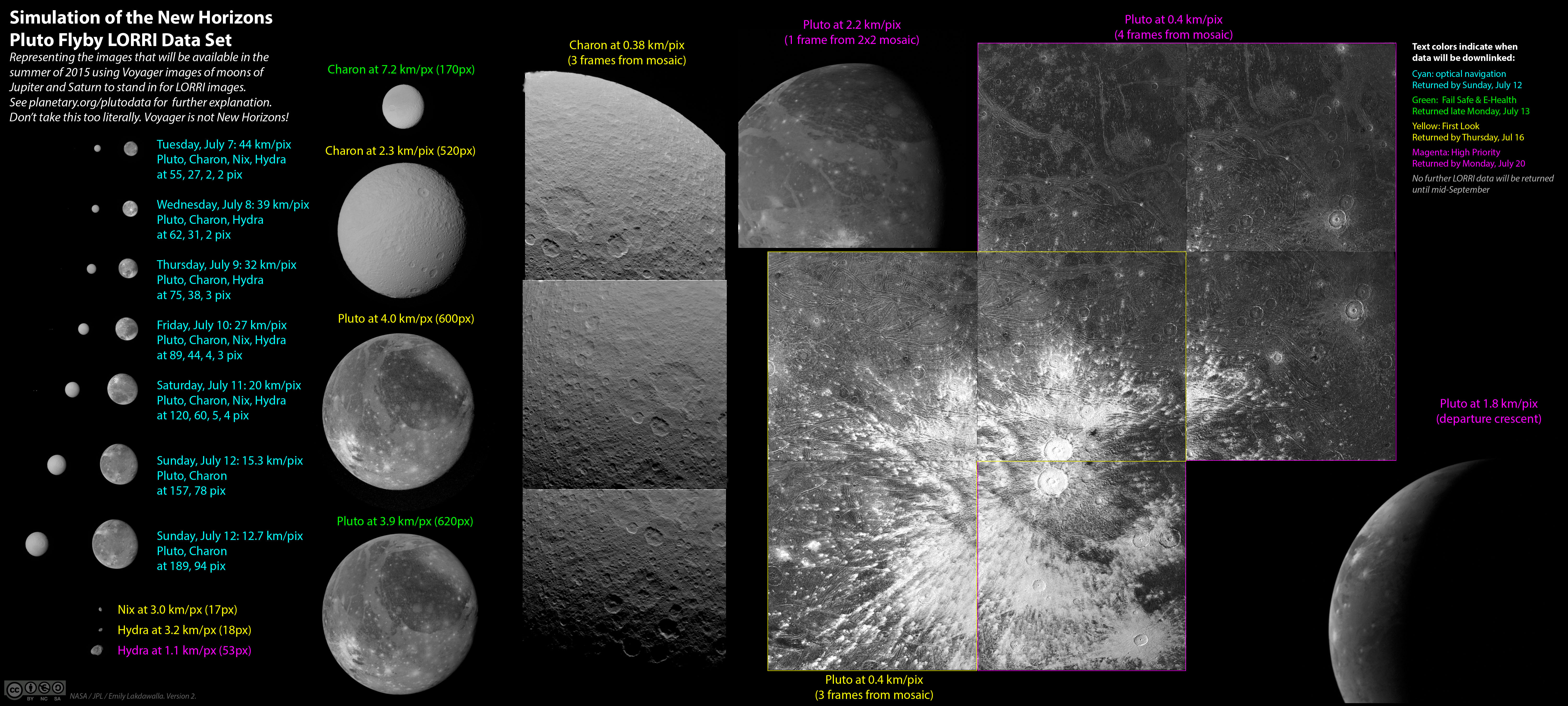
As the New Horizons probe nears Pluto, I’ve been reading a bit more about how it’s going to work and what sort of photos we’re going to get. Emily Lakdawalla has a comprehensive post about what to expect when you’re expecting a flyby of Pluto. The post contains an image of approximations of the photos New Horizon will take, using Voyager images of Jovian and Saturnian moons as stand-ins. The highest resolution photo of Pluto will be 0.4 km/pixel…it’ll have this approximate level of detail:

Which is pretty amazing and exciting considering that before the mission started this was our best view of Pluto:

NASA’s Eyes app lets you see a simulation of the probe as it approaches Pluto, but if you don’t want to download anything, you can watch this video of the flyby instead:
I had no idea the probe spun around so much as it grabs photos & scans and then beams them back to Earth. And the flyby is so fast! New Horizons is currently moving at 32,500 mph relative to the Sun…it’s travelling just over 9 miles every second. (via @Tim_Meyer_ & @badastronomer)

The WNYC Data News Team is looking for the longest possible NYC subway ride. The MTA says the longest direct trip is 38 miles, but WNYC found one that’s 148 miles, requiring 45 transfers. They’re running a little competition to see who can find a longer ride…check the rules for more details (short version: you can repeat stations but not track segments). This is basically a variant of the travelling salesman problem, yes? Anyone care to take a crack at it? (via @ryandawidjan)
The opening scenes from dozens of movies, including 2001, There Will Be Blood, Lost in Translation, Seven Samurai, and Star Wars.
(via devour)
Chris Umson is the Director of Self-Driving Cars at Google[x] and in March, he gave a talk at TED about the company’s self-driving cars. The second half of the presentation is fascinating; Umson shows more than a dozen different traffic scenarios and how the car sees and reacts to each one.
It will be interesting to see how roads, cars, and our behavior will change when self-driving cars hit the streets. Right now, street markings, signage, and automobiles are designed for how human drivers see the world. Computers see the road quite differently, and if Google’s take on the self-driving car becomes popular, it would be wise to adopt different standards to help them navigate more smoothly. Maintaining painted lines might be more important, along with eliminating superfluous signage close to the roadway. Maybe human-driven cars would be required to display a special marking alerting self-driving cars to potential hazards.1 Positioning of headlights and taillights might become more standard.
Human drivers, cyclists, and pedestrians will necessarily adapt to self-driving cars as well. Some will take advantage of the cars’ politeness. But mostly I suspect that learning to interact with self-driving cars will require a different approach, just as people talk to computers differently than they do to other humans — think of how you formulate a successful search query, speak to Siri, or, more to the point, manipulate a Wii remote so the sensor dingus on top of your TV can interpret what you’re doing.
On his YouTube channel, Dylan Marron is cutting down films to only include dialogue spoken by persons of color. Under those conditions, Moonrise Kingdom is 10 seconds long. Her is about 40 seconds. Noah is 0 seconds.
(via @riondotnu)

The Iron Giant has been remastered and burnished with a pair of extra scenes for a re-release in US theaters scheduled for the end of September.
Warner Bros. and Fathom Events are teaming up to bring The Iron Giant back to life. The beloved 1999 animated film is being remastered and augmented with new footage, and it’s coming to select American theatres as what the studio’s calling the “Signature Edition” on September 30th. There’ll also be an encore presentation in select theatres a few days later on October 4th.
The movie earned a respectable $23 million at the box office and critical acclaim, but failed to recoup its $70 million production budget. After reading a bunch of positive reviews, including one from my cinematic divining rod Roger Ebert, I was one of the brave few souls to see The Iron Giant in the theater. Hope to catch it again in September. (via @anildash)
Bummer, film site The Dissolve has shut down. They burned bright for a short time.
For the past two years-well, two years this Friday — it’s been our pleasure to put up this site, a site founded on and driven by a love for movies, alongside a company with passion and talent for creating thoughtful, important work. Sadly, because of the various challenges inherent in launching a freestanding website in a crowded publishing environment, financial and otherwise, today is the last day we will be doing that. We’ve had this opportunity thanks to Pitchfork, which has been incredibly supportive of our vision. We couldn’t have asked for a better partner.
I’ve linked to a few of their things over the past few months, and the quality was always high. Tony Zhou has collected a few of his favorite pieces from the site.
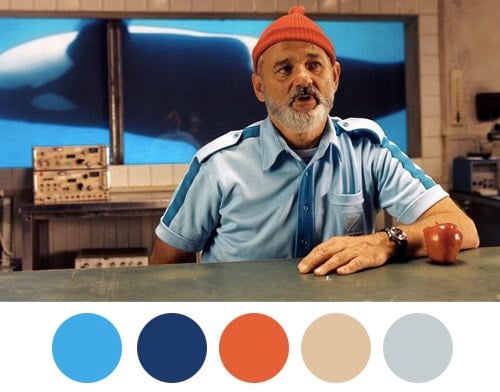
Color palettes derived from Wes Anderson movies.

Mario Koran writes about how tough it can be to be a parent (particularly a single parent) and the impossibility of describing parenthood to someone without kids. This all rings true to me, especially this bit:
I also learned that being a dad means living in constant fear. Due to dumb, random chance, or a second’s negligence, my entire world could implode at any moment. She could be electrocuted, shot, run-over, kidnapped or poisoned. She could get leukemia. It’s all there, just waiting to happen. Each week, the fear seems to grow.
During the day, I keep these emotions contained in wire mesh. I can see the feelings. I know they’re there, behind the wire. But I ignore them. I focus on work. At night, that wire mesh falls away. It’s just my wife and Lucia and me, singing Twinkle Twinkle or ABCs — or Twinkle Twinkle to the tune of ABCs. Some nights, after we tick off the lights and everything’s quiet, I feel so much I suddenly realize I’m crying.
Elsewhere, danah boyd on “the irrational cloud of fear”. Even Steve Jobs, not the best parent in the world, said that having kids is like having “your heart running around outside your body”. Not every parent feels this way, but if you are prone to anxiety, that pretty much covers it.
Pluto is so far away that we haven’t even been able to get a good look at it, not even with the crazy-powerful Hubble telescope. But with NASA’s New Horizons mission closing in on our solar system’ ninth planet,1 we are getting a better and better view of Pluto every day.1 Here’s the latest, from just a few hours ago:

New Horizons will reach its closest approach to Pluto in just under 6 days, on July 14. The probe will pass within 7,800 miles of the surface…I can’t wait to find out what that day’s photos look like.
Update: You don’t even need to wait until tomorrow for that better image…here’s one that NASA released just a short while ago. Tune in tomorrow for an even better view.

♬ With the shovel out, the ice’s less dangerous / Drop the shovel, entertain us / I feel stupid and contagious / Drop the shovel, entertain us ♬
Magisterial. I love the internet. This is even better than the door that sounds like Miles Davis. (via @slowernet)
Update: Oh, and this nightstand door sounds like Chewbacca. (via @steveportigal)
An NYPD officer anonymously shares what it’s like to be a cop in NYC.
I’m walking in Boerum Hill on one of the first really good days of summer. It’s been a long week but I’m feeling good in a flowing sundress and sandals, relieved to be freed from what I’ve begun to think of as my blue polyester prison. I look up and realize with amusement that I’m walking by an actual prison, or, to be precise, a jail: Brooklyn Central Booking.
The doors to the courtroom lobby open and a man emerges, pausing to survey the street. He’s a little scruffy but then the newly arraigned usually are — there aren’t many opportunities to freshen up in the holding cells. He has an open, pleasant face, and the recognition on my part is immediate. My heart sinks as I see him cross the street and make a beeline for me.
“Miss? Miss?” He doesn’t sound particularly confrontational and I give him my best blank smile, hoping he has some kind of mundane procedural question.
“I don’t mean to like bother you or anything, but if you’re not busy, and a beautiful lady such as yourself is probably busy, but if you’re not busy I’d love to buy you a cup of coffee.”
Now I have to grin. This is my new favorite person in the world. What chutzpah! I’m so delighted by this guy that I almost chuck him on the shoulder. Then it hits me. He doesn’t recognize me, at all. He has no idea that I’m the person who arrested him two nights before.
(via @choire, who called it “BY FAR the most interesting thing i read all week”)
Disney is proceeding at full steam in delivering more Star Wars to your eyeballs. Today they announced that Christopher Miller and Phil Lord, the duo behind The Lego Movie, will direct a movie about a young Han Solo.
The screenplay is written by Lawrence Kasdan and Jon Kasdan. The story focuses on how young Han Solo became the smuggler, thief, and scoundrel whom Luke Skywalker and Obi-Wan Kenobi first encountered in the cantina at Mos Eisley.
Release date is May 2018. As Princess Leia once said, “Disney, I hope you know what you’re doing.”
Screen Addiction Is Taking a Toll on Children, from Jane Brody in the NY Times:
Parents, grateful for ways to calm disruptive children and keep them from interrupting their own screen activities, seem to be unaware of the potential harm from so much time spent in the virtual world.
In reply, John Hermann writing at The Awl:
The grandparent who is persuaded that screens are not destroying human interaction, but are instead new tools for enabling fresh and flawed and modes of human interaction, is left facing a grimmer reality. Your grandchildren don’t look up from their phones because the experiences and friendships they enjoy there seem more interesting than what’s in front of them (you). Those experiences, from the outside, seem insultingly lame: text notifications, Emoji, selfies of other bratty little kids you’ve never met. But they’re urgent and real. What’s different is that they’re also right here, always, even when you thought you had an attentional claim. The moments of social captivity that gave parents power, or that gave grandparents precious access, are now compromised. The TV doesn’t turn off. The friends never go home. The grandkids can do the things they really want to be doing whenever they want, even while they’re sitting five feet away from grandma, alone, in a moving soundproof pod.
As a writer for screens, someone who spends a tremendous amount of time each day staring at screens, and an involved parent of two grade-schoolers, this is precisely where my professional and personal lives meet, so I’ve done a bit of thinking about this recently. Here’s what I’ve come up with and am attempting to actually believe:
People on smartphones are not anti-social. They’re super-social. Phones allow people to be with the people they love the most all the time, which is the way humans probably used to be, until technology allowed for greater freedom of movement around the globe. People spending time on their phones in the presence of others aren’t necessarily rude because rudeness is a social contract about appropriate behavior and, as Hermann points out, social norms can vary widely between age groups. Playing Minecraft all day isn’t necessarily a waste of time. The real world and the virtual world each have their own strengths and weaknesses, so it’s wise to spend time in both.
Colorado has spent the last six years conducting a real life test to see if they could reduce the number of unwanted pregnancies and abortions. As the NYT’s Sabrina Tavernise explains, the results were stunning.
If we want to reduce poverty, one of the simplest, fastest and cheapest things we could do would be to make sure that as few people as possible become parents before they actually want to.
If you divide 1 by 999,999,999,999,999,999,999,998,999,999,999,999,999,999,999,999 (that’s 999 quattuordecillion btw), the Fibonacci sequence neatly pops out. MATH FTW!

At the end of Carl Sagan’s Contact (spoilers!), the aliens give Ellie a hint about something hidden deep in the digits of π. After a long search, a circle made from a sequence of 1s and 0s is found, providing evidence that intelligence was built into the fabric of the Universe. I don’t know if this Fibonacci division thing is on quite the same level, but it might bake your noodle if you think about it too hard. (via @stevenstrogatz)
Update: From svat at Hacker News, an explanation of the magic behind the math.
It’s actually easier to understand if you work backwards and arrive at the expression yourself, by asking yourself: “If I wanted the number that starts like 0.0…000 0…001 0…001 0…002 0…003 0…005 0…008 … (with each block being 24 digits long), how would I express that number?”
(thx, taylor)
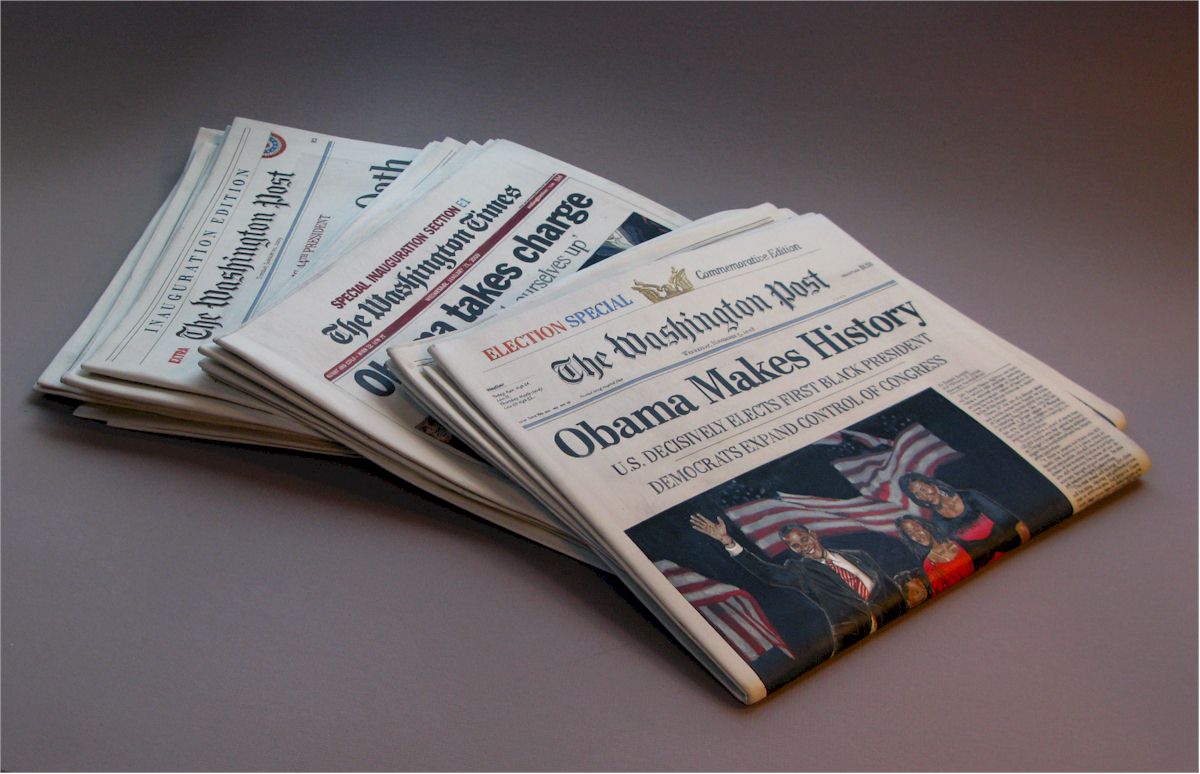
Randall Rosenthal makes amazingly realistic wooden sculptures of everyday objects like newspapers, legal pads, baseball cards, and kitchen scenes. He carves each of his sculptures out of a single block of wood. So, this is carved entirely out of wood:

And so is this:

And this too:

And here’s a look at that last sculpture in progress:

(via @pieratt)
Books loom large in Wes Anderson’s movies. Several of his films open with opening books and Fantastic Mr. Fox is based on an actual book. Here’s a nicely edited selection of bookish moments from Anderson’s films.
In the work of Wes Anderson, books and art in general have a strong connection with memory. The Royal Tenenbaums (2001) begins with a homonymous book, as does Fantastic Mr. Fox (2009). The Grand Budapest Hotel (2014) begins and ends with a book. Moonrise Kingdom (2012) ends with a painting of a place which no longer exists. These movies have a clear message: books preserve stories, for they exist within them and live on through them.

From the August 1968 issue of Computers and Automation magazine, the results of their Sixth Annual Computer Art Contest (flip to page 8).


It’s also worth paging through the rest of the magazine just for the ads.
Update: Looks like The Verge saw this post and did a followup on the history of the Computer Art Contest.
In any given issue, Computers and Automation devoted equal time to the latest methods of database storage and grand questions about the future of their “great instrument,” but the Computer Art Contest was soon a regular event. A look back through old issues of the journal (available at Internet Archive) shows how the fledgling discipline of computer art rapidly evolved. At the time, computers were specialized tools, most commonly used by individuals working in research labs, academia, or the military — and this heritage shows. Both the first and second prizes for the inaugural 1963 competition went to designs generated at the same military lab.
The Venus de Milo’s arms are lost to history but that hasn’t stopped historians and scholars wondering what exactly she was doing with them when the statue was carved. In order to test out a theory that Venus was spinning thread, Virginia Postrel hired designer and artist Cosmo Wenman to construct a 3D model of Venus de Milo.

This list ranking Don DeLillo’s novels into categories ranging from “Classic” to “Avoid” from 2007 excludes his two most recent novels, but if you have little exposure to the author, it’s a good place to start.
White Noise. DeLillo’s breakthrough success, arguably still his quintessential masterpiece, and the funniest and most sustained example of his talent. Jack Gladney, professor of Hitler Studies, struggles with information overload, simulated disasters, an “airborne toxic event,” the most photographed barn in America, and a drug that neutralizes the fear of death. If you’re going to like DeLillo, this is the book that will make it happen.
Confession: aside from attempting to tackle Underworld1 more than 10 years ago, I have not read any DeLillo. I should probably fix that? (via @davidgrann)
Saul Bass designed the opening sequences for dozens of films, including North by Northwest, Psycho, West Side Story, and Goodfellas. Here’s a look at some of his best work:
(via art of the title)
Newer posts
Older posts

Socials & More