Entries for July 2015
No hunger. No pollution. No disease. Wired’s Amy Maxmen welcomes you to the age of copy and paste DNA editing and the end of life as we know it.
Genome editing started with just a few big labs putting in lots of effort, trying something 1,000 times for one or two successes. Now it’s something that someone with a BS and a couple thousand dollars’ worth of equipment can do. What was impractical is now almost everyday. That’s a big deal.
[I recently listened to Radiolab’s show on Crispr. Recommended. -jkottke]

Clothing retailer Forever 21 hired product and prototyping company Breakfast to build them a giant screen made out of spools of thread to “print” people’s Instagram photos. The screen, which Breakfast bills as “one of the most complex machines ever built for a brand”, weighs 2000 pounds, measures 11 ft high, 9 ft wide, and 3 ft deep, and has a resolution of 80x80 spool pixels. Here’s how they made it:
If you want to give it a try, just tag an Instagram photo with #F21ThreadScreen and it’ll print it out for you (watch the live stream). Prior art alert: the first time I remember seeing something like this was Daniel Rozin’s Wooden Mirror (1999) at ITP (video here).

Hold onto your butts, gang… I just found out, via Pixar’s Michael B. Johnson, that the 3D file manager that Lex uses in Jurassic Park — “It’s a Unix system, I know this” — was a real thing. FSN (File System Navigator) was a demo tool for Silicon Graphics’ IRIX operating system that you could download from their web site.
P.S. In that same thread, Johnson shares that his office was the inspiration for Dennis Nedry’s work area.
This video was shot in NYC on July 18, 1990, mostly in Times Square and Central Park.
The first 30 seconds of the video (stumbling drunk, trash digger, overheating car) is pretty much a perfect representation of how NYC felt to many at the time. A squeegee man can also been seen at work near the end of the video.
Slow motion video of a South Dakota lightning storm shot at 2000 fps.
I love the little tendrils “sent out” by the clouds before a big strike happens. It’s like nature is searching for the optimal path for the energy to travel and then BAM!
There’s going to be a Minecraft movie. Even if it sucks, every kid in America will see this.
For the first time since 2005, Pixar didn’t release a movie last year but are doubling up this year with Inside Out and The Good Dinosaur. Here’s the trailer for The Good Dinosaur, which looks like much more of a just-for-kids movie than Inside Out.
Still, where did the lighter fluid come from?
Sister is my new mother, Mother.
I’m afraid I just blue myself.
I’m about halfway through season two of Arrested Development again on Netflix and it might be the best show ever on television. I’m not even kidding.
Update: NPR has been obsessively cataloging the show’s running gags here. Holy shit, the extensive foreshadowing of Buster losing his hand! This show is amazing. (via @Nick__Vance)
Ann Friedman recently created The Disapproval Matrix to better understand where criticism comes from and how to deal with it.

Frenemies: Ooooh, this quadrant is tricky. These people really know how to hurt you, because they know you personally or know your work pretty well. But at the end of the day, their criticism is not actually about your work-it’s about you personally. And they aren’t actually interested in a productive conversation that will result in you becoming better at what you do. They just wanna undermine you. Dishonorable mention goes to The Hater Within, aka the irrational voice inside you that says you suck, which usually falls into this quadrant. Tell all of these fools to sit down and shut up.
See also Friedman’s Hierarchy of Haters.
Man at Arms is a YouTube show in which real-life weapons from movies and TV shows are recreated. Recently they made the Bride’s Hattori Hanzo sword from Kill Bill. They started from scratch by building a furnace from before the Edo period (before 1603) to smelt the iron ore.
I know zero about swords, but it looks like these guys really did their homework in making as close to a traditional katana blade as they could. (via devour)
James Hansen, NASA’s former top climate scientist, is joined by 16 other leading climate scientists in a paper with some alarming conclusions. The gist is that the glaciers in Antartica and Greenland are melting so much faster than previously predicted that the global sea level will rise more than 10 feet in as little as 50 years, rendering many coastal cities uninhabitable. From Eric Holthaus in Slate:
The study — written by James Hansen, NASA’s former lead climate scientist, and 16 co-authors, many of whom are considered among the top in their fields — concludes that glaciers in Greenland and Antarctica will melt 10 times faster than previous consensus estimates, resulting in sea level rise of at least 10 feet in as little as 50 years. The study, which has not yet been peer reviewed, brings new importance to a feedback loop in the ocean near Antarctica that results in cooler freshwater from melting glaciers forcing warmer, saltier water underneath the ice sheets, speeding up the melting rate. Hansen, who is known for being alarmist and also right, acknowledges that his study implies change far beyond previous consensus estimates. In a conference call with reporters, he said he hoped the new findings would be “substantially more persuasive than anything previously published.” I certainly find them to be.
That’s the thing about nonlinear systems like the Earth’s climate: things happen gradually, then suddenly. This is much more terrifying to me than the Pacific Northwest earthquake. BTW, as a reminder, here’s what NYC and the surrounding area looks like with 10 more feet of water. Goodbye JFK Airport.
Update: The paper is now available online.
Update: In the New Yorker, Elizabeth Kolbert provides a bit more explanation and context about Hansen’s paper.
What the new paper does is look back at a previous relatively warm period, known as the Eemian, or, even less melodically, as Marine Isotope Stage 5e, which took place before the last ice age, about a hundred and twenty thousand years ago. During the Eemian, average global temperatures seem to have been only about one degree Celsius above today’s, but sea levels were several metres higher. The explanation for this, the new paper suggests, is that melt from Antarctica is a non-linear process. Its rate accelerates as fresh water spills off the ice sheet, producing a sort of “lid” that keeps heat locked in the ocean and helps to melt more ice from below. From this, the authors conclude that “rapid sea level rise may begin sooner than is generally assumed,” and also that a temperature increase of two degrees Celsius would put the world well beyond “danger.”
“We conclude that the 2°C global warming ‘guardrail,’ affirmed in the Copenhagen Accord, does not provide safety, as such warming would likely yield sea level rise of several metres along with numerous other severely disruptive consequences for human society and ecosystems,” Hansen and his colleagues wrote.
A nice short animated video on the power of empathy and how it differs from sympathy.
Rarely can a response make something better. What makes something better is connection.
Related: Empathy is a Choice.
Some kinds of people seem generally less likely to feel empathy for others — for instance, powerful people. An experiment conducted by one of us, Michael Inzlicht, along with the researchers Jeremy Hogeveen and Sukhvinder Obhi, found that even people temporarily assigned to high-power roles showed brain activity consistent with lower empathy.
But such experimental manipulations surely cannot change a person’s underlying empathic capacity; something else must be to blame. And other research suggests that the blame lies with a simple change in motivation: People with a higher sense of power exhibit less empathy because they have less incentive to interact with others.
In the mid-90s, Stewart Brand published a fantastic book called How Buildings Learn: What Happens After They’re Built.
Buildings have often been studies whole in space, but never before have they been studied whole in time. How Buildings Learn is a masterful new synthesis that proposes that buildings adapt best when constantly refined and reshaped by their occupants, and that architects can mature from being artists of space to becoming artists of time.
From the connected farmhouses of New England to I.M. Pei’s Media Lab, from “satisficing” to “form follows funding,” from the evolution of bungalows to the invention of Santa Fe Style, from Low Road military surplus buildings to a High Road English classic like Chatsworth-this is a far-ranging survey of unexplored essential territory.
In 1997, Brand and the BBC did a six-part TV series based on the book. Brand has put the series on his YouTube channel; here’s the first part to get you going:
(via open culture)
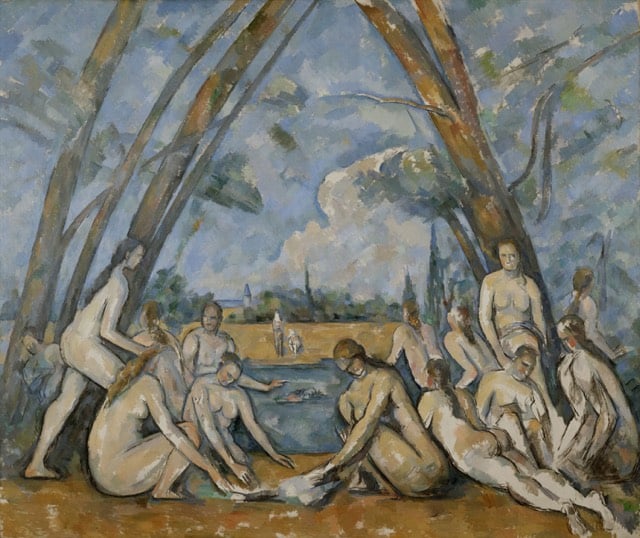
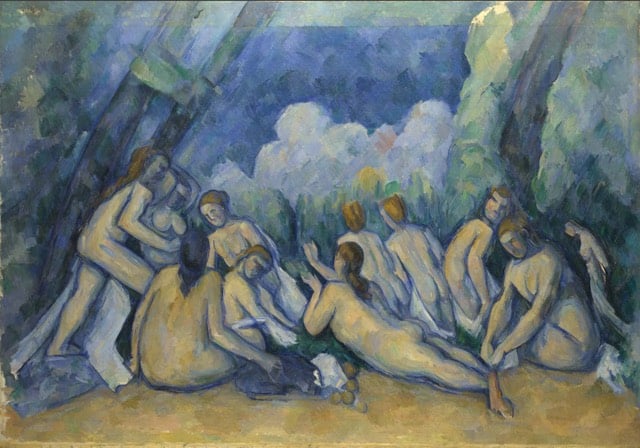
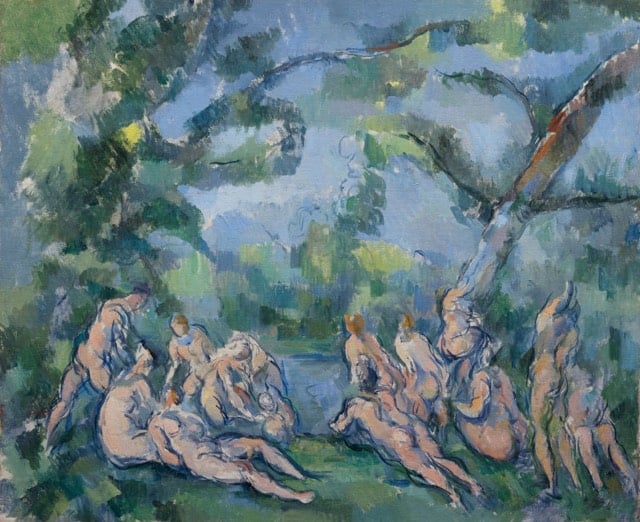
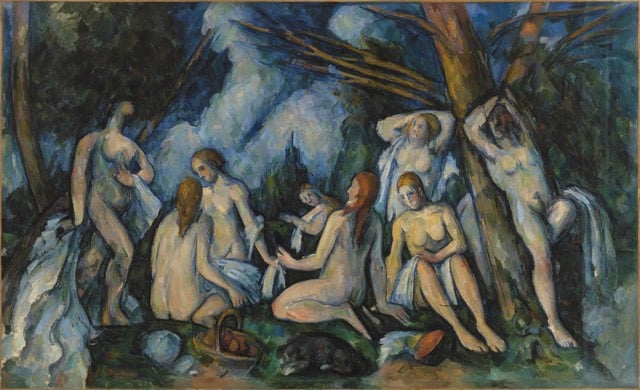
Paul Cezanne’s The Large Bathers is the subject of the second video in The Nerdwriter’s series, Understanding Art. (The first was on Jacques-Louis David’s The Death of Socrates.)
The Large Bathers is part of a series of similar paintings by Cezanne. The one used in the video is housed at the Philadelphia Museum of Art:
Other pieces include those from (top to bottom) The National Gallery, The Art Institute of Chicago, and The Barnes Foundation:
Former convicts Roby So and Carlos Cervantes pick up inmates on the day they get released from prison to help ease their reentry into society.
By now, Carlos and Roby — officially, A.R.C.’s Ride Home Program — have done about three dozen pickups, either together or individually, waking up long before dawn and driving for hours toward prison towns deep in the desert or up the coast. Then they spend all day with the guy (so far they’ve picked up only men), taking him to eat, buying him some clothes, advising him, swapping stories, dialing his family on their cellphones or astonishing him by magically calling up Facebook pictures of nieces and nephews he’s never met — or just sitting quietly, to let him depressurize. The conversation with those shellshocked total strangers doesn’t always flow, Roby told me. It helps to have a wingman.
“The first day is everything,” Carlos says — a barrage of insignificant-seeming experiences with potentially big consequences. Consider, for example, a friend of his and Roby’s: Julio Acosta, who was paroled in 2013 after 23 years inside. Acosta describes stopping for breakfast near the prison that first morning as if it were a horrifying fever dream: He kept looking around the restaurant for a sniper, as in the chow hall in prison, and couldn’t stop gawking at the metal knives and forks, “like an Aztec looking at Cortez’s helmet,” he says. It wasn’t until he got up from the booth and walked to the men’s room, and a man came out the door and said, “How you doin’?” and Acosta said, “Fine,” that Acosta began to feel, even slightly, like a legitimate part of the environment around him. He’d accomplished something. He’d made a treacherous trip across an International House of Pancakes. He’d peed.
I know I already posted this in my quick links early last week, but HOLY GOD is this Kathryn Schulz piece about the already-overdue Pacific Northwest earthquake is terrific and terrifying.
Flick your right fingers outward, forcefully, so that your hand flattens back down again. When the next very big earthquake hits, the northwest edge of the continent, from California to Canada and the continental shelf to the Cascades, will drop by as much as six feet and rebound thirty to a hundred feet to the west — losing, within minutes, all the elevation and compression it has gained over centuries. Some of that shift will take place beneath the ocean, displacing a colossal quantity of seawater. (Watch what your fingertips do when you flatten your hand.) The water will surge upward into a huge hill, then promptly collapse. One side will rush west, toward Japan. The other side will rush east, in a seven-hundred-mile liquid wall that will reach the Northwest coast, on average, fifteen minutes after the earthquake begins. By the time the shaking has ceased and the tsunami has receded, the region will be unrecognizable. Kenneth Murphy, who directs FEMA’s Region X, the division responsible for Oregon, Washington, Idaho, and Alaska, says, “Our operating assumption is that everything west of Interstate 5 will be toast.”
Update: Michelle Nijhuis interviewed Schulz about how this piece came about and its impact.
Probably the hardest thing about writing this piece was that from the beginning, this story was two stories for me. It’s the overt, obvious story, which is the story of the Cascadia subduction zone. On its own, that’s an incredible story, one of the best I’ve ever happened to chance upon. But, from the get go, in my mind, it was also really a parable about climate change. And then one level deeper than that, it’s not a parable, but an example about a really deep problem in our human existence, this kind of problem of scale. We are bound by certain temporal and geographic coordinates, and it’s very very hard to see beyond them.
Update: The Pacific Tsunami Warning Center recently posted a revised version of a paper on the link between an “orphan tsunami” that occurred in Japan in 1700 and a massive earthquake in the Pacific Northwest. An accompanying video shows a forecast model animation of the tsunami.
That’s it. That’s the joke.
According to a model developed by psychologist Jonathan Cheek and his colleagues, there are actually four types of introversion: social, thinking, anxious, and restrained.
Social: Social introversion is the closest to the commonly held understanding of introversion, in that it’s a preference for socializing with small groups instead of large ones. Or sometimes, it’s a preference for no group at all — solitude is often preferable for those who score high in social introversion. “They prefer to stay home with a book or a computer, or to stick to small gatherings with close friends, as opposed to attending large parties with many strangers,” Cheek said. But it’s different from shyness, in that there’s no anxiety driving the preference for solitude or small groups.
I took the quiz at the bottom of the article and I’m a mix of roughly equal parts social, restrained, and anxious introversion with a dash of thinking.
A compilation of some of the world special effects ever to make it to the big screen. Some of these are almost too bad to believe.
(via devour)
…and he FREAKS OUT. I can’t tell if he’s laughing or crying or both. His reaction when he goes outside and sees green grass for the first time: “it’s so pretty!”
The glasses he wears to adjust his color vision are made by EnChroma.
The Met recently cleaned and repaired a 1660 painting by Charles Le Brun called Everhard Jabach and His Family. It took ten months of painstaking work, as this video shows:
Colossal has some before-and-after shots of the painting.
Tony Zhou and Taylor Ramos are back with another installment of Every Frame a Painting. In this one, they examine the evolution of Looney Tunes animation master Chuck Jones and how his approach and style changed as his career progressed.
I love Looney Tunes. In my mind, Duck Amuck and Rabbit of Seville are some of the finest images put to film. Related: watch Chuck Jones draw Bugs Bunny and the 11 rules of making Road Runner cartoons.
David Chang has an opinion — several opinions really — about the proper burger.
My ideal burger is bun, cheese, burger. Sometimes bacon. Ketchup on the side, so I can control it. Pickles — yes! Obviously. And the cheese thing has to be very clear: American cheese only. American cheese was invented for the hamburger. People talk about it being processed and artificial and not real cheese — you know what makes it real? When you put it on a hamburger.
But much of his burger manifesto is about what a burger shouldn’t be.
Grass-fed beef does not make burgers, in my opinion. It’s too lean and the fat content is not evenly distributed, so it can get a little mealy. But the dumbest burger in the world is the wagyu bullshit. It’s like 70 percent fat content — it’s disgusting. Would you eat a ground bacon burger? That’s what you’re doing with a wagyu burger. Or the idiots that have “kobe beef wagyu sliders with like a trio of ketchup” on their menu — that drives me insane. The inventor of the kobe beef slider is right next to the inventor of aluminum siding in the Dumbest Thing I’ve Ever Seen Hall of Fame. And you know what’s even more stupid? The fucking customer that buys it because he’s like, Oooohh, kobe, and it’s like $21. God have mercy on their souls.
I love that Chang loves White Castle; I do too1 and make a trip to the one in Hell’s Kitchen about once a month without ever telling another living soul I do so. I agree with most of the rest of his list, 1 but would add one thing: no super-thick burgers, aka most burgers at fancy restaurants. They are too difficult to eat and the massive patty throws everything out of proportion and you end up with a mouthful of burger with very little of anything else. Blech. Balance, people!
The New Yorker did a short feature on Charlie Pellett, the voice of the NYC subway.
This deep, sometimes vexing voice — which also apologizes for “unavoidable delays” — belongs to a man named Charlie Pellett. A radio anchor for Bloomberg News, Pellett was raised in London but cultivated an American accent by listening to the radio. His work for the M.T.A., which is done on a volunteer basis, is the only non-reporting voice-over work that he’s done.
A company called Oxitec has genetically modified mosquito eggs so that the mosquitos born from them pass along a gene to their offspring that prohibits the mosquitos from reaching sexual maturity and mating. They release the mosquitos into the wild, they mate with the local population of mosquitos, and those born from those matings will die before mating themselves. Voila! Pest control.
Oxitec has conducted trials with its modified mosquito in dengue-ridden regions of Panama, Brazil, Malaysia, and the Cayman Islands. The results show population suppression rates above 90 percent-far greater than the typical 30 percent achieved with insecticides.
The company is currently planning a trial in Florida using this technique to curb an influx of mosquito-borne illness.
Netflix and HBO know what you did last summer. And they know you’re still doing it this summer. The sharing of login credentials is so widespread that the big streaming players are losing hundreds of millions a year. So why don’t they stop us? Two reasons: It’s all about growth at this point. And no one has come up with a way to limit credential sharing without hurting the customer experience.
Amazon is a different kind of movie studio. It’s all about getting more people to become Prime members.
You can have the best technology, you can have the best business model, but if the storytelling isn’t amazing, it won’t matter. Nobody will watch. And then you won’t sell more shoes.

Adding her voice to a chorus of others, Amy Davidson makes a great case for putting Harriet Tubman on the US $20 bill and kicking Andrew Jackson to the curb.
On September 17, 1849, Araminta, who now called herself Harriet, ran away to freedom, along with two of her brothers. Their owner, Eliza Brodess-Pattison’s granddaughter-in-law-had been making moves to sell them, and the fear was that the family would be broken up. Brodess put an ad in the local newspaper, offering a hundred-dollar reward each for “Minty,” Harry, and Ben. (The only extant copy of the ad was found in 2003, in a dumpster.) Almost immediately, Tubman began making trips back to Maryland, organizing the escapes of relatives, friends, and scores of other slaves, often just ahead of armed men pursuing them. On one trip, she discovered that her husband, John Tubman, who was free himself, was living with another woman; he had no interest in going north. He is a man who seems not to have known Tubman’s worth.
When I was a kid, I read a lot of biographies1 on people like Ben Franklin, Thomas Edison, Abraham Lincoln, and the Wright brothers. My favorite, which I read at least three times, was Ann Petry’s Harriet Tubman: Conductor on the Underground Railroad. Tubman is one of history’s greatest badasses. Put her on the damn bill.
If you want to see what Leo Messi, Cristiano Ronaldo, and Neymar might have looked like if they played in the 1950s/60s, Paladar Negro photoshopped some Barcelona & Real Madrid players onto old timey trading cards.


They previously did a similar project with Argentinian players…this one of Angel Di Maria is amazing:

(via @craigpatik)
Today is Amazon Prime Day, a totally manufactured holiday invented to sell you stuff you don’t need…no, not like those other totally manufactured holidays — Mother’s Day, Father’s Day, Christmas — invented to sell you stuff you don’t need. Ok anyway, the deals are out but people are yawning about them a bit. But there are some nice bargains to be had, if you’re in the market (and are an Amazon Prime member): Kindle (for $49) (all gone!), Herschel backpacks, $10 credit for buying Amazon gift card multipacks, and get a free $30 gift card if you order $75 or more in Amazon Home Services. I’m eyeing that Kindle a little — my son is agitating for a hand-me-down of my current one — but wish it were a Paperwhite instead. Is the Paperwhite really worth the extra $70?
Update: Oh and coincidentally, the 55-gallon drum of lube is on sale today too for $1360, 46% off the usual price. There’s only three left though, so hurry!
Clips of Peggy Olsen from Mad Men set to Drake’s Started From the Bottom.
(via av club)
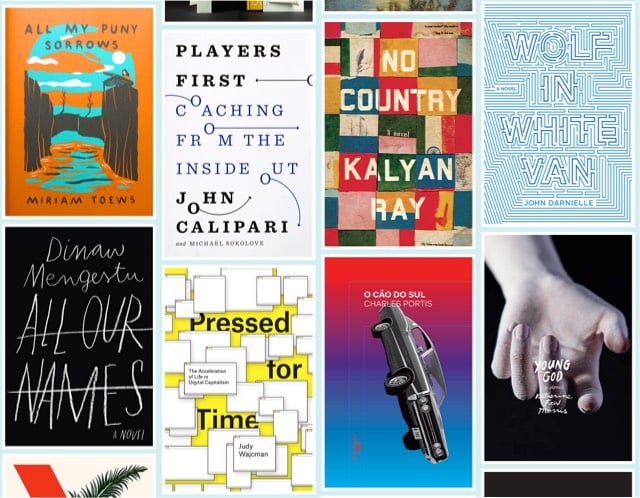
Design Observer and the AIGA have announced the winners of their 50 Books | 50 Covers competition to find the best designed books and book covers published last year. The books are here and the covers are here.
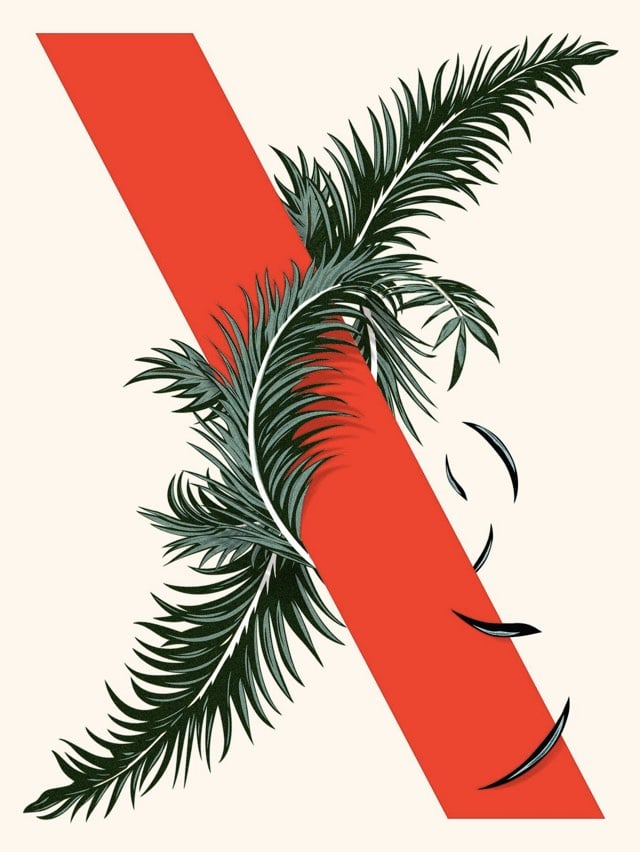
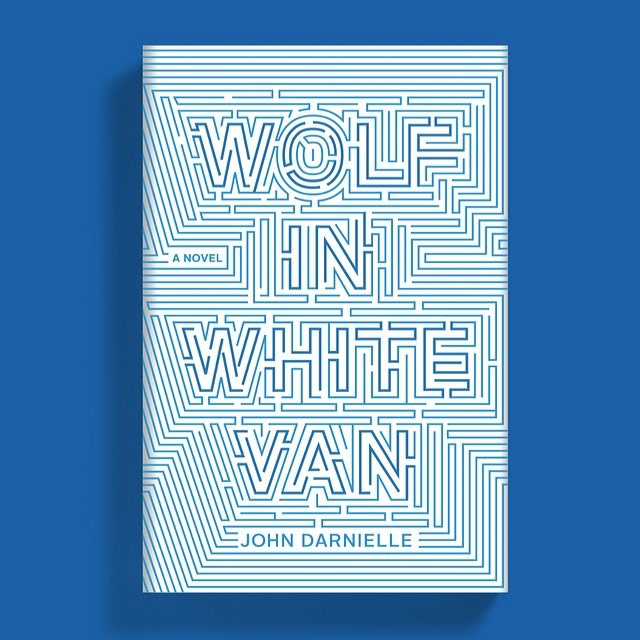
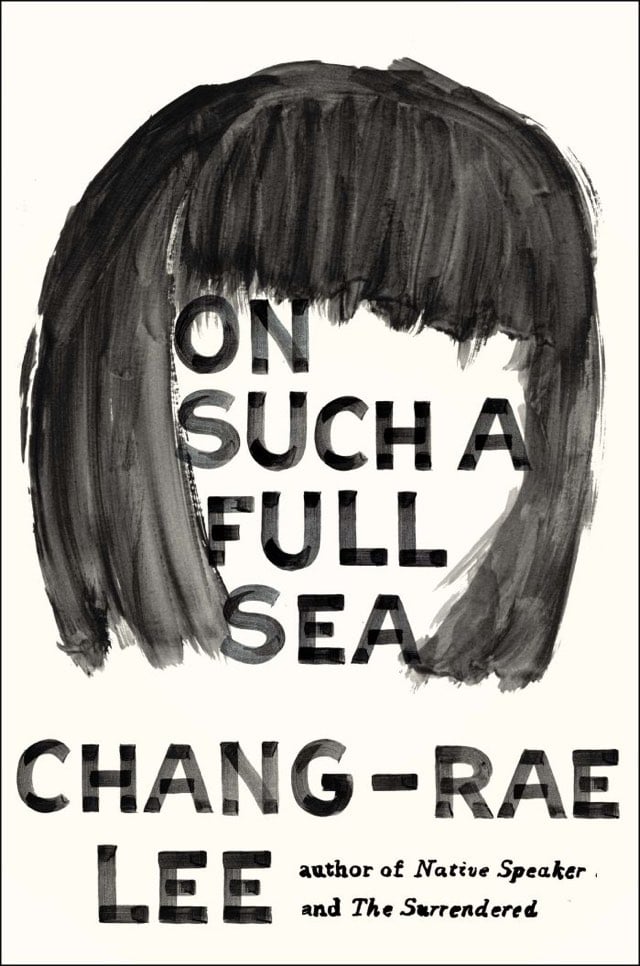
They’re publishing a book and putting on an exhibition in New Orleans of the winners and need your help on Kickstarter to make it happen.
In 2008, Hossein Derakhshan was sentenced to 20 years in jail in Iran for blogging and championing the open web. Released and pardoned late last year, Derakhshan is now wondering why the web he went to jail for is dying and why no one is stopping it. Just as things changed in the real world while he was imprisoned:
Around me, I noticed a very different Tehran from the one I’d been used to. An influx of new, shamelessly luxurious condos had replaced the charming little houses I was familiar with. New roads, new highways, hordes of invasive SUVs. Large billboards with advertisements for Swiss-made watches and Korean flat screen TVs. Women in colorful scarves and manteaus, men with dyed hair and beards, and hundreds of charming cafes with hip western music and female staff. They were the kinds of changes that creep up on people; the kind you only really notice once normal life gets taken away from you.
…so too did the web:
The hyperlink was my currency six years ago. Stemming from the idea of the hypertext, the hyperlink provided a diversity and decentralisation that the real world lacked. The hyperlink represented the open, interconnected spirit of the world wide web — a vision that started with its inventor, Tim Berners-Lee. The hyperlink was a way to abandon centralization — all the links, lines and hierarchies - and replace them with something more distributed, a system of nodes and networks.
Blogs gave form to that spirit of decentralization: They were windows into lives you’d rarely know much about; bridges that connected different lives to each other and thereby changed them. Blogs were cafes where people exchanged diverse ideas on any and every topic you could possibly be interested in. They were Tehran’s taxicabs writ large.
Since I got out of jail, though, I’ve realized how much the hyperlink has been devalued, almost made obsolete.
(via @anildash)

Taking inspiration from the opening sequence of Contact, lightyear.fm is a musical journey away from the Earth. As you get farther out (say, 10 light years away, just past star Ross 154 in the constellation of Sagittarius), you hear music that was broadcast on the radio at that time (Gold Digger by Kanye West).
Radio broadcasts leave Earth at the speed of light. Scroll away from Earth and hear how far the biggest hits of the past have travelled. The farther away you get, the longer the waves take to travel there — and the older the music you’ll hear.
This is the coolest.
This morning, the New Horizons probe zinged safely1 past Pluto. Before it did, it transmitted the best photo we’ve seen of Pluto so far…the last one we’ll get before we get the really good stuff. Look at this:

The probe’s “I’m OK!” message will reach Earth around 9pm ET tonight and we’ll start seeing photos from the flyby Wednesday afternoon…there’s a NASA press conference scheduled for 3pm ET on July 15. So exciting!
Update: The photo above is also the best full-disk image of Pluto that we will get…the rest will be close-ups and such. So that’s the official Pluto portrait from now on, folks.
CERN’s LHC (Large Hadron Collider) has discovered a new subatomic particle, the pentaquark.
“The pentaquark is not just any new particle,” said LHCb spokesperson Guy Wilkinson. “It represents a way to aggregate quarks, namely the fundamental constituents of ordinary protons and neutrons, in a pattern that has never been observed before in over fifty years of experimental searches. Studying its properties may allow us to understand better how ordinary matter, the protons and neutrons from which we’re all made, is constituted.”
Here’s the paper, with more than 680 authors. Between New Horizons zipping past Pluto earlier today (look at this pic!) and this, what a day for science.
Prosopagnosia is a disorder where you’re unable to recognize faces. Neurologist Oliver Sacks and artist Chuck Close are both face-blind. This is a really interesting interview with a woman who suffers from prosopagnosia so completely that she cannot recognize her own daughter or even herself (sometimes).
The researchers concluded that I’m profoundly face-blind. One thing I find very difficult to get across is that it’s not as if I can’t recognize anybody at all — it’s that it can take me up to five minutes before I can figure out who they are. I have to wait for the signs. The other thing I have discovered is that there is a specific expression people have when they see somebody they know.
I call it the “I know you face” — it’s sort of a surprised micro expression. I’m convinced that it’s completely involuntary. It looks a little like surprise. The eyebrows go up, and usually the mouth opens like they’re about to say something. When I see it, I say hello, and then when I start interacting with them, I’ll remember who they are. That’s just one of a whole set of observational skills I’ve developed. Another is when I’m meeting somebody in public, I’ll arrive early so they’ll approach me.
I’m always looking for visual hooks. My daughter has a particular thing she does with her mouth. If there’s several people who could be her, I look for the mouth thing. If she’s nervous, or she’s irritated, one side of her mouth goes up. She’s done it since she was a baby. She doesn’t like having her photograph taken, so when I look at a group photo, I look for the kid with the smirk and I know it’s my daughter.
But her face-blindness is sometimes an advantage:
I’m also a very good listener because the tone of voice and body language are what I always pay attention to. I’m good at calming people down, because I can tell when they’re starting to freak out.
And she’s also less quick to notice things like race or gender:
When I worked at a homeless shelter, I was often praised for the way I interacted with my African-American clients. I couldn’t figure out what I was doing differently from the other white workers, but I was allowed into their circle and they bonded with me. When we lived in Louisiana, I was always being asked by African-American women if my husband was black.
When I was tested at Dartmouth, I scored low on unconscious racism. Apparently babies show a preference for their own race at about nine months because that’s when they start being able to recognize faces. My head doesn’t do this.
(via mr)
Lee John Phillips is attempting to draw every single item in his late grandfather’s tool shed.


You can follow his progress on Instagram.
Formula 1 driver Fernando Alonso recently tried his luck at a go-kart track in the UK. Starting from last position, he worked his way up to first in less than three laps.
That’s neat, but I’m more interested in the person in the lead kart, who presumably hasn’t won two F1 championships and hasn’t been racing karts since age 3, who holds Alonso off for an entire lap before being passed. Nice work, mate! (via digg)
Newer posts
Older posts





Socials & More