



Advertise here with Carbon Ads
This site is made possible by member support. 💞
Big thanks to Arcustech for hosting the site and offering amazing tech support.
When you buy through links on kottke.org, I may earn an affiliate commission. Thanks for supporting the site!
kottke.org. home of fine hypertext products since 1998.
Beloved by 86.47% of the web.
Entries for January 2023
Running with Speed
I love me a good speedrunning video, so I’m interested in seeing Running with Speed, a new feature-length documentary about people who strive to finish video games as fast as they can. You can find the movie on Amazon, Apple TV, and other such places. (thx, rex)
How Roman Roads Were Made
At the height of the Roman empire, over 250,000 miles of roadway criss-crossed present-day Europe, western Asia, and northern Africa. These roads were built using a variety of techniques, but many of them were built as shown in these two short videos:
First, a wide area would be deforested in order to clear all vegetation. Then, in the strip where the track had been projected, the topsoil would be removed until a solid base was found. Then on this base, the curbs were placed appropriate to the chosen width for the road. Large stones were placed between the curbs to serve as foundations, and on top of them, smaller stone layers all mixed up with fine aggregates to fill the gaps. Finally, the surface layer: a mixture of gravel, sand, and clay was added.
Tipper carts moved along the already compacted layers to deposit the material for the next layer. After tipping out heaps of material, it had to be spread out with planks, watered from barrels, and, finally, compacted with rollers.
If you’re like me and want to know just a little bit more about Roman roads in general after watching those, you can check this one out:
And if you want to know a lot more (and can read Spanish), check out this 245-page PDF.
See also How Did Roman Aqueducts Work? and A Subway-Style Map of Roman Roads Circa 125 A.D. (via open culture)
Trailer for Magic Mike’s Last Dance. After sitting out Magic Mike XXL, Steven Soderbergh is back in the director’s seat for this one.
Avatar and the Papyrus Typeface
I know I’ve posted this before, but with the new Avatar movie out in theaters, it’s a good time to revisit the SNL sketch where Ryan Gosling is driven mad by the typeface choice for the movie’s logo.
I had forgotten about the title card at the end. Perfection.
Update: From Jake Kring-Schreifels at The Ringer last month: The Intertwining History of the ‘Avatar’ Papyrus Font and the ‘SNL’ Sketch That Spoofed It.
There actually is one single person responsible for Avatar’s Papyrus-esque logo: Peter Stougaard. The former senior vice president of creative advertising for 20th Century Fox willingly takes credit for selecting and tweaking the movie’s much-maligned font, but he doesn’t mince words. “I didn’t aimlessly pick Papyrus,” he insists. “I chose it very strategically.”
I can’t believe they got it off of the cover of Cameron’s copy of the script. (thx, matt)
The 25 Best Films of 2022
It’s here, it’s here! David Erhlich’s annual 25 best films of the year video for 2022 is here. Every year around this time, I get a little down about the movies. There’s nothing to seeeeee… And then I watch Erhlich’s 17-minute love letter to cinema and I want to see ever-ry-thing. The only complaint I have is that Everything Everywhere All at Once is not rated highly enough (a respectable #3 but not #1).
Erhlich has been doing these recaps since 2012 — you can find them all here or almost all of them at kottke.org with my commentary.
René Redzepi is closing Noma, the consensus best restaurant in the world, at the end of 2024 because it’s unsustainable. “Fine dining, like diamonds, ballet and other elite pursuits, often has abuse built into it.”
The White Noise End-Credits Grocery Store Dance Scene
I am not entirely sure I liked Noah Baumbach’s adaptation of Don DeLillo’s White Noise (nor am I sure I disliked it), but I’m 100% positive that the grocery store dance scene that plays while the end credits roll was my favorite part of the film. The scene is set to a new LCD Soundsystem track called new body rhumba and Netflix has uploaded the whole thing to YouTube so you can enjoy it whenever you would like. Also, André 3000 with the cookie box!
How to Watch Hundreds of Free Movies on YouTube. Open Culture has compiled a list of YouTube channels with free movies, including Tarkovsky films, Charade, Kino Lorber docs, Nosferatu, and The Silence of the Lambs.
Whoa, furniture conservator Ben Bacon figured out that repeated marks in prehistoric cave drawings related to the life-cycles of the animals depicted. If true, this “proto-writing” would predate other examples by 10,000 years.
Widening Highways Doesn’t Fix Traffic. So Why Do We Keep Doing It? “If you reduce the price of a good then people will consume more of it. That’s essentially what we’re doing when we expand freeways.”
The Winners of the 2022 Close-Up Photographer of the Year Awards


The results of the 4th annual Close-Up Photographer of the Year competition have been announced and you can take a look at the top 100 images right here. I’ve included a few of my favorites above from photographers Minghui Yuan, Alex Pansier, Andy Sands, and Szűcs Boldizsár. (thx, jodi)
Meet the Climate Quitters. “An ever-growing roster of people are leaving their jobs to pursue careers combating climate change.”
Lego’s The Great Wave Off Kanagawa
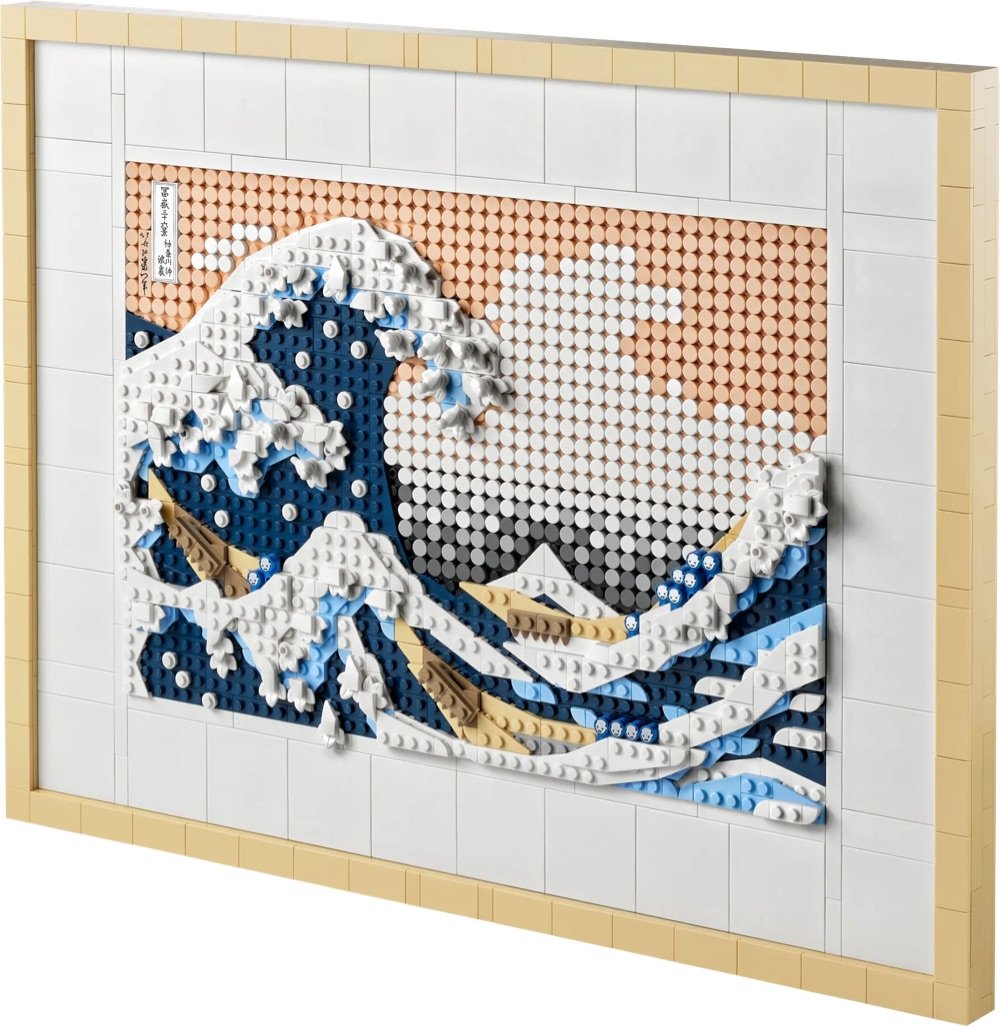
As part of the company’s effort to get more adults building with bricks, LEGO has released an 1810-piece set based on Hokusai’s The Great Wave Off Kanagawa. Here’s the only problem: it’s sold out online (and on Amazon as well). Perhaps you can find one at your local toy store?
If you were lucky enough to procure a set, Lego has produced an 85-minute audio piece about The Great Wave that you can listen to while you’re putting it together. The piece includes interviews with woodblock printer David Bull, Alfred Haft, curator of Japanese Art at the British Museum, and anime & manga scholar Susan Napier. Very cool.
How Spider-Verse Is Leading the Shift Away from “The Pixar Look”
When Spider-Man: Into the Spider-Verse came out in 2018, it had a very different look than most other animated feature-length films. Since the release of Toy Story in the mid-90s, digitally animated films made by the large studios had taken their cues from Pixar. “The Pixar Look” was “extremely high quality, physically based, and in some cases almost photorealistic”. Spider-Verse introduced a different style and since then, digital animation studios have been experimenting with non-photorealism. This video looks at how that shift is happening.
The Best Movie Posters of 2022


It feels weird to admit this, even to myself, but maybe I love movie poster design even more than I love book cover design. After running across Daniel Benneworth-Gray’s list of his favorite movie posters of 2022 (via his newsletter), I found some more best-of lists — Mubi, Indiewire, Collider, The Playlist, First Showing, The Film Stage — and selected a few of my favorites to include here. I couldn’t decide between the different versions of the posters for White Noise and Everything Everywhere All at Once, so I included both of each. *shrug*
Whoa, remember the early iOS game Flight Control? One of the first viral games on the platform – for a few months there, it seemed like everyone w/ an iPhone was playing it.
The exciting sport of NBA basketball. But sure, soccer is boring.
In Perfect Unison
Jon Lefkovitz has created a video montage of moments from movies and TV where characters “do or say the same thing at the same time”. As you might imagine, it’s a little bit mesmerizing.
This reminded me of Synchronized Basketball.
A tour of the various doors at Antarctica’s McMurdo Station. “This is not a master-planned community. Rather, it is a series of organic responses to evolving operational needs.”
A Beautiful Typographic Mini Golf Game
As a former mini-golf champion, I am completely charmed by Alphaputt, an mini golf iOS game where the courses are shaped like letters of the alphabet.
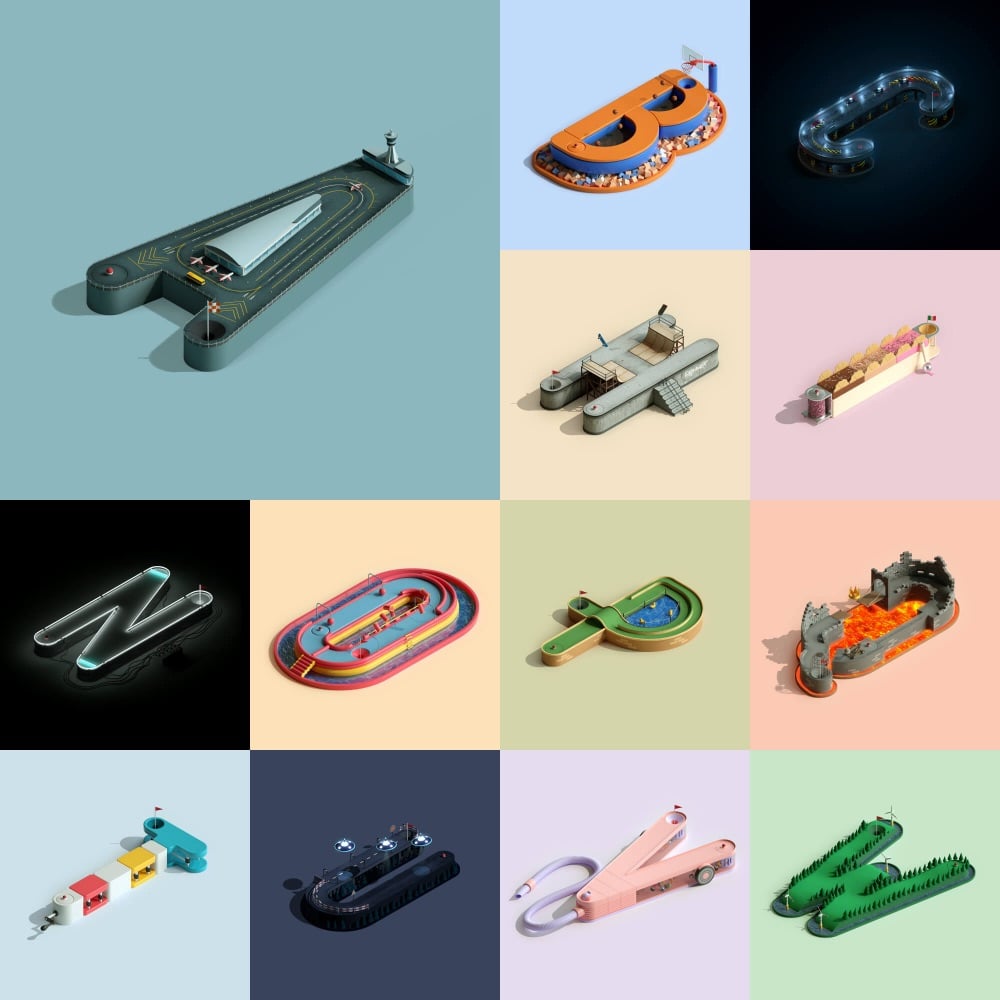

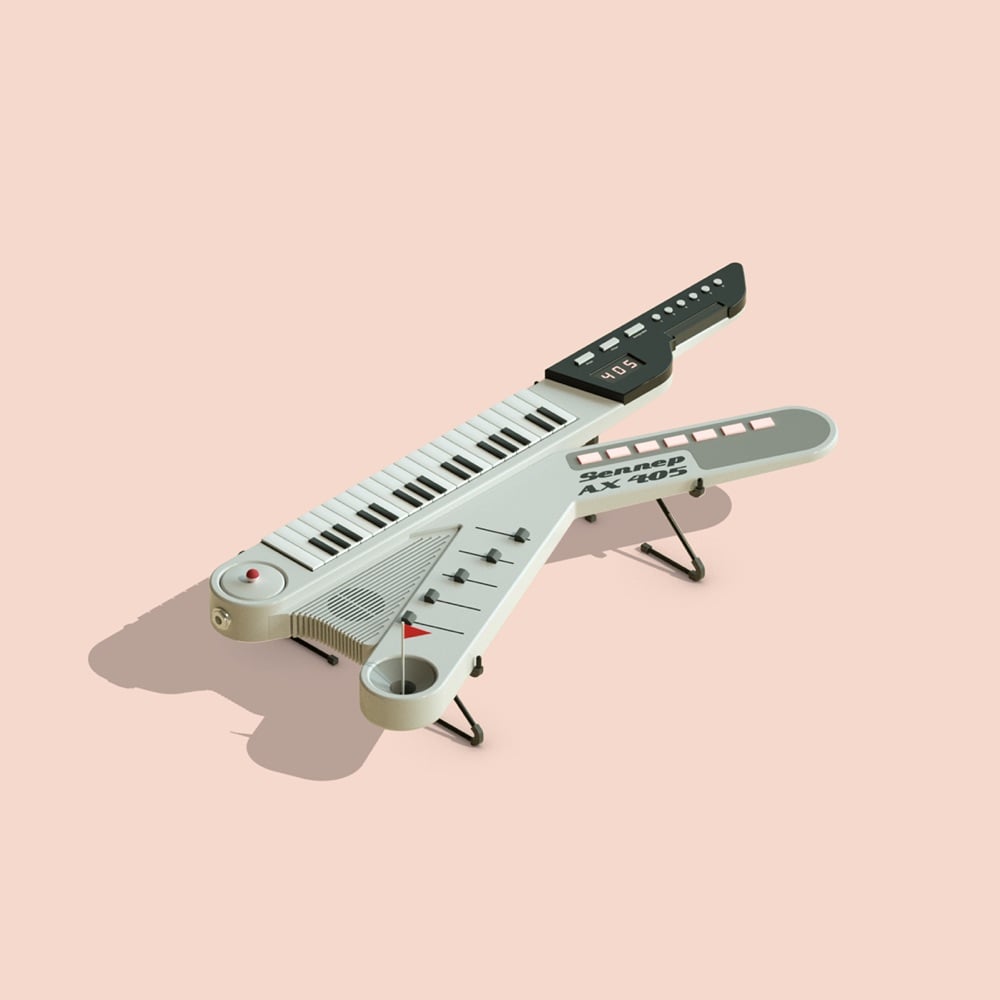
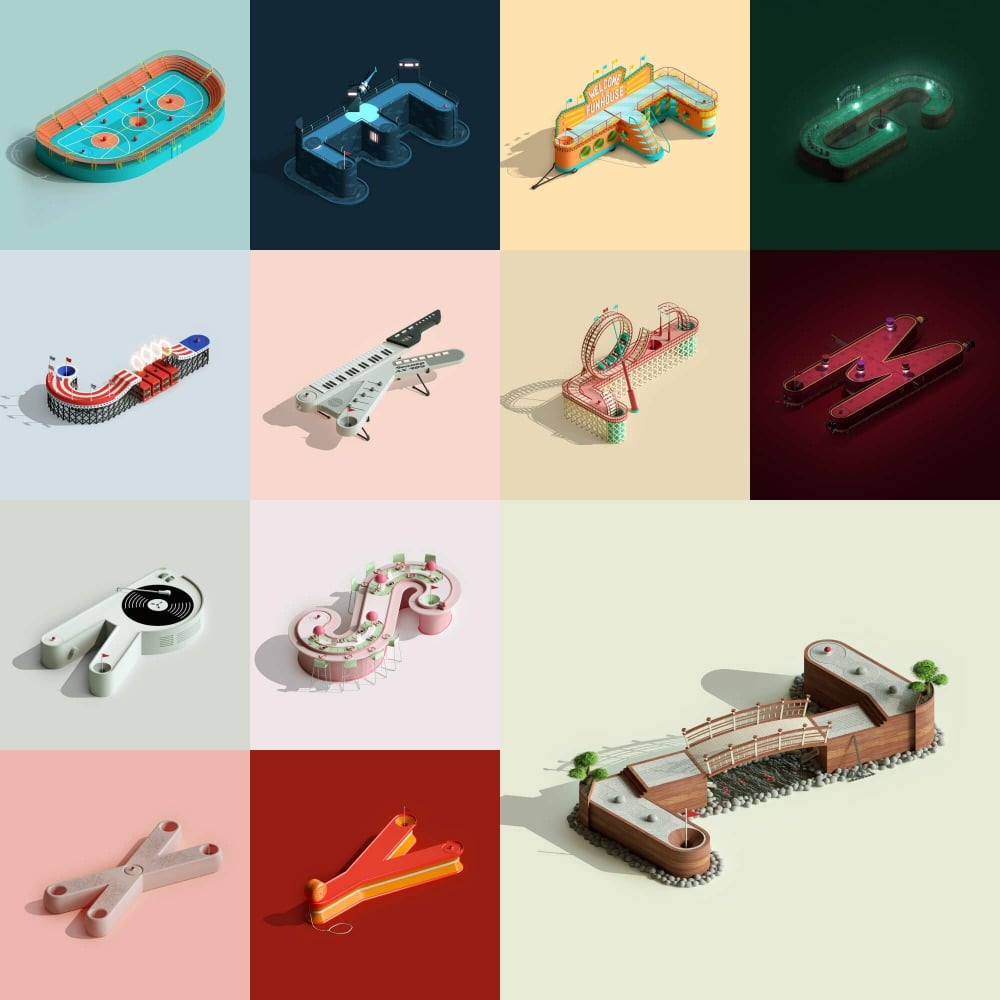
You can play through the alphabet or play a customized course by typing out a word (come on, that’s pretty cool). (via colossal)
Two Scott Stallings, a UPS mixup, and a misdirected Masters invite. “That’s how a 60-year-old with no professional golf experience found himself with an invitation to play in the Masters.”
Pop-Up Magazine has come to an end. “Live audiences were starting to return. A profitable, self-sustaining future was in sight. But we don’t have enough money in the bank to make it.”
Out of Sight
After her guide dog runs off after a thief who takes her bag, a girl navigates a world guided by her powerful senses of touch, hearing, and smell. Super charming and inventive. From the YouTube comments:
For those who don’t know, blind people will clap their hands and listen for the echo to get a sense of how big a space they are in, if it’s wide open or a tightly enclosed space.
(via peterme)
Are Golf Carts the Future of Urban Transportation?
Back in August, David Zipper wrote an interesting piece for Slate arguing that urban areas should embrace smaller personal transportation options, like the golf cart.
Learnard said that most residents still commute by car, but that the carts have replaced automobiles for many short trips to a restaurant, school, or friend’s house. “Golf carts are a quintessential part of the quality of life here,” she said. “You put the family in a golf cart and go to the park or the splash pad. Or you go out for ice cream, or with your spouse to get a cocktail.” The golf carts have proved popular with teenagers; many use them to get to and from high school. Residents frequently personalize their vehicles with souped-up radios and jerry-rigged storage. “It turns out you can do a lot with a couple milk crates and bungee cords,” Learnard said.
With palpable enthusiasm, she reeled off a list of golf carts’ advantages over cars: They provide accessibility for residents who aren’t able to drive; they enable local shops to expand parking capacity (golf cart spots are significantly smaller than those for cars); the electric models are quiet and don’t pollute. She is even convinced that they have made her town friendlier. “If you’re on your golf cart and you see your neighbor doing yardwork, you’re going to pull over and chat,” she said. “You’re never going to do that if you’re in a car.”
Bikes and ebikes share many of these advantages and infrastructure built for bikes can often be used for carts and vice versa. Zipper followed up with a recent thread on how he saw golf carts being used in The Villages, FL and Peachtree City, GA.
The weather was awful when I stopped by The Villages, a fast-growing 60+ community in central Florida, but I still saw a ton of golf carts.
Put up some plastic sheets, and you’re protected from the rain.
The Villages was designed for golf carts; they can be life savers for those otherwise unable to drive.
Many roads have separated golf cart paths, and local streets are slow (with many roundabouts) so golf carts comfortably mix with car traffic.
What’s happened so far to the people who have cryogenically preserved themselves for later reanimation? “The first ‘cryonauts’ met gruesome fates. A few of them decomposed into a ‘plug of fluids’ and were scraped off the bottom of a capsule.”
You Suck at Cooking
This YouTube channel has been going for seven years and 150 episodes now but I just recently ran across it via Open Culture: You Suck at Cooking. The emphasis here is on being dryly funny while cooking but the actual techniques are solid as well. If you follow their advice — well some of it anyway — you will get a tasty loaded baked potato or smashburger:
Update: I no longer mix things, I wangjangle them together.
See also The Katering Show and Hilarious Recipe Videos in the Style of Famous Directors.
“Room tone” recordings help sound editors create seamless edits but are kind of funny/awkward to observe. Daniel Reis made a short film out of these silent moments from Criterion Collection interviews (w/ Spike Lee, Coens, etc.)
Ariel Waldman’s forthcoming book is called Out There: The Science Behind Sci-Fi Film and TV. “Explore the science behind some of your favorite popular science fiction tropes – from escaping a black hole to riding a space elevator to the stars.”
Winners of the 2022 BigPicture Natural World Photography Competition


The annual BigPicture Natural World Photography Competition put on by the California Academy of Sciences has announced the winners of the 2022 competition. As usual, I have selected a few of my favorites and included them above; photos by Karine Aigner, Jens Cullmann, Jose Grandio, Sitaram Raul, and Sergio Tapia.
How to Grow Old by Bertrand Russell. Of his elderly grandmother, he said, “I do not believe that she ever had time to notice that she was growing old. This, I think, is the proper recipe for remaining young.”
Some Design Notes
Hey folks. One of the things I realized coming back here after my time away is that I’m not super happy with how the site works & looks. It could be *waaay* better. The last time I fully redesigned the site was back in 2016 and it’s showing its age. But redesigning the whole shebang just isn’t feasible right now, so I’m starting to do what I can, here and there. First up is taking the Quick Links out of their front page box (the 10 latest links were collected below the first post) and inlining them into the main flow. (If you’re reading this in RSS or clicked through from social media, you can head to the front page to see what I’m on about.) The Quick Links represent a lot of the site’s present activity and I was worried they were a little lost down there in that box…like, were people actually reading them? Were they even aware of the existence of the Quick Links? Were they missing 40-60% of the site’s total activity? That felt like something that needed to be addressed without delay.
It’s not a perfect solution, I’m still not happy with how it works, and the whole thing is slightly inconsistent/janky in terms of design (e.g. multiple people have told me the inlined Quick Links look like ads), but I felt it was more important just to get something out there. There is a much better version of the kottke.org frontpage in my head, but as my art director (i.e. me) is currently 100% focused on editorial, it’s going to have to wait. Feedback is welcome via email, Twitter, or Mastodon. Thanks!
Now that some AI can help you write, research, make music, and design things faster, what’s next? “If you’re trying to get through your work as quickly as you can, then maybe you should see if you can find a different line of work.”
The Originals: A Short Film About Bygone Brooklyn
This is delightful: a group of five friends who grew up on a predominantly Italian block of Union St. in Brooklyn reminisce about their childhood and the neighborhood in this animated video.
Imagine a whole block where 75-80% of the kids spoke Italian. We all lived there.
A lot of families were first generation Italians in America. Everybody was poor.
It was an open concept where, in the evening, the mothers and the grandmothers would take their chairs, sit outside, while we’re playing in the street. People were out the window watching their kids from the fourth floor. It was tight-knit.
And whenever a stranger walked on the block, like the whole block knew that there was a stranger on the block. That’s how tight-knit it was.
We’ve been together since, forget about it, since we were infants. Like brothers. Paisanos.
The names of the games they played in the street are amazing; I’ve only actually heard of a couple of these: stoopball, cracktop, red light green light one-two-three, ringolevio, buck buck, old mother witch, slapball, skelsies, boxball, stick ball, and hot peas & butter. The rules for hot peas & butter, which Eddie Murphy remembers playing as a kid:
It involved a long leather belt with a sharp edge. As kids gathered on the stoop or base, one person was selected from the group to hide the belt in our community’s parking lot. The belt was usually tucked away in a car bumper or under a loose hubcap or something.
After hiding it, the child returned to base and said, “Hot peas and butter, come and get your supper!” With that call, dozens of eager children ventured out to find the belt. The person who hid it constantly screamed who’s “hot” or near the belt and who’s “cold” or far away from it. This could go on for 15 even 20 minutes, and then the climax! The person who located the belt got to whip and thrash every child until they ran hurriedly back to base.
When I was a kid, we played a game with a homophobic name where one kid would have the football and the rest of us would try to take it from them using any means necessary; it was a violent version of keep-away. Being a small bookish sort, I don’t think I ever got the football and if I did, I threw it down the second anyone got close.
Anyway, back to the video…it’s really charming; here’s how it was produced.
The result is a vivid film that plays out on an intricately detailed model of a single block of brownstone Brooklyn. The childhood friends, now in late middle age, remember not just the games they played but also the prevalence of organized crime that shaped the neighborhood, and, to some degree, their own lives. And they talk, of course, about how the neighborhood has changed, laughing about the influx of “yuppies” who don’t return hellos on the street.
Trailer for The 1619 Project TV Series
Hulu and the NY Times are teaming up to bring Nikole Hannah-Jones’ The 1619 Project to television.
In keeping with the original project, the series seeks to reframe the country’s history by placing the consequences of slavery and the contributions of Black Americans at the very center of our national narrative. The episodes — “Democracy,” “Race,” “Music,” “Capitalism,” “Fear,” and “Justice” — are adapted from essays from The New York Times No. 1 bestselling “The 1619 Project: A New Origin Story” and examine how the legacy of slavery shapes different aspects of contemporary American life.
The six-episode limited series will premiere January 26 on Hulu.
Wow, check out this amazing website for Shift Happens, Marcin Wichary’s forthcoming book on keyboards. If the book is even half as cool as the site…
Socials & More