Entries for June 2017


For places that people go to immerse themselves in books, libraries sure do try to steal the show sometimes. For his photo series on libraries, Thibaud Poirier travelled to a number of libraries in Europe and took photos of them while empty.
“Reading is solitude,” Italo Calvino once said, embodying the inspiration behind this series. These temples of cultural worship gather communities, and yet the literary experience, and therefore the experience of a library, remains solitary. Giving groups of scholars and peers glimpses into the past, present and future of humanity, literature offers an unparalleled opportunity to explore one’s self from within through the unique internal narrative that each reader develops. It is this internal narrative that forms us when we are young, matures with us, and grows when we feed it. It was the first means of travel offered to many and continues to be the most accessible form of escape for millions of people seeking knowledge, the world, themselves. It is with an eye towards this improbable bled of public space and private experience that Poirier displays some of the finest libraries, both classical and modern, across Europe.
Ever since Colossal linked to them before the weekend, I’ve been stealing glances at these trying to pick a favorite. I can’t, they’re all so good.
Sometimes in a movie, a character will say the name of the movie. This is a supercut of 150 examples of title dropping from movies like The Right Stuff, Free Willy, Chinatown, Back to the Future, Full Metal Jacket, Con Air, and a bunch of Bond films.
Update: Paul Thomas Anderson talked about film titles on Fresh Air several years ago:
I had a friend who…any time he went to see a film and the title of the film was said onscreen he would scream out this horrible obnoxious noise, he would say “buk-CAW!” really loud.
Update: In the late 80s and early 90s, Penn Jillette did a movie night in NYC and there were rules. One of them was responding to film titles:
If the title of the movie is mentioned in the movie, it is always greeted by Movie Night people with polite applause. I’m still not clear as to how that custom began, but I do know that it leads to a lot of applause in a movie like “Wall Street.”
And if the title of another film is mentioned, that leads to a different reaction:
Whenever the title of another film was mentioned in the dialogue (as in, “I don’t want to be home alone tonight”), everybody whispered, “Wow.”
That EW piece also mentions a 12-year-old kid who shows up to Movie Night named Nick Jarecki, who has to be director Nicholas Jarecki (brother of Andrew Jarecki, director of Capturing the Friedmans and Jinx, the HBO doc about Robert Durst). (via @fortybillion)
For a short video called The Selfish Gene, director Smriti Keshari cut together a number of divers jumping and spinning and falling in mid-air. The result is a little bit mesmerizing and a little bit soothing. See also Ten Meter Tower.
Sports superstars are staying superstars longer than ever before. Sure, there have been outliers before (Kareem Abdul-Jabbar, Ted Williams) but increasingly the best players in the major sports are veterans fighting off the ravages of time: Tom Brady, Roger Federer, Cristiano Ronaldo, Gianluigi Buffon, Zlatan Ibrahimovic, Aaron Rodgers, etc.
When players perform at such a high level for so long, we no longer get sick of them. Instead, they become such an ever-present part of sports culture that many of us can’t help but love them. Buffon was launched to superstardom in 2006, when, perhaps already the best goalkeeper in the world, he was one of the faces of a then-unlikable Italian team that controversially made their way to winning the World Cup. Now he probably has a near-100-percent approval rating — still saving enough shots, winning enough games and doing enough stunts to earn it. Ronaldo became a worldwide name after replacing Beckham in the no. 7 shirt for Manchester United and doing a bunch of stepovers. He was unpopular with a segment of English fans for his entire stay in the Premier League; they viewed him as having an overly precious playing style in a game that was supposed to be anything but. Even upon his 2009 departure to Madrid, which came after he delivered every major trophy to Manchester, Ronaldo was mocked for, as this Telegraph headline put it, being a preening peacock: England would miss his footballing talents but not “the theatrics, the astonishing self-regard.”
But if you hang around long enough, you begin to earn a grudging respect from everyone who isn’t a Barcelona fan. If you have closely watched the last decade-plus of Ronaldo, Buffon, Messi, and Zlatan and not seen a play in which you learned to love them, then you haven’t really watched them.
Interesting observation, but I would have liked to read more about why…the piece only quickly mentions “modern training methods [and] technology”. Training and technology have made it possible to blend the energy & power of youth with the wisdom gained through experience, and it’s a potent combination.
P.S. A round of applause for writer Kevin Clark for the line: “It is possible that Ronaldo cannot pass the Turing test.”
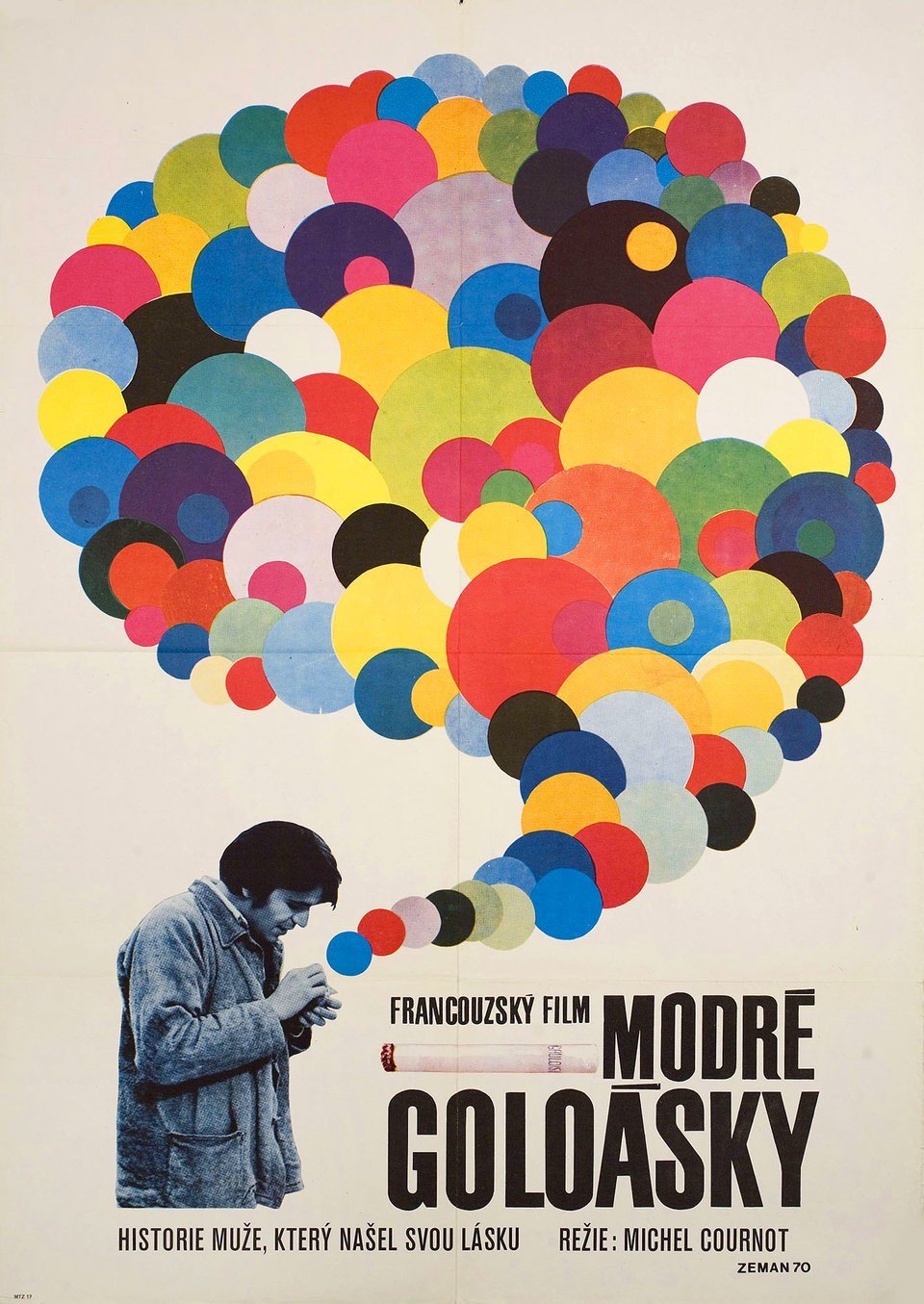
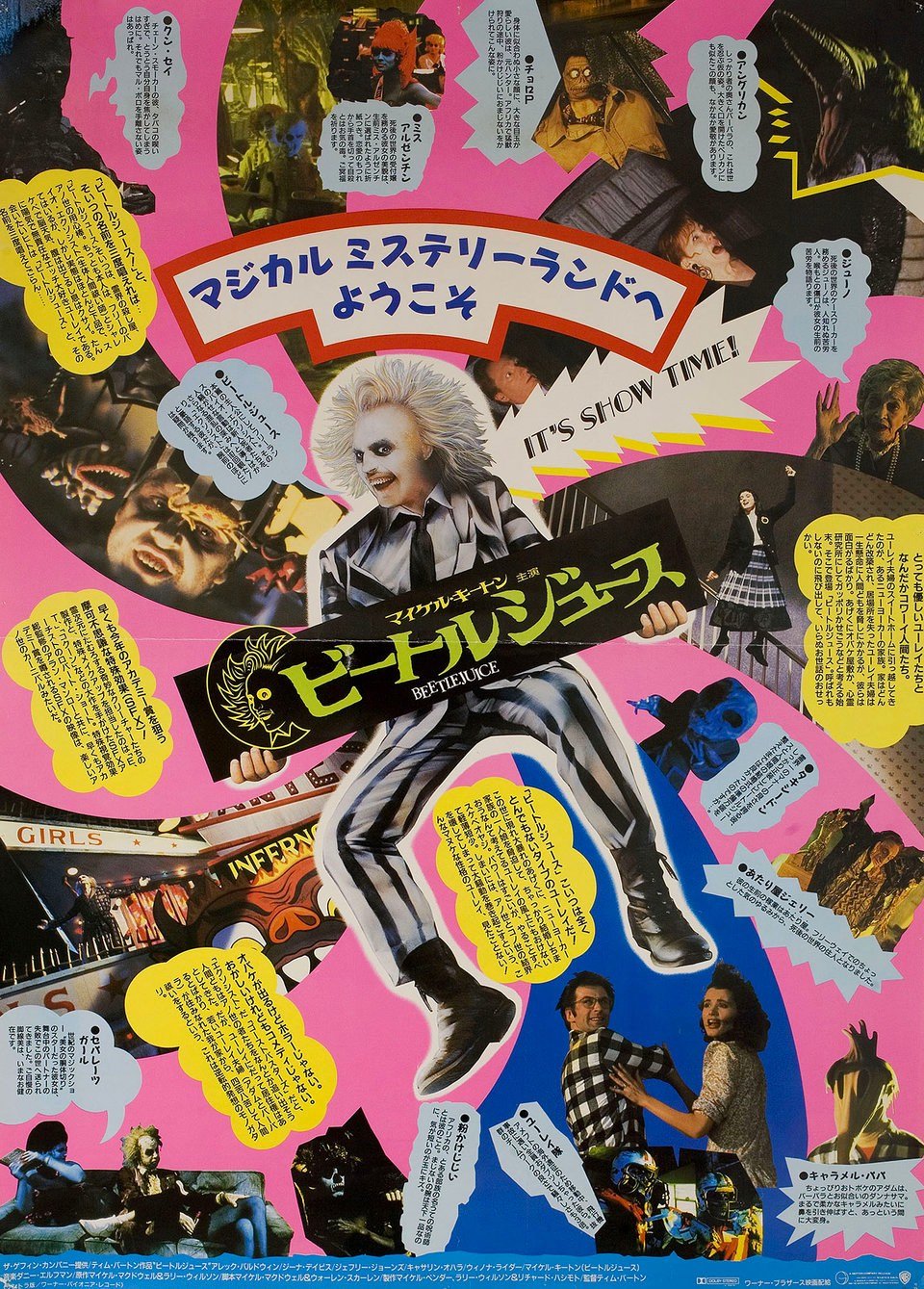

Posteritati is a New York movie poster store/gallery that also has an online store featuring more than 40,000 posters. You can view posters by director, year, country of origin, genre, size, and more. Some of the posters are very old, rare, and valuable: Some Like It Hot ($3,000), Lolita ($1,200), and Star Wars ($1,500). And wow, a 1933 Argentinian poster for King Kong for $75,000.
The three posters pictured above are a 1970 Czech poster for Les gauloises bleues, a 1988 Japanese poster for Beetlejuice, and a 1980 Polish poster for Alien.

Chelsea Marshall and Mary Dauterman are coming out with a satirical children’s book called What Are We Even Doing With Our Lives?. It’s Richard Scarry’s Busy, Busy Town crossed with HBO’s Silicon Valley.
Welcome to “Digi Valley,” the epitome of twenty-first-century urban life! The animal-people who call it home do cool things: life coach, cat landlord, baby DJ teacher, app developer, iPhone photographer, new media consultant, beauty blogger, and, of course, freelancer. On the street, in the coffee shop, at the farmer’s market, or the local vegan cafe, you’ll meet new friends like Frances and Sadie, Freelance Frank, Realtor Rick, and Bethany the Beauty Blogger as they bike, drive, bus, hoverboard, and Uber their way around town-or just sit and enjoy a latte while doing important things on their devices.
This is good, but surely this book owes a debt to the prior art of Ruben Bolling and Business Business Town?
This new video by Kurzgesagt examines automation in the past (“big stupid machines doing repetitive work in factories”) and argues that automation in the information age is fundamentally different. In a nutshell,1 whereas past automation resulted in higher productivity and created new and better jobs for a growing population, automation in the future will happen at a much quicker pace, outpacing the creation of new types of jobs for humans.
Their two main sources for the video are Martin Ford’s Rise of the Robots and The Second Machine Age by Erik Brynjolfsson and Andrew McAfee.

Environmentalist and entrepreneur Paul Hawken has edited a book called Drawdown: The Most Comprehensive Plan Ever Proposed to Reverse Global Warming which lists “the 100 most substantive solutions to reverse global warming, based on meticulous research by leading scientists and policymakers around the world”.
In the face of widespread fear and apathy, an international coalition of researchers, professionals, and scientists have come together to offer a set of realistic and bold solutions to climate change. One hundred techniques and practices are described here-some are well known; some you may have never heard of. They range from clean energy to educating girls in lower-income countries to land use practices that pull carbon out of the air. The solutions exist, are economically viable, and communities throughout the world are currently enacting them with skill and determination. If deployed collectively on a global scale over the next thirty years, they represent a credible path forward, not just to slow the earth’s warming but to reach drawdown, that point in time when greenhouse gases in the atmosphere peak and begin to decline.
On the website for the book, you can browse the solutions in a ranked list. Here are the 10 best solutions (with the total atmospheric reduction in CO2-equivalent emissions in gigatons in parentheses):
1. Refrigerant Management (89.74)
2. Wind Turbines, Onshore (84.60)
3. Reduced Food Waste (70.53)
4. Plant-Rich Diet (66.11)
5. Tropical Forests (61.23)
6. Educating Girls (59.60)
7. Family Planning (59.60)
8. Solar Farms (36.90)
9. Silvopasture (31.19)
10. Rooftop Solar (24.60)
Refrigerant management is about replacing hydro-fluorocarbon coolants with alternatives because HFCs have “1,000 to 9,000 times greater capacity to warm the atmosphere than carbon dioxide”. As a planet, we should be hitting those top 7 solutions hard, particularly when it comes to food. If you look at the top 30 items on the list, 40% of them are related to food.
If, somehow, we could get to a place where we are talking about dealing with climate change not as “saving the planet” (which it isn’t) but as “improving humanity” (which it is), we might actually be able to accomplish something.
In 2012, Michael Lewis gave a commencement speech at Princeton University, his alma mater. In the speech, Lewis, the author of Liar’s Poker, Moneyball, and The Big Short, talks about the role of luck in rationalizing success. He tells the graduates, the winners of so many of life’s lotteries, that they “owe a debt to the unlucky”. This part near the end is worth reading even if you skip the rest of it.
I now live in Berkeley, California. A few years ago, just a few blocks from my home, a pair of researchers in the Cal psychology department staged an experiment. They began by grabbing students, as lab rats. Then they broke the students into teams, segregated by sex. Three men, or three women, per team. Then they put these teams of three into a room, and arbitrarily assigned one of the three to act as leader. Then they gave them some complicated moral problem to solve: say what should be done about academic cheating, or how to regulate drinking on campus.
Exactly 30 minutes into the problem-solving the researchers interrupted each group. They entered the room bearing a plate of cookies. Four cookies. The team consisted of three people, but there were these four cookies. Every team member obviously got one cookie, but that left a fourth cookie, just sitting there. It should have been awkward. But it wasn’t. With incredible consistency the person arbitrarily appointed leader of the group grabbed the fourth cookie, and ate it. Not only ate it, but ate it with gusto: lips smacking, mouth open, drool at the corners of their mouths. In the end all that was left of the extra cookie were crumbs on the leader’s shirt.
This leader had performed no special task. He had no special virtue. He’d been chosen at random, 30 minutes earlier. His status was nothing but luck. But it still left him with the sense that the cookie should be his.
This experiment helps to explain Wall Street bonuses and CEO pay, and I’m sure lots of other human behavior. But it also is relevant to new graduates of Princeton University. In a general sort of way you have been appointed the leader of the group. Your appointment may not be entirely arbitrary. But you must sense its arbitrary aspect: you are the lucky few. Lucky in your parents, lucky in your country, lucky that a place like Princeton exists that can take in lucky people, introduce them to other lucky people, and increase their chances of becoming even luckier. Lucky that you live in the richest society the world has ever seen, in a time when no one actually expects you to sacrifice your interests to anything.
All of you have been faced with the extra cookie. All of you will be faced with many more of them. In time you will find it easy to assume that you deserve the extra cookie. For all I know, you may. But you’ll be happier, and the world will be better off, if you at least pretend that you don’t.
You can watch Lewis’ speech as delivered on YouTube:
I wonder if hearing that moved the needle for any of those grads? I suspect not…being born on third base thinking you hit a triple is as American as apple pie at this point. (via @goldman)

The oldest known fossils of homo sapiens have been found in Morocco. The bones date back to ~300,000 years ago, more than 100,000 years earlier than previous fossils found. Here’s Carl Zimmer reporting for the NY Times about the paper in Nature:
Dating back roughly 300,000 years, the bones indicate that mankind evolved earlier than had been known, experts say, and open a new window on our origins.
The fossils also show that early Homo sapiens had faces much like our own, although their brains differed in fundamental ways.
Until now, the oldest fossils of our species, found in Ethiopia, dated back just 195,000 years. The new fossils suggest our species evolved across Africa.
“We did not evolve from a single cradle of mankind somewhere in East Africa,” said Phillipp Gunz, a paleoanthropologist at the Max Planck Institute for Evolutionary Anthropology in Liepzig, Germany, and a co-author of two new studies on the fossils, published in the journal Nature.
The previous oldest fossils were found clear across the continent in Ethiopia, in eastern Africa. From a New Yorker article on the discovery:
And the specimens in question were found not in East Africa, which has become synonymous with a sort of paleoanthropological Garden of Eden, but clear on the other side of the continent — and the Sahara — in Morocco. “We’re not claiming that Morocco is the cradle of modern humankind,” the lead author, Jean-Jacques Hublin, of the Max Planck Institute for Evolutionary Anthropology, said at a press conference yesterday. Rather, he added, our emergence as a species was pan-African. “There is no Garden of Eden in Africa — or if there is, it’s Africa,” Hublin said. “The Garden of Eden is the size of Africa.”
Quick reviews of some things I’ve read, seen, and heard in the past few weeks. Come on now, don’t take the letter grades so seriously.
The Wright Brothers. A surprising amount of what you’ve heard about the Wright Brothers is wrong. David McCullough sets the record straight. (B+)
Shake Shack: Recipes & Stories. I really wish I could get Martin’s Potato Rolls in Vermont. (B+)
Steal Like an Artist: 10 Things Nobody Told You About Being Creative. A good book to have around when you need a creative kick in the pants. (B+)
King Arthur: Legend of the Sword. I wasn’t even going to see this, but the power went out in my house for three hours due to a 45-second wind/rain storm, so I went to the movies. It is exactly what you’d expect from a medieval action movie directed by Guy Ritchie, and I left entertained. (B-)
Alien: Covenant. More entertaining and felt more like an Alien movie than Prometheus. Why are the people so stupid though? (B)
Lemonade. Still great. (A+)
Mad Men. I rewatched all seven seasons in just under three months. The middle part lagged in places, but the final seasons were as strong as the first seasons. IMO, Mad Men is among the best ever TV shows. (A+)
Passengers. J. Law and Chris Pratt stranded together in space? Yes, please. But the filmmakers should have found a way around the stalker plot point…it was unnecessarily disturbing and uninteresting. (B-)
Moana. Long-time readers might remember Pamie, one of the most well-known OG online diarists from the late 90s. I noticed her name in the credits…she co-wrote screenplay. Also, I was not the only person to immediately think of Beyonce when I saw Te Fiti. (A-)
The Keepers. Disturbing in more ways than one and well worth watching. (B+)
The Americans. The fifth season did not quite live up to the high standard of the previous seasons. (B)
She Persisted. The day this arrived, my daughter cracked this open and said, delighted, “Harriet Tubman!” (A-)
Emotions Part One of Invisibilia. The classical view is that emotions happen to you. But according to guest Lisa Feldman Barrett, “the way emotion works is opposite of what you think — emotions aren’t reactions to the world; emotions actually construct the world”. See also Barrett’s recent book How Emotions Are Made. (B+)
Sgt. Pepper’s Lonely Hearts Club Band remix album. This sounds like a whole new record. As Sippey says, “now you can simply, finally, hear it”. (A)
Zodiac. Some say this is Fincher’s best film. Not sure I would, but it’s damned fine. (A-)
Wonder Woman. I would happily watch 100 sequels to this. (A-)
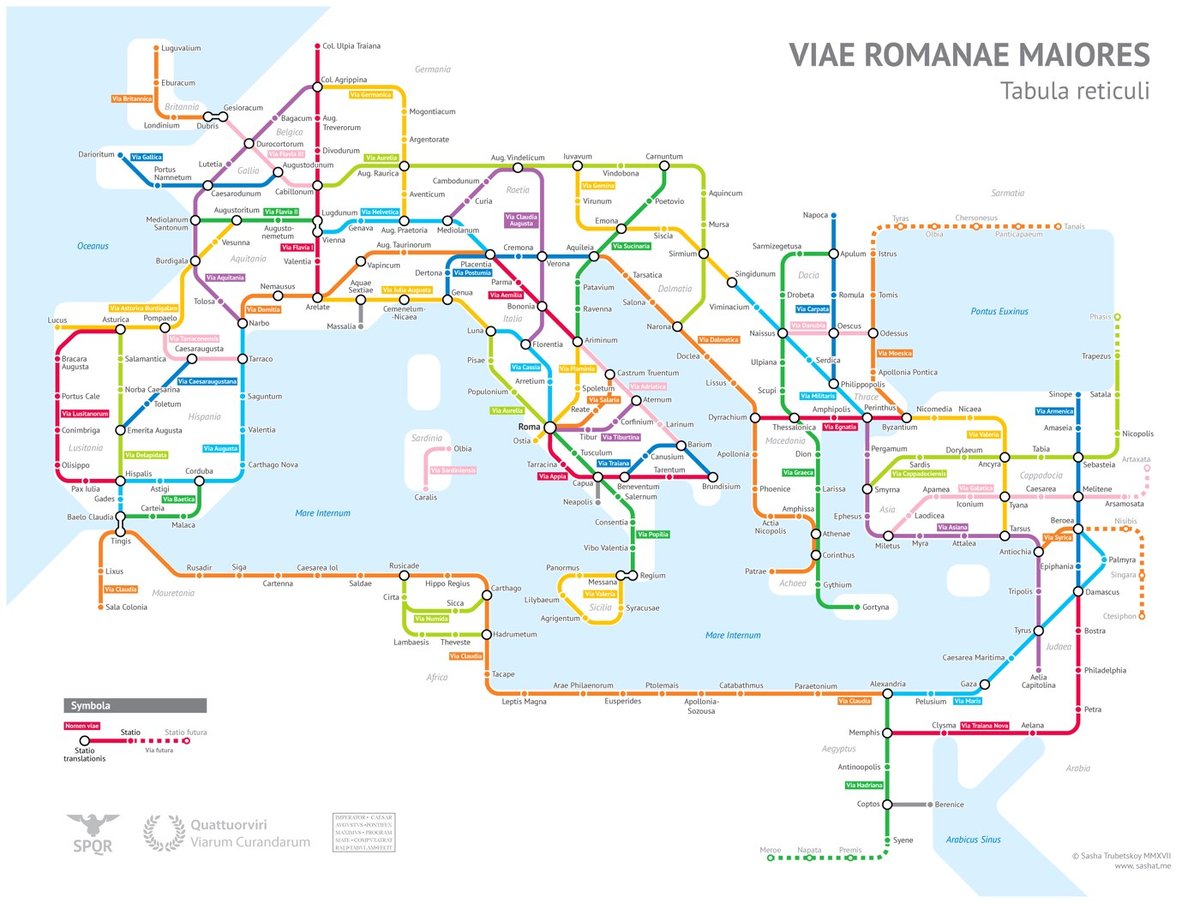
After much research, Sasha Trubetskoy has completed a subway-style map of the road system of the Roman Empire. From about 300 BC, the Romans built or improved over 250,000 miles of roads (50,000 miles were stone paved) that extended into the farthest reaches of the Empire: from Spain to modern-day Iraq to Britain to northern Africa.
Creating this required far more research than I had expected — there is not a single consistent source that was particularly good for this. Huge shoutout to: Stanford’s ORBIS model, The Pelagios Project, and the Antonine Itinerary (found a full PDF online but lost the url).
The lines are a combination of actual, named roads (like the Via Appia or Via Militaris) as well as roads that do not have a known historic name (in which case I creatively invented some names). Skip to the “Creative liberties taken” section for specifics.
(via @zachklein)
Judi Dench playing a British monarch? I’m there. Victoria & Abdul is based on the true story of the friendship that developed between Queen Victoria and a young Indian named Abdul Karim during the Queen’s later years.
When Abdul Karim (Ali Fazal), a young clerk, travels from India to participate in the Queen’s Golden Jubilee, he is surprised to find favor with the Queen herself. As the Queen questions the constrictions of her long-held position, the two forge an unlikely and devoted alliance with a loyalty to one another that her household and inner circle all attempt to destroy. As the friendship deepens, the Queen begins to see a changing world through new eyes and joyfully reclaims her humanity.
Karim was also Muslim, which makes this movie all the more relevant today. In 2012, Channel 4 aired a short documentary about the relationship called Queen Victoria’s Last Love:
(thx, meg)
This short video shows several ways in which systemic racism is still very much alive and well in the United States in 2017. See also Race Forward’s video series featuring Jay Smooth.
“What Is Systemic Racism?” is an 8-part video series that shows how racism shows up in our lives across institutions and society: Wealth Gap, Employment, Housing Discrimination, Government Surveillance, Incarceration, Drug Arrests, Immigration Arrests, Infant Mortality… yes, systemic racism is really a thing.
The reason why this matters should be obvious. Just like extra effort can harness the power of compound interest in knowledge and productivity, even tiny losses that occur frequently can add up to a large deficit. If you are constantly getting dinged in even small ways just for being black, those losses add up and compound over time. Being charged more for a car and other purchases means less life savings. Less choice in housing results in higher prices for property in less desirable neighborhoods, which can impact choice of schools for your kids, etc. Fewer callbacks for employment means you’re less likely to get hired. Even if you do get the job, if you’re late for work even once every few months because you get stopped by the police, you’re a little more likely to get fired or receive a poor evaluation from your boss. Add up all those little losses over 30-40 years, and you get exponential losses in income and social status.
And these losses often aren’t small at all, to say nothing of drug offenses and prison issues; those are massive life-changing setbacks. The war on drugs and racially selective enforcement have hollowed out black America’s social and economic core. There’s a huge tax on being black in America and unless that changes, the “American Dream” will remain unavailable to many of its citizens.
That’s the title of a forthcoming book edited by Cass Sunstein (Harvard professor, former Obama regulatory administrator). On Twitter, Sunstein says he’s the editor not the author and that the essays will “offer diverse views”. But by the time this book comes out in March 2018, we might already know the actual answer to the title’s question. (via @tylercowen)
From David Firth comes the story of Cream, a magical invention that’s poised to fix all of the world’s problems. Until… (via @faqsonly)
Storm-chasing photographer Mike Olbinski was recently taking photos of a storm in North Dakota close to sunset when asperitas clouds (aka undulatus asperatus clouds) appeared.
Undulatus asperatus clouds are a rare phenomenon and actually the newest named cloud type in over 60 years. I’ve seen tons of photos of them, but never anything like what we witnessed last night. We had a storm with hail in front of us and flashing lightning which was fantastic. But then we had this layer of undulatus clouds flowing across our view. Watching them was amazing already, but then the sun slowly appeared from behind some clouds to the west and lit up our storm like nothing we’ve ever seen before. We were like kids in a candy store.
Nature is ridiculous. More asperitas time lapse goodness here. (via bad astronomy)
Interesting observation: fish-out-of-water movies (e.g. Crocodile Dundee) have been replaced by superhero movies
How are some people more productive than others? Are they smarter or do they just work a little bit harder than everyone else? In 1986, mathematician and computer scientist Richard Hamming gave a talk at Bell Communications Research about how people can do great work, “Nobel-Prize type of work”. One of the traits he talked about was possessing great drive:
Now for the matter of drive. You observe that most great scientists have tremendous drive. I worked for ten years with John Tukey at Bell Labs. He had tremendous drive. One day about three or four years after I joined, I discovered that John Tukey was slightly younger than I was. John was a genius and I clearly was not. Well I went storming into Bode’s office and said, “How can anybody my age know as much as John Tukey does?” He leaned back in his chair, put his hands behind his head, grinned slightly, and said, “You would be surprised Hamming, how much you would know if you worked as hard as he did that many years.” I simply slunk out of the office!
What Bode was saying was this: “Knowledge and productivity are like compound interest.” Given two people of approximately the same ability and one person who works ten percent more than the other, the latter will more than twice outproduce the former. The more you know, the more you learn; the more you learn, the more you can do; the more you can do, the more the opportunity — it is very much like compound interest. I don’t want to give you a rate, but it is a very high rate. Given two people with exactly the same ability, the one person who manages day in and day out to get in one more hour of thinking will be tremendously more productive over a lifetime.
Thinking of life in terms of compound interest could be very useful. Early and intensive investment in something you’re interested in cultivating — relationships, money, knowledge, spirituality, expertise, etc. — often yields exponentially better results than even marginally less effort.
See also this metaphor for how cultural, technological, and scientific changes happen. (via mr)
Bob Dylan finally delivered his Nobel Prize lecture in the form of a video (you can also listen to it on Soundcloud). Over the course of just 27 minutes, he talks about his influences, both musical and literary, and muses on the differences and similarities between music and literature. Listening to the speech, instead of just reading the transcript, is well-worth your time, if only to experience Dylan’s lyrical delivery while exalting Buddy Holly or explaining Moby Dick.
If I was to go back to the dawning of it all, I guess I’d have to start with Buddy Holly. Buddy died when I was about eighteen and he was twenty-two. From the moment I first heard him, I felt akin. I felt related, like he was an older brother. I even thought I resembled him. Buddy played the music that I loved — the music I grew up on: country western, rock ‘n’ roll, and rhythm and blues. Three separate strands of music that he intertwined and infused into one genre. One brand. And Buddy wrote songs — songs that had beautiful melodies and imaginative verses. And he sang great — sang in more than a few voices. He was the archetype. Everything I wasn’t and wanted to be. I saw him only but once, and that was a few days before he was gone. I had to travel a hundred miles to get to see him play, and I wasn’t disappointed.
He was powerful and electrifying and had a commanding presence. I was only six feet away. He was mesmerizing. I watched his face, his hands, the way he tapped his foot, his big black glasses, the eyes behind the glasses, the way he held his guitar, the way he stood, his neat suit. Everything about him. He looked older than twenty-two. Something about him seemed permanent, and he filled me with conviction. Then, out of the blue, the most uncanny thing happened. He looked me right straight dead in the eye, and he transmitted something. Something I didn’t know what. And it gave me the chills.
I arrived late to Bob Dylan and I still haven’t investigated much of his music (relatively speaking), but listening to him talk about his musical and literary influences bleeding all over each other makes me want to go on a Dylan bender and create some shit. (thx, david)
Update: There’s evidence that Dylan based part of his Nobel speech on the SparkNotes study guide for Moby Dick.
Theft in the name of art is an ancient tradition, and Dylan has been a magpie since the 1960s. He has also frequently been open about his borrowings. In 2001, he even released an album titled “Love and Theft,” the quotation marks seeming to imply that the album title was itself taken from Eric Lott’s acclaimed history of racial appropriation, Love & Theft: Blackface Minstrelsy and the American Working Class.
Biggie, Nicki, Snoop, Wu-Tang, Biz Markie, Lil Kim, Public Enemy, Missy Elliott. In a video featuring 150+ songs from more than 100 artists, The Hood Internet has distilled 40 years of hip hop into a tight 4-minute video.
It’s not a chronological history of hip hop. It’s rappers from different eras finishing each other’s rhymes over intersecting beats, all woven together to make one song.
I just watched that three times in a row. Lots more Hood Internet in the archives…their last remix was a retrospective of the past 10 years of hip hop and indie music.
Resurfaced recently by Austin Kleon in his weekly newsletter, I missed this Nov 2016 list from Curbed of 101 books about where and how we live the first time around. The list is organized by category:
Urban Classics includes The Death and Life of Great American Cities*, The Works: The Anatomy of a City*, and Richard Scarry’s Busy, Busy Town*.
Why We Build features Geoff Manaugh’s A Burgler’s Guide to the City* and Building Stories* by Chris Ware.
Cities We Love includes Nonstop Metropolis: A New York City Atlas by Rebecca Solnit, A.J. Liebling’s Between Meals: An Appetite for Paris, and Make Way for Ducklings.
Changing Places highlights The Devil in the White City* by Erik Larson and The Levittowners: Ways of Life and Politics in a New Suburban Community by Herbert Gans.
Planning the Future includes Traffic: Why We Drive the Way We Do (and What It Says About Us)* by Tom Vanderbilt and Annalee Newitz’s Scatter, Adapt, and Remember: How Humans Will Survive a Mass Extinction.
Understanding People features Going Solo: The Extraordinary Rise and Surprising Appeal of Living Alone by Eric Klinenberg, Isabel Wilkerson’s The Warmth of Other Suns*, and Working by Studs Terkel.
And How We Live Today includes The Power Broker* and Robert Putman’s Bowling Alone.
I love the inclusion of Busy, Busy Town and Make Way for Ducklings. Books marked by an asterisk I have read or can otherwise personally vouch for. If I could recommend just one book to read from this list, it would be The Warmth of Other Suns.
Last week, journalist Jules Suzdaltsev wrote:
Just wanna make sure you all know there is a Russian handbook from 1997 on “taking over the world” and Putin is literally crossing shit off.
The book in question is The Foundations of Geopolitics: The Geopolitical Future of Russia by neo-fascist political scientist Aleksandr Dugin, whose nickname is “Putin’s Brain”. The book has been influential within Russian military & foreign policy circles and it appears to be the playbook for recent Russian foreign policy. In the absence of an English language translation, some relevant snippets from the book’s Wikipedia page:
The book declares that “the battle for the world rule of [ethnic] Russians” has not ended and Russia remains “the staging area of a new anti-bourgeois, anti-American revolution.” The Eurasian Empire will be constructed “on the fundamental principle of the common enemy: the rejection of Atlanticism, strategic control of the USA, and the refusal to allow liberal values to dominate us.”
The United Kingdom should be cut off from Europe.
Ukraine should be annexed by Russia because “Ukraine as a state has no geopolitical meaning, no particular cultural import or universal significance, no geographic uniqueness, no ethnic exclusiveness, its certain territorial ambitions represents an enormous danger for all of Eurasia and, without resolving the Ukrainian problem, it is in general senseless to speak about continental politics”.
The book stresses the “continental Russian-Islamic alliance” which lies “at the foundation of anti-Atlanticist strategy”. The alliance is based on the “traditional character of Russian and Islamic civilization”.
Russia should use its special services within the borders of the United States to fuel instability and separatism, for instance, provoke “Afro-American racists”. Russia should “introduce geopolitical disorder into internal American activity, encouraging all kinds of separatism and ethnic, social and racial conflicts, actively supporting all dissident movements — extremist, racist, and sectarian groups, thus destabilizing internal political processes in the U.S. It would also make sense simultaneously to support isolationist tendencies in American politics.”
Ukraine, Brexit, Syria, Trump, promotion of fascist candidates in European elections (Le Pen in France), support for fascism in the US…it’s all right there in the book. And they’ve done it all while barely firing a shot.
For the NY Times, Claire Cain Miller asked a panel of experts (including neuroscientists and psychologists) how to raise feminist sons. From the introduction:
We’re now more likely to tell our daughters they can be anything they want to be — an astronaut and a mother, a tomboy and a girlie girl. But we don’t do the same for our sons.
Even as we’ve given girls more choices for the roles they play, boys’ worlds are still confined, social scientists say. They’re discouraged from having interests that are considered feminine. They’re told to be tough at all costs, or else to tamp down their so-called boy energy.
If we want to create an equitable society, one in which everyone can thrive, we need to also give boys more choices. As Gloria Steinem says, “I’m glad we’ve begun to raise our daughters more like our sons, but it will never work until we raise our sons more like our daughters.”
One piece of advice is to encourage friendships with girls:
Research at Arizona State University found that by the end of preschool, children start segregating by sex, and this reinforces gender stereotypes. But children who are encouraged to play with friends of the opposite sex learn better problem-solving and communication.
“The more obvious it is that gender is being used to categorize groups or activities, the more likely it is that gender stereotypes and bias are reinforced,” said Richard Fabes, director of the university’s Sanford School, which studies gender and education.
Organize coed birthday parties and sports teams for young children, so children don’t come to believe it’s acceptable to exclude a group on the basis of sex, said Christia Brown, a developmental psychologist at the University of Kentucky. Try not to differentiate in language, either: One study found that when preschool teachers said “boys and girls” instead of “children,” the students held more stereotypical beliefs about men’s and women’s roles and spent less time playing with one another.
I’ve seen this segregation happen in school with both my kids and it drives me bananas.


For their playful Artisan Brunch project, Kyle Bean, Aaron Tilley, and Lucy-Ruth Hathaway imagined how noted artists like Damian Hirst, Salvador Dali, and Alexander Calder would incorporate the idea of brunch into their art works. Loved this, despite the conspicuous lack of a bloody mary…perhaps a second edition with a Warhol soup can representation of the bloody? (via colossal)
OK Computer is 20 years old and to mark the occasion, Radiohead is reissuing the album with three previously unreleased songs from that era (as well as eight B-sides). The album is now available for pre-order and will be released on June 23, but one of the unreleased songs, I Promise, is out now on Spotify, YouTube (see above) and elsewhere.
And now, a poem from my daughter.

To play
play
Play
Yes play!
So if i have not made that clear,
I will make it clear.
Play!
Have a good weekend, everyone.
It’s Friiiiiiiday! It’s time for — *fanfare* — 15 minutes of cooking tips and tricks? Yes, why not? Many of these I’ve seen before (like the sucking egg yolks with a plastic bottle trick), but I literally gasped at the rubber band measuring spoon trick. My current baking soda canister doesn’t have a spoon-scraping ledge (my old one did!) and it drives me a little crazy every time I make the world’s best pancakes. Anything that gets me to delicious pancakes quicker is a win. (via swissmiss, whose friday link pack is always worth a look)
Artist Jonas Lund is away on vacation. But in his stead, he’s left his Macbook Pro hard at work using Photoshop to create paintings related to work and vacation.
The computer will open Photoshop and start creating a painting. It will use an array of symbols, brushes, and shapes all, relating to the idea of vacation and its opposite — work. Once the painting has been completed, the software will upload it to the website awayonvacation.live and post it to the Artist’s Twitter and Facebook accounts.
Watch the livestream above or view some of the computer’s past creations:


Newer posts
Older posts







Socials & More