Entries for May 2016
When Grade-A nerds get together and talk about programming and math, a popular topic is P vs NP complexity. There’s a lot to P vs NP, but boiled down to its essence, according to the video:
Does being able to quickly recognize correct answers [to problems] mean there’s also a quick way to find [correct answers]?
Most people suspect that the answer to that question is “no”, but it remains famously unproven.
In fact, one of the outstanding problems in computer science is determining whether questions exist whose answer can be quickly checked, but which require an impossibly long time to solve by any direct procedure. Problems like the one listed above certainly seem to be of this kind, but so far no one has managed to prove that any of them really are so hard as they appear, i.e., that there really is no feasible way to generate an answer with the help of a computer.

According to this 2011 article on Mark Eaton and other 7-footers who have played in the NBA, there are only 70 American men between 20 and 40 who are 7 feet tall…and that more than 1 in 6 of them get to play in the NBA.
The curve shaped by the CDC’s available statistics, however, does allow one to estimate the number of American men between the ages of 20 and 40 who are 7 feet or taller: fewer than 70 in all. Which indicates, by further extrapolation, that while the probability of, say, an American between 6’6” and 6’8” being an NBA player today stands at a mere 0.07%, it’s a staggering 17% for someone 7 feet or taller.
Being seven feet tall is absurdly tall and comes with a whole host of challenges, from bumping one’s head on door frames to difficulty finding clothes to health issues. Some of these difficulties arise out of simple geometry: as height and width increase, volume increases more quickly.1
If you remember back more than 12 years ago1 to when Jared Tarbell created these beautiful Buddhabrot images using Processing, then you’ll enjoy this ultra high-resolution exploration of the Buddhabrot fractal.
This looked crazy cool on my 5K iMac. The render took 10 days! (via digg)
Not content with mere 3D, some movie theaters are outfitting themselves with what’s being called 4DX technology, which makes going to the movies more like a theme park ride. The chairs can move, vibrate, and tickle, and the system can also generate wind, lightning, snow, and even smells1 from the movie.
With only the best technologies, 4DX motion chairs are equipped with three base movements of heave (move up and down), roll (move left and right) and pitch (tilt backward and forward) which can create an endless expanse of possible combinations to mimic such actions as flying and driving. The skilled team of 4DX editors, “i-Studio”, are experts in maximizing the feeling of immersion within every movie without overstepping comfort bounds.
Yes, it actually snows in the theater:
There are only three theaters in the US with this system installed, including the Regal in Union Square, where you can currently catch Batman vs. Superman in 4DX. It’ll cost you though. A regular screening of BvS at Union Square is $15.60 per ticket, 3D is $20.10, and 4DX is $28.10.
In this video, Vox’s Estelle Caswell and Martin Conner break down how rappers construct their rhymes and how it’s changed and evolved since rap’s early days. As someone who doesn’t know a whole lot about music and even less about rapping but appreciates both, this was super entertaining and informative.
When it came out in December, Star Wars: The Force Awakens made a shed-load of cash, garnered positive reviews from critics and fans alike, but also got dinged for borrowing too much from the previous films, particularly the original. In this edition of Everything is a Remix, Kirby Ferguson considers JJ Abrams’ remix settings on The Force Awakens and wonders if the essential elements of such an undertaking (copying, transforming, combining) were properly balanced.
Werner Herzog has made more than 70 films during his career of 50+ years. This summer, Herzog will be teaching an online filmmaking class at Masterclass. The fee for the course is $90 and includes 5 hours of video lessons about documentary and feature filmmaking, a class workbook, and the chance to get your student work critiqued by the man himself. The trailer above offers a little taste of what you’ll be getting.
For example, I do not use a storyboard. I think it’s an instrument of the cowards.
See also 24 pieces of life advice from Werner Herzog, including “carry bolt cutters everywhere” and “take revenge if need be”.
Wes Copeland recently shattered the all-time record high score for Donkey Kong with 1,218,000 points. During the 3 hour and 20 minute game, he didn’t die a single time.
It’s how he took the title, though that’s so staggering. Copeland did not lose a single Mario in the game. He took his first life all the way from the first level all the way to the end, cashing in the extra lives to obliterate all comers.
“This will be my last record score,” Copeland wrote on Facebook. “I don’t believe I can put up a game any higher than this.” Copeland had set 1.2 million as his ultimate goal in Donkey Kong, and said he’d retire from competition if he could reach that.
Copeland’s effort was a nearly perfect score; though the theoretical maximum is 1,265,000 points, the randomness of each game limits the number of points available before reaching the kill screen. If you’re looking for pointers, you can watch the entire game here:
From the NY Times, the excellent Jenna Wortham on How I Learned to Love Snapchat. This bit caught my eye:
Its entire aesthetic flies in the face of how most people behave on Facebook, Instagram and Twitter — as if we’re waiting to be plucked from obscurity by a talent agent or model scout. But Snapchat isn’t the place where you go to be pretty. It’s the place where you go to be yourself, and that is made easy thanks to the app’s inbuilt ephemerality.
I wonder if Snapchat’s intimacy is entirely due to the ephemerality and lack of a “fave-based economy”. Blogs, Flickr, Twitter, Vine, and Instagram all started off as places to be yourself, but as they became more mainstream and their communities developed behavioral norms, the output became more crafted and refined. Users flooded in and optimized for what worked best on each platform. Blogs became more newsy and less personal, Flickr shifted toward professional-style photography, Vine got funnier, and Twitter’s users turned toward carefully crafted cultural commentary and link sharing. Editing worked its way in between the making and sharing steps. In 2013, Mat Honan wrote of Vine:
It built a ground up culture that feels loose, informal, and — frankly — really fucking weird. Moreover, most of what you see there feels very of-the-moment. Sure, there’s plenty of artistry that goes into making six second loops, and there are volumes of videos with high production values. But far more common are Vines that serve as windows into what people are doing right now.
Sounds familiar, right? I’m almost positive that when Instagram was first blowing up, similar things were written about it in comparison to Flickr. Now, as Wortham notes, Instagram is largely a place to put your heavily curated best foot forward. But scroll back through time on anyone’s Instagram and the photos get more personal and in-the-moment. Even Alice Gao’s immaculately crafted feed gets causal if you go back far enough.
Although more than a year older than Vine and fewer than two years younger than Instagram, Snapchat is a relatively young service that the mainstream is still discovering. It’ll be interesting to see if it can keep its be-yourself vibe or if users tending toward carefully constructing their output is just something that happens as a platform matures.

The Internet Archive is now hosting thousands of hours of hip-hop mixtapes. Jason Scott explains:
The code I had to write to pull in these tapes (which are often distributed via torrents, because the albums generally range between 80-200mb), then to clean up the resulting downloads, and make sure the right cover is the “official” cover in the collection, took me a while. It’s “human/machine augmented” stuff, because there’s massive variation in how the files come in. Let’s not pretend it’s real work — the real work is even keeping track of all this stuff.
I have a list of 17,000 tapes to access at the exact moment, and so something close to that number might end up at the Archive across the next couple months. Keeping track of new releases will have to be automated, I suppose. I’ll probably need help.
On Ask MetaFilter, sleepy psychonaut declares their love for spending time in temporarily deserted places that are normally crowded.
Examples include San Francisco during Burning Man weekend, Penn Station at 2pm on Christmas day, almost everywhere in the US on Easter Sunday, the Financial District in Boston on Saturdays and Sundays, many major European cities during August.
Several people offered up suggestions; these were my favorites:
Any big amusement park on a day when it’s raining. The heavier the rain, the fewer people. (Cue family flashback to an idyllic day at Disneyland when there was hardly anyone there.)
Unless there’s a special event, people don’t go to museums in the evening. Here’s what the British museum looks like if you go on such an evening.
Any Colorado ski resort town during the summer when there’s not a festival going on. The ski paths are alpine meadows full of flowers you can hike on, and the streets are pretty much empty. Also renting condos there is super cheap off-season.
For an area that gets not quite as deserted but is much nicer to visit after the end of the usual season, you have to promise not to tell anyone (because this is a secret) but the beach towns along Lake Michigan are just about empty by a week after Labor Day but the beaches are actually at the nicest they will be all season because the lake has been warming all summer. Mid-September is a really nice time of year to visit the Great Lakes if you like clean, deserted beaches, farm markets full of fresh produce, restaurants with plenty of open tables, and relaxed hospitality staff who are happy to have survived the summer.
I went to the Muse D’orsay deep off season in the days before Christmas. Being alone in a room full of Van Goghs for at least 10 minutes (well but for a security guards & cameras) is still one of the highlights of my life.
(via @mathowie)


Photographer Bill Yates spent months documenting the happenings at the Sweetheart Roller Skating Rink in Florida in the early 1970s. After a successful Kickstarter campaign, Yates is publishing a book of the photos.
Fifty films critics weighed in on their favorite movies directed by women and Fandor tallied the results into a top 20 list.
The top of Mount Washington, in New Hampshire, is one of the windiest places on Earth. In 1934, a windspeed of 231 mph was recorded — a record that stood until a typhoon-powered wind topped 254 mph in Australia — and the wind chill value on a January day in 2004 was -102.59 °F. So, it’s a cold, windy place.
Yesterday, the winds on Mount Washington only got up to 109 mph, but it still created the perfect conditions for people to fly themselves like kites and bad conditions for walking. Here’s what living and working up there is like.
Wind on the summit is an experience that you can’t just describe to understand. It makes you fully appreciate that air is in fact a fluid and not empty space. It is really impossible to safely face down hundred-mile-per-hour winds almost anywhere else; you’d either be risking your life trying to hike into them (I was exhausted after several minutes of playing in the wind) or risking your life in a hurricane, where flying debris and shrapnel poses a huge threat.
(via @EricHolthaus)
Update: It is also impossible to eat in high winds.
(via @kyleslattery)
After The Man freaked out back in the 60s, LSD and other psychedelics were banned and criminalized. But slowly, scientists are experimenting with psychedelics to treat depression, anxiety, and other ailments.
In the 1960s, a psychologist and former Harvard teacher named Timothy Leary coined the phrase ‘Turn on. Tune in. Drop out.’ The slogan was inspired by advertising jingles, but Leary wasn’t pushing a product, he was promoting a drug: LSD.
But today, scientists are studying psychedelics once again, in the latest twist in the long, strange story of LSD.
Even outside of a therapeutic setting, many people extolled the beneficial effects of psychedelics. Former Apple CEO Steve Jobs recalled in his biography by Walter Isaacson:
Taking LSD was a profound experience, one of the most important things in my life. LSD shows you that there’s another side to the coin, and you can’t remember it when it wears off, but you know it. It reinforced my sense of what was important — creating great things instead of making money, putting things back into the stream of history and of human consciousness as much as I could.
Check out the NY Times companion piece and the archival footage of LSD experiments on cats, spiders, and goats.
An extraordinary panorama of Mars. Fullscreen this on a big monitor; it really gives you the feeling of being there.
If you’re clever, you can take normal sand or dirt and support really heavy things with it. Near the end of this video, a small block of reinforced sand holds up a car wheel with absolutely no difficulty.
And yes, the Practical Engineering YouTube channel is a new favorite. (via digg)
Errol Morris has made a short film about the world’s remaining stocks of smallpox virus and the debate between those who want to eliminate the virus forever and those who want to keep it around.
In the story from classical Greece, Pandora was warned: Don’t open the box. She opens it anyway. The various pestilences are unleashed on the world but Hope remains at the very bottom of the box. Today there are microbiologists who want to continue to research smallpox. If they are given a free hand, what might they unleash?
There are those who insist that these residual stocks of smallpox should not be destroyed because some ruthless super-criminal or rogue government might be working on a new smallpox, even more virulent than existing strains of the virus. We may need existing stocks to produce new vaccines to counteract the new viruses. New viruses, new vaccines. New vaccines, new viruses. An escalating arms race with germs.
Keep this video in mind when you read about the latest advances with CRISPR.
Surprise! A new Lena Dunham book is out today. All proceeds go to charity. Your move, Beyonce.
Car alarms don’t work. Then why are they so common?
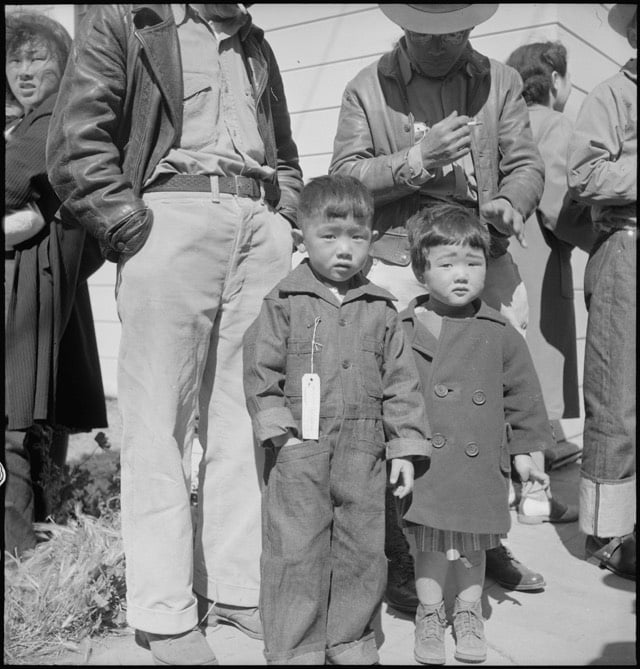
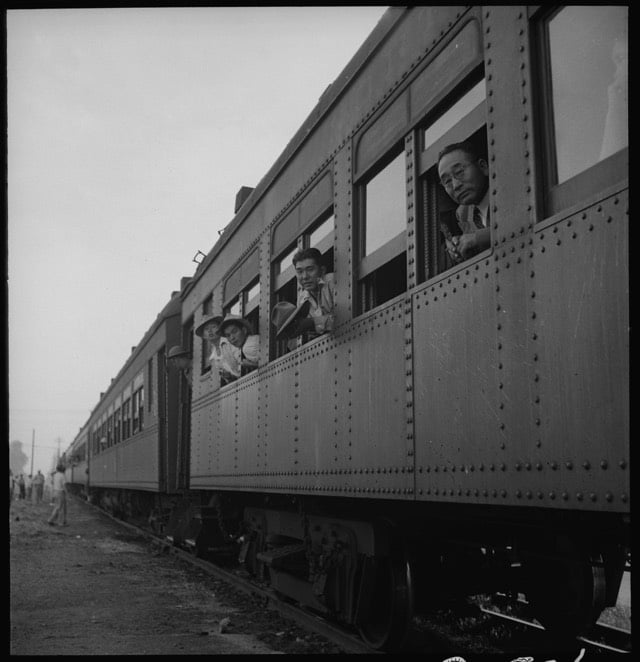
In 1942, the US government hired Dorothea Lange (of Migrant Mother fame) to take photos of the removal and imprisonment of Japanese Americans during World War II. Although Lange quit after a few months because government censors wouldn’t let her shoot images of barbed wire and the bayonets on guards’ guns, she took hundreds of photos documenting this shameful moment in American history.
Famous for her forlorn images of Dust Bowl America, this pioneering female photographer was hired by the War Relocation Authority in 1942 to document the removal and imprisonment of Japanese Americans. Although her skill at candid portraiture was unparalleled, “Lange was an odd choice, given her leftist politics and strong sympathy for victims of racial discrimination,” writes scholar Megan Asaka. The position was a challenging one for Lange as well. “Appalled by the forced exile, she confided to a Quaker protestor that she was guilt stricken to be working for a federal government that could treat its citizens so unjustly.”
The WRA initially gave Lange little instruction about where and what to shoot, but controlled and censored her while she was at work. When documenting life inside the assembly centers and concentration camps, she was prohibited from taking shots of barbed wire and bayonets. Unable to tolerate this censorship and her own conflicted feelings about the work, Lange quit after just a few months of employment with the WRA.
Less ashamed at what they’d done and more worried about PR backlash, the government embargoed Lange’s photos until 1972.
If this all makes you think of some recent comments about Muslims from a certain Republican presidential candidate, history may not repeat itself, but it sure does rhyme.
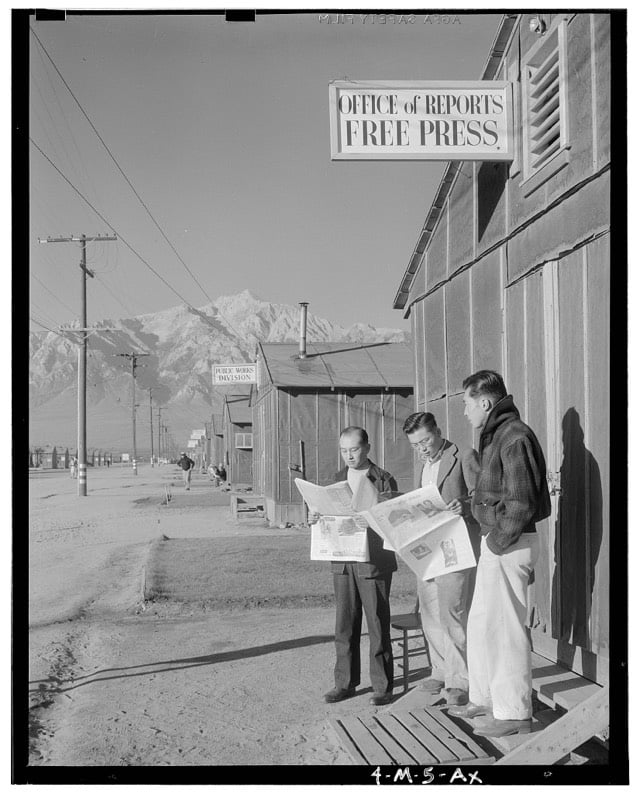
Update: Ansel Adams also took dozens of photos of the Japanese American interment camp at Manzanar.
So did photographer Toyo Miyatake, who was among the prisoners at Manzanar.
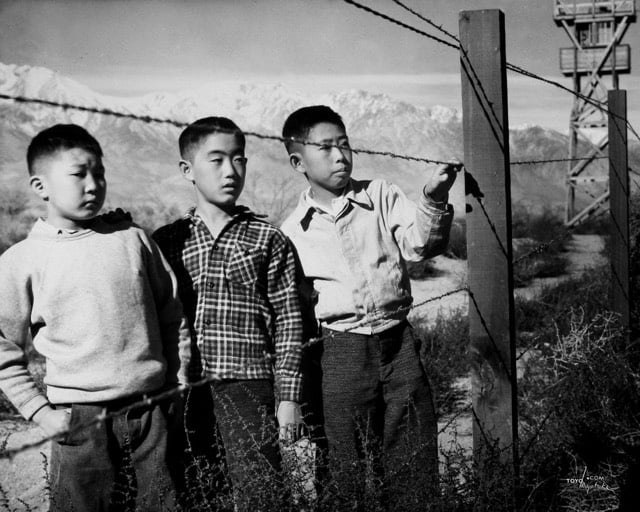
The exclusion order forced Miyatake, his wife and four children, to the concentration camp at Manzanar. He was able to store his photographic equipment but managed to smuggle a camera lens and film plate holder into the camp against government orders. Miyatake told his son Archie that he felt it was his duty to document camp life. An Issei carpenter in camp constructed a box to house the lens, and Miyatake was able to get film into camp by way of a hardware salesman and former client. The photographer eventually asked camp director Ralph Merritt if he could set up a photo studio, and Merritt, who learned about Miyatake from Edward Weston, consented with the provision that Miyatake only load and set the camera, and a Caucasian assistant snap the shutter. Eventually, that restriction was lifted, and Miyatake was designated official camp photographer, and granted the freedom to take photos of everyday life at Manzanar.
Miyatake and Adams met at the camp and began a collaboration. Lange and Adams were friends — he printed Migrant Mother for her — and she was instrumental in convincing Adams to document Manzanar. But she was also critical of his detached approach:
In 1961, Lange said about Adams’s taking landscape pictures at the Manzanar Relocation Center: “It was shameful. That’s Ansel. He doesn’t have much sense about these things.”
(thx, @gen and samuel)
Update: Anchor Editions made a page with dozens of Lange’s photos paired with quotes from contemporary sources about the camps.
Season two of Mr. Robot premieres on July 13. You can watch season one on USA’s site with a cable login or on Amazon video.
This video about how not to get screwed buying a used car crams an astounding amount of good information into three minutes.
Update: Bold claim by Robin Sloan on Twitter:
The calm density of this video is way more “future of visual communication” than 99% of claimants to that title
I agree. That video contained more information than a 44-minute episode of Mythbusters but the pace and energy were more relaxed.
When a show spans 27 seasons and almost 600 episodes, you’re bound to hit your futuristic mark at least some of the time. Here are ten instances in which The Simpsons predicted inventions which have since come to pass, including smartwatches you can talk to, baby translators, and left-handed stores.

The Airbus A380 is currently the world’s largest passenger jet. Depending on the seating configuration, the A380 can carry anywhere from 400 to 615 passengers and is certified for up to 853 passengers.
As of November 2013, only 536 people have ever been in space (any flight above 100 kilometres).1 The listing of their names on Wikipedia is shorter than the site’s page on Game of Thrones. Only 24 of those people left low Earth orbit (on the Apollo missions) and only 12 of those men set foot on the Moon. Seven of the moon walkers are still alive; they’re all in their 80s. Six people are currently in space.
We’ve been sending humans into space for 55 years. That’s an average of about 10 people per year if you don’t count repeats. Human space exploration is still very much in its infancy.
Radiohead compartmentalizes various parts of its overall business dealings into several smaller companies. Here are some of them as detailed in this Guardian article.
Random Rubbish LTD
LLLP LLP
Over Normal LTD
Ticker Tape LTD
Unsustainabubble LTD
Unreliable LTD
_Xurbia_ Xendless LTD
You could whip up a really good Radiohead Business Name or Radiohead Song Title? quiz with these.
The Toast is closing on July 1. Great site. A toast to The Toast for a good run!
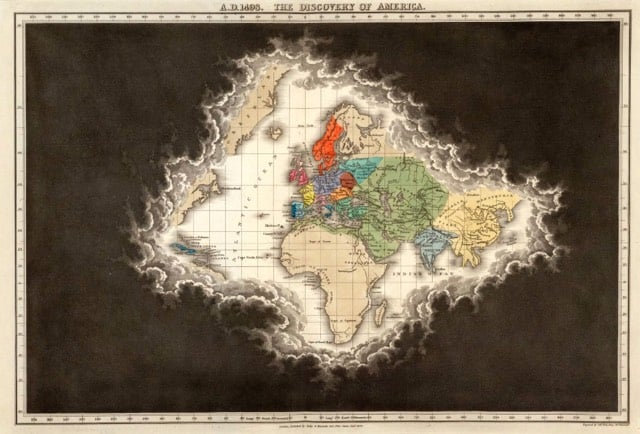
Betsy Mason and Greg Miller are writing a new blog for National Geographic about maps called All Over the Map. Here’s a mission statement.
There is something magical about maps. They transport you to a place you’ve never seen, from the ocean depths to the surface of another planet. Or a world that exists only in the imagination of a novelist.
Maps are time machines, too. They can take you into the past to see the world as people saw it centuries ago. Or they can show you a place you know intimately as it existed before you came along, or as it might look in the future. Always, they reveal something about the mind of the mapmaker. Every map has a story to tell.
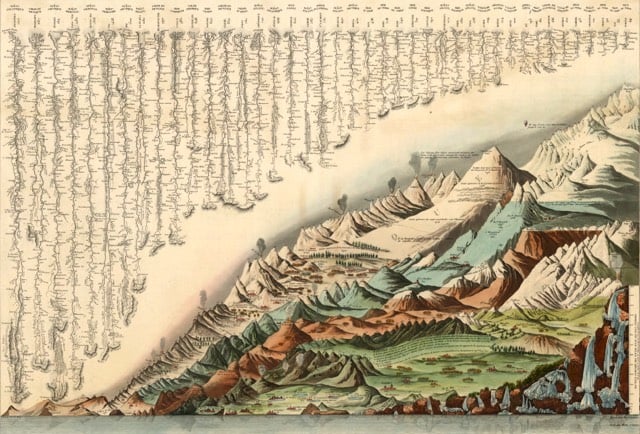
You can also follow their progress on Twitter and Instagram. They recently shared this comparative rivers and mountains chart on Instagram; it’s one of my all-time favorite charts.
A new video from Kurzgesagt explores the limits of human exploration in the Universe. How far can we venture? Are there limits? Turns out the answer is very much “yes”…with the important caveat “using our current understanding of physics”, which may someday provide a loophole (or wormhole, if you will). Chances are, humans will only be able to explore 0.00000000001% of the observable Universe.
This video is particularly interesting and packed with information, even by Kurzgesagt’s standards. The explanation of the Big Bang, inflation, dark matter, and expansion is concise and informative…the idea that the Universe is slowly erasing its own memory is fascinating.
In Twelfth Man, a short film by Duane Hopkins, you’ll witness the chaotic and occasionally ugly run-up to a football match in one of the most heated rivalries in England, the Tyne-Wear derby pitting Sunderland against Newcastle United. Watching it, I was reminded of the rhetoric and confrontations happening around the US in the presidential primaries. Turns out, equating politics with sports is not far off the mark in this case.
Sunderland and Newcastle are situated 12 miles apart in North East England. After first meeting in 1883, the teams have played a total of 155 matches, with each winning 53 matches (with 49 draws). According to Wikipedia (and ultimately sourced from a pair of texts on the two cities), the rivalry between the two cities dates back to the English Civil War in the 17th century:
The history of the Wear-Tyne derby is a modern-day extension of a rivalry between Sunderland and Newcastle that dates back to the English Civil War when protestations over advantages that merchants in Royalist Newcastle had over their Wearside counterparts led to Sunderland becoming a Parliamentarian stronghold.
Sunderland and Newcastle again found themselves on opposite sides during the Jacobite Rebellions, with Newcastle in support of the Hanoverians with the German King George, and Sunderland siding with the Scottish Stuarts.
If you’re unfamiliar with English football, the entire entry is worth a read, particularly the sections on policing and banning fans during away games and hooliganism. There’s even an entire section on players (and a couple of managers) who have played for both teams, a reminder that although rivalries may stretch back centuries and be rooted in deep political differences, money holds a powerful attraction. (Which brings us right back to the US presidential primaries…)
Update: Matches between the two teams may be hard to come by next year. With a 3-0 win over Everton on May 11, Sunderland secured a place in the Premier League next year and caused Newcastle to be relegated to the Championship, the league below the Premier League. The bitter rivalry rolls on.
Update: See also Viceland’s The Eternal Derby about a football rivalry in Serbia. Here’s the trailer for the episode:
And some footage of a pre-match riot. Intense.
Wow. Hi is closing down but they’re archiving the whole site on a nickel plate that will last 10,000 years.
I think this might be my favorite Every Frame a Painting yet: Taylor Ramos and Tony Zhou explore how a film editor does what she does. Or as Zhou puts it, “how does an editor think and feel?” The point about emotions taking time is especially interesting, as is the accompanying comparison between similar scenes from The Empire Strikes Back and Ant Man.
Emotions take time. When we watch people onscreen, we feel a connection to them. And that’s because we have time to watch their faces before they speak and time to watch them afterwards. Editors have to decide, “how much time do I give this emotion?”
Newer posts
Older posts






Socials & More