



Super-trippy images and animations created for The Simpsons on FXX
I love these trippy Simpsons brand ids created for FXX by LA-based Laundry.



This site is made possible by member support. 💞
Big thanks to Arcustech for hosting the site and offering amazing tech support.
When you buy through links on kottke.org, I may earn an affiliate commission. Thanks for supporting the site!
kottke.org. home of fine hypertext products since 1998.
Beloved by 86.47% of the web.
I love these trippy Simpsons brand ids created for FXX by LA-based Laundry.
Written, produced, and directed by Nate Parker, The Birth of a Nation is a film about Nat Turner, the man who led a slave rebellion in Virginia in 1831. The movie won both the Audience Award and Grand Jury Prize at Sundance this year and will be out in theaters in October.
P.S. If the name of the movie sounds familiar, it was deliberately given the same name as D.W. Griffith’s 1915 silent film, which dramatized the formation of the Ku Klux Klan. In an interview, Parker said:
When I endeavored to make this film, I did so with the specific intent of exploring America through the context of identity. So much of the racial injustices we endure today in America are symptomatic of a greater sickness - one we have been systematically conditioned to ignore. From sanitized truths about our forefathers to mis-education regarding this country’s dark days of slavery, we have refused to honestly confront the many afflictions of our past. This disease of denial has served as a massive stumbling block on our way to healing from those wounds. Addressing Griffith’s Birth of a Nation is one of the many steps necessary in treating this disease. Griffith’s film relied heavily on racist propaganda to evoke fear and desperation as a tool to solidify white supremacy as the lifeblood of American sustenance. Not only did this film motivate the massive resurgence of the terror group the Ku Klux Klan and the carnage exacted against people of African descent, it served as the foundation of the film industry we know today.
I’ve reclaimed this title and re-purposed it as a tool to challenge racism and white supremacy in America, to inspire a riotous disposition toward any and all injustice in this country (and abroad) and to promote the kind of honest confrontation that will galvanize our society toward healing and sustained systemic change.
(via trailer town)
Amazon is now offering the ability to subscribe to Prime and Prime Video monthly rather than just yearly. Prime Video is $8.99/mo (Netflix is going up to $9.99/mo soon) and the full Prime offering is $10.99/mo. A year of Prime is still $99.
In Prime Video, Amazon has built a worthy competitor to Netflix. And it actually might be better at this point. The stable of impressive Netflix originals aside (which Amazon is also doing *cough* Transparent *cough* best show in years), Amazon allows you to rent/buy digital movies not available for free streaming1, provides discounts for subscriptions to Showtime and Starz, and (if you opt for the full Prime) offers free shipping on most stuff in the store (as well as other benefits.) I sub to both services, but if I had to make a choice right now, I’d probably stick with Amazon.
What Amazon should do, to really sweeten the deal (if the movie studios would allow such a thing), is offer Prime-only discounts on renting and buying digital movies and shows. So not only would you get a bunch of free streaming movies, you can rent new-to-video movies, and they’re cheaper than at iTunes. That’s something that Netflix can’t offer right now. I wonder if they’ll add a digital video store to their offering to compete?↩
When the Titanic struck an iceberg in the North Atlantic on April 14, 1912, it took the ship 2 hours and 40 minutes to sink. I don’t necessarily know why you would want to, but now you can watch a highly detailed animation of the ship sinking in realtime, all 2h 40m. I can’t quite figure out if this is appropriate or not, although when I think about the inevitable realtime 9/11 version, perhaps it isn’t.
NES player darbian just broke his own record for the fastest time through Super Mario Bros. He completed the entire game in just 4 minutes 57.260 seconds. But the most entertaining part of the video is watching his heart rate slowly creep up from 80 bpm at the beginning to ~140 bpm in World 8-2 and spiking to 171 bpm when he beats the record. (via digg)
Update: Compare that with this insane level from Mario Maker:
(via @pieratt)

In this post about Minecraft yesterday, I wrote a footnote about educational-ish1 apps on my iPad:
On my iPad, I have a screen full of educational apps that the kids can work with pretty much anytime they want without asking.
I posted a screenshot of that page on Twitter, and I wanted to follow up with some App Store links as well as some links to other apps that people tweeted back at me. (Note: my kids are 6 and 8, so YMMV.)
Minecraft Pocket Edition - Duh. It doesn’t do quite as much as the full versions available on other platforms, but they’re improving and adding stuff all the time and the touchscreen experience is great.
The Tinybop Collection - Beautiful, fun apps. The kids most often work with The Everything Machine and Simple Machines.
Mate in 1 - A game that challenges you to find the checkmate using just one move. Ollie takes chess after school once a week, so I downloaded this for when he wants some extra practice during the week. See also Mate in 2.
Monument Valley - This is a straight-up game, but it’s so well-made (I love the soundtrack) and the logic puzzles are genuinely challenging that I’m happy to let them work with this one. Ollie has made it all the way through while Minna is still on level 9. Gonna get the Forgotten Shores IAP too.
The Numberlys - This one has ceased to be educational for my kids, but it’s great for the younger set.
Crazy Gears - 99 levels of mechanical puzzles involving gears.
Hopscotch - Use an intuitive drag-and-drop interface to build games. It includes many video tutorials for learning how everything works.
And here are a few recommendations from others that I am eager to try out:
Quick Math Pack - Four math apps, including multiplication, fractions, and telling time. See also Prodigy Math Game, The Counting Kingdom, the DragonBox apps.
Barefoot World Atlas - An annotated world atlas. This looks great…downloading now.
Epic! - A eBook library for kids 12 and under with 10,000 titles. A couple of very strong recommendations from people for this.
Brain It On - Draw shapes to solve challenging physics puzzles. See also LiquidSketch.
Endless Reader - For beginning readers. The same company, Originator Inc., has many other apps as well.
Professor Astro Cat’s Solar System - Learn about the solar system with a cat and mouse as tour guides.
Deep Green - Top-notch chess game.
Lots of good stuff there…I’ve downloaded a few already. I really really wish the App Store had a try-before-you buy policy. I have no idea which of these apps the kids will actually like/play and it would be nice not to have to spend $50 to find out. Anyway, thanks to everyone who shared their favorites. Let me know if I’ve missed anything great!
As you might have guessed from reading this here web site, I tend to have an expansive definition of what is educational. Hence, “educational-ish” to adjust people’s expectations.↩
From The Intercept and director A.J. Schnack, a simple and powerful short film about more than a dozen mass shootings that have occurred in the US since 2011.
A scene of tragedy unfolds, accompanied by fear, chaos and disbelief. As Speaking is Difficult rewinds into the past, retracing our memories, it tells a story about a cumulative history that is both unbearable and inevitable.
Fuck, that was difficult to watch. When Sandy Hook came up, I just lost it. We should be deeply deeply ashamed that that happened and we did nothing about it.
NYC water tastes amazing. Better than bottled. Where does the city get such great water from?
The Catskill/Delaware watershed, which extends 125 miles northwest of the city, provides more than 90 percent of the city’s supply. The rest comes from the Croton watershed.

It can take 12 weeks to a year for water to wind its way to the city from the streams, tunnels, dams and reservoirs in the Catskills. All of it is delivered to the city by gravity alone.
“Gravity’s an important friend of ours,” said Mr. Rush, the deputy commissioner, explaining that it “works nonstop” and is “energy efficient.”
Whoa, I had no idea the aqueduct tunneled 1000 feet under the Hudson River. Water systems have been in the news lately, both in Flint, MI and here in NYC, where Mayor de Blasio postponed work on Water Tunnel #3 and then, a day later, responding to public concern over the postponement, announced that he was going to accelerate the work on Tunnel #3.
See also David Grann’s classic 2003 New Yorker piece about the NYC water system, City of Water.
The author accompanied a group of sandhogs and nine cases of dynamite six hundred feet down a shaft leading to a segment of the tunnel that lies below Tenth Ave. and 13th St. New York’s invisible underground empire goes as deep as the Chrysler building is high. Tunnel No. 3 has been under construction since 1969; it will extend sixty miles, from the reservoir in Yonkers to the end of Manhattan, with various redundant loops.
Kurzgesagt examines what’s happened to our privacy, civil liberties, and security because of the threat of terrorism.
For the Love of Spock is a documentary about Leonard Nimoy and the beloved character he played on Star Trek. Nimoy’s son Adam is the director, the film was funded with the help of Kickstarter, and is playing at the Tribeca Film Festival this weekend (with special guest appearance by Zachary Quinto).
Body cameras, dashboard cams, and bystander videos all offer different views of police officers doing their jobs, which underscores the importance of perspective in skewing our perceptions of what’s happening. For instance, body cams can tend to put you in the shoes of the wearer.
These details were not captured by the police body camera, though, revealing another important point: Body cameras prioritize the officer’s point of view.
“When video allows us to look through someone’s eyes, we tend to adopt an interpretation that favors that person,” Professor Stoughton said, explaining a psychological phenomenon known as “camera perspective bias.”
Thanks to Reed for sending me the link and pointing out the connection to how film directors use the camera to tell stories effectively:
The importance of composition in cinematic storytelling and “What a film director really directs is the audience’s attention.” What are these law enforcement surveillance cameras inadvertently directing our attention to?

Clive Thompson’s article for the NY Times about Minecraft captures what many players, parents, and teachers find exciting about the game that seems like more than just a game.
Presto: Jordan had used the cow’s weird behavior to create, in effect, a random-number generator inside Minecraft. It was an ingenious bit of problem-solving, something most computer engineers I know would regard as a great hack — a way of coaxing a computer system to do something new and clever.
In addition to learning about logic and computer science, various educators have also touted Minecraft’s lessons in civics, design, planning, and even philosophy. If you’ve ever seen little kids playing with blocks, you’ve noticed that some of those potential lessons there too.
Block-play was, in the European tradition, regarded as a particularly “wholesome” activity; it’s not hard to draw a line from that to many parents’ belief that Minecraft is the “good” computer game in a world full of anxiety about too much “screen time.”
Among the parents I know, Minecraft is not classified as a game…it’s very much tied to education.1 And when listening to the kids and their friends talk about it, if you can get past the endless chatter about zombies and diamond armor, their understanding of the whole world of possibilities is quite sophisticated.
And I can’t resist commenting on this little aside about Lego:
Today many cultural observers argue that Lego has moved away from that open-ended engagement, because it’s so often sold in branded kits: the Hogwarts castle from “Harry Potter,” the TIE fighter from “Star Wars.”
Until very recently, I was in that camp of cultural observers, frustrated by the brands and paint-by-number aspect of contemporary Lego kits. But my kids play with Lego a ton and I’ve observed plenty of open-ended engagement going on. Sure, they sit for 20-30 minutes putting the kits together using directions, but after they’re “done”, the real play begins. Ollie’s Star Wars ships dock at Minna’s birthday party. Soon, beach goers are wearing Stormtrooper helmets and Vader’s eating cupcakes. None of the “finished” products survive more than a few minutes without being augmented or taken apart to make something different. Ships take on wheels from previous kits and become delivery trucks (with cool laser cannons). Parts from every station, house, vehicle, and landscape get remixed into whatever’s necessary for their dramatic play. It’s like jazz with injection molded plastic.
On my iPad, I have a screen full of educational apps that the kids can work with pretty much anytime they want without asking. (To play Alto’s Adventure or Subway Surfer, they have to ask.) Minecraft is not on this screen — and I had to explain my decision on this specifically to the kids — but this article may have persuaded me to add it.↩
This animation is super-freaky and somewhat NSFW and you should just watch it. Also: and that’s why you always leave a note. (via @gavinpurcell)
From Fusion, a 45-minute documentary about the making of Zootopia.
Fusion spent two years with the production team of Disney’s smash hit film. In ‘Imagining Zootopia,’ you will travel with the team to Africa to explore the animals in their natural habitat and find out how the storytellers and animators dealt with the very real themes of prejudice and bias.
I found this via Khoi Vinh, who writes:
A lot of careful thought went into how to render the emotional truth behind experiencing racism, and the documentary takes a detailed look at the filmmakers grappling with that. However, it also betrays one of the unfortunate truths of the production; the movie is commendably bold about addressing prejudice, but it’s evident from watching the documentary that of the five-hundred plus people who contributed to the film, hardly any were non-white, and even fewer were African-American.
For a criticism of Zootopia’s racial allegory, read Devin Faraci’s A Muddled Mess of Racial Messaging… And Cute Animals.
Alexey Zakharov gathered old photos of New York, Washington D.C. and other American cities from Shorpy and animated them into something wonderful. There’s a cheesy steampunk time machine at the beginning…push through that to the good stuff. (via @pshoplifter)
Just learned/realized that the old logos for Reebok, Apple, and Trapper Keeper all use the same typeface, Motter Tektura.

(via @pieratt)
In a new video, Even Puschak talks about the rise of the serialization genre, from Dickens to Flash Gordon to General Hospital to Star Wars. Now that our entertainment is increasingly serialized, he argues that audiences have a unique opportunity to shape what we watch. (Case in point: the increased importance of non-white and non-male characters in The Force Awakens and Rogue One.)
Further reading: Wired’s You Won’t Live to See the Final Star Wars Movie, which I’ve thought about almost every week since I read it.
Everywhere, studio suits are recruiting creatives who can weave characters and story lines into decades-spanning tapestries of prequels, side-quels, TV shows, games, toys, and so on. Brand awareness goes through the roof; audiences get a steady, soothing mainline drip of familiar characters.
Forget the business implications for a moment, though. The shared universe represents something rare in Hollywood: a new idea. It evolved from the narrative techniques not of auteur or blockbuster films but of comic books and TV, and porting that model over isn’t easy. It needs different kinds of writers and directors and a different way of looking at the structure of storytelling itself. Marvel prototyped the process; Lucasfilm is trying to industrialize it.
And Puschak recommends Consuming Pleasures by Jennifer Hayward.
Ranging from installment novels, mysteries, and detective fiction of the 1800s to the television and movie series, comics, and advertisements of the twentieth century, serials are loosely linked by what may be called “family resemblances.” These traits include intertwined subplots, diverse casts of characters, dramatic plot reversals, suspense, an such narrative devices as long-lost family members and evil twins. Hayward chooses four texts to represent the evolution of serial fiction as a genre and to analyze the peculiar draw that serials have upon their audiences: Dickens’s novel Our Mutual Friend, Milton Canif’s comic strip Terry and the Pirates, and the soap operas All My Children and One Life to Live. Hayward argues that serial audiences have developed active strategies of consumption, such as collaborative reading and attempts to shape the production process. In this way fans have forced serial producers to acknowledge the power of the audience.
All this makes me realize that I’ve often thought of kottke.org as a serial. The “family resemblances” amongst all my posts might be difficult to see sometimes, but it’s there most of the time. In my mind, at least.
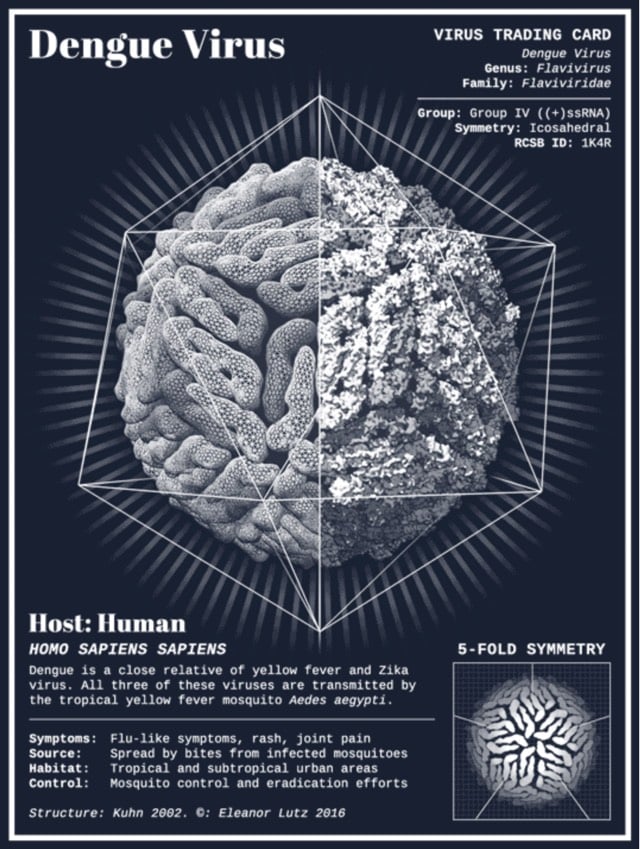
Eleanor Lutz’s latest infographic creation is a set of animated virus trading cards.
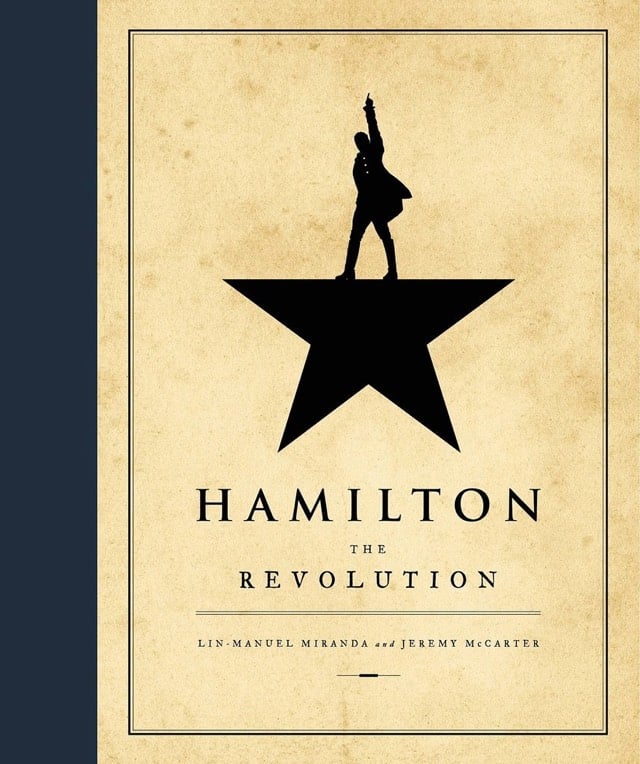
The Broadway musical Hamilton is having a bit of a moment right now. Ok, not really. Lin-Manuel Miranda’s smash hit has seemingly had one loooong moment since he performed “Alexander Hamilton” in front of the President and Mrs. Obama at the White House in 2009.
The show is sold out1 until who knows when, the original cast album went gold and won a Grammy, and they’re doing spin-off productions in Chicago, LA, and SF — all this scarcely more than a year since Rebecca Mead wrote up Miranda and Hamilton in the New Yorker.2 Bernie Sanders took in the show last week. And this week, a book about the production of the play came out.
Hamilton: The Revolution gives readers an unprecedented view of both revolutions, from the only two writers able to provide it. Miranda, along with Jeremy McCarter, a cultural critic and theater artist who was involved in the project from its earliest stages — “since before this was even a show,” according to Miranda — traces its development from an improbable performance at the White House to its landmark opening night on Broadway six years later. In addition, Miranda has written more than 200 funny, revealing footnotes for his award-winning libretto, the full text of which is published here.
Add to that a flurry of articles (several from the NY Times, which has a dedicated staff of 162 reporters on the beat) that came out in the past week or so: Why Hamilton Matters, Lin-Manuel Miranda: By the Book (he’s never finished Infinite Jest), ‘Hamilton’ and History: Are They in Sync?, A Hamilton Skeptic on Why the Show Isn’t As Revolutionary As It Seems, and The C.E.O. of ‘Hamilton’ Inc. How much bigger can this thing get?
Update: And now Miranda has won a Pulitzer.
Hey, if anyone’s got a ticket and wants to take me, I’m free literally any time/day/year. Hahahaha. No seriously, email me. Hahaha. (No, really. AFTER ALL I’VE DONE FOR YOU UNGRATEFUL MOTH ↩
You know who else Mead wrote up in the New Yorker many years ago?! Hint: it’s not actually Hitler this time…↩
Amazon debuts new Kindle Oasis. Super light, thin, long-lasting battery, dedicated page-turn buttons, etc.
Greenland sees record-smashing early ice sheet melt. That graph is terrifying.
If you’re poor, you might want to consider moving to a place where your life expectancy will be reasonably high. In many parts of America, there is only a minor gap between the life expectancies of the wealthy and the poor.
But in some other parts of the country, adults with the lowest incomes die on average as young as people in much poorer nations like Rwanda, and their life spans are getting shorter.
If you’re rich, you’re probably OK right where you are (regardless of where that happens to be). Here are some remarkable numbers from the NYT Upshot: The rich live longer everywhere. For the poor, geography matters.
Russian billionaire Yuri Milner, with the help of Stephen Hawking and Mark Zuckerburg, plans to launch a fleet of nano-probes1 toward a star close to our solar system, Alpha Centuri. The craft, outfitted with lightsails, will be pushed along to their destination in just 20 years by powerful lasers on Earth.
In the last decade and a half, rapid technological advances have opened up the possibility of light-powered space travel at a significant fraction of light speed. This involves a ground-based light beamer pushing ultra-light nanocrafts - miniature space probes attached to lightsails - to speeds of up to 100 million miles an hour. Such a system would allow a flyby mission to reach Alpha Centauri in just over 20 years from launch, and beam home images of possible planets, as well as other scientific data such as analysis of magnetic fields.
Breakthrough Starshot aims to demonstrate proof of concept for ultra-fast light-driven nanocrafts, and lay the foundations for a first launch to Alpha Centauri within the next generation. Along the way, the project could generate important supplementary benefits to astronomy, including solar system exploration and detection of Earth-crossing asteroids.
The Atlantic and the NY Times have more information on the initiative.
Sure, we can launch laser-powered nano-probes toward a distant star, but humanity still struggles with proper descriptive URLs.↩
As the US and Cuba move toward becoming BFFs again (or at least members of the same #squad), it’s a good time to review the history between the two countries, which includes slavery, the Spanish-American War, and the Cold War-era series of fiascos.
The San Francisco earthquake of 1906 and the resulting fires destroyed 500 blocks, 25,000 buildings, killed more than 3000 people, and left more than half the city homeless. Alan Taylor curated a selection of photos of the earthquake and aftermath. The most striking ones are those taken from an airship that show how complete and extensive the destruction was. I mean:

Sam Hinkie recently resigned as general manager of the NBA’s Philadelphia 76ers. His resignation letter took the form of an investor letter, a la Warren Buffett’s annual letters. Before he gets down to basketball specifics, Hinkie spends several pages explaining his philosophy. Along with Buffett and his business partner Charlie Munger, Hinkie mentions in this introductory section Atul Gawande, Elon Musk, Bill James, James Clerk Maxwell, Bill Belichick, Jeff Bezos, Tim Urban (whom he suggests the Sixers owners should meet for coffee), AlphaGo, and Slack (the Sixers’ front office uses it). He even quotes Steven Johnson about the adjacent possible:
A yearning for innovation requires real exploration. It requires a persistent search to try (and fail) to move your understanding forward with a new tool, a new technique, a new insight. Sadly, the first innovation often isn’t even all that helpful, but may well provide a path to ones that are. This is an idea that Steven Johnson of Where Good Ideas Come From popularized called the “adjacent possible.” Where finding your way through a labyrinth of ignorance requires you to first open a door into a room of understanding, one that by its very existence has new doors to new rooms with deeper insights lurking behind them.
If I didn’t know any better, I’d guess that Hinkie is a regular kottke.org reader. (via farnum street)

It did not work for Gilligan and the Skipper, but writing “HELP” with palm fronds on the beach got three men rescued from a deserted island in the Pacific.
A Navy P-8 Madfox 807 aircrew from Misawa Air Base in Japan was conducting a search pattern for the missing mariners when they spotted survivors holding lifejackets and their makeshift sign. This information was relayed back to search and rescue watchstanders in Guam and shared with the family. The survivors were then picked up and transferred by a local small boat to Pulap.
Update: A woman in Arizona was rescued a few days ago in part because of a HELP sign she wrote with sticks.

(via @mchamblin)
Can you love your daily commute? “Let reality be reality.”
If they survive at all, recordings of a lot of older music (pre-50s or -60s) don’t sound great because they were taken from old records that aren’t in the best shape. This 1929 recording of Louis Armstrong & His Orchestra playing Ain’t Misbehavin’ was taken from what’s called a “mother record”, a metal disc that’s produced from the master disc. As you can hear, recording directly from a mother gives you an incredibly crisp and clear result:
Wow. It sounds so much better than the same song recorded in a more conventional way:
We’re so conditioned to hearing 90-year-old music with that muddy record hiss that the mother recording is a revelation, like seeing early color photography and film.
A poison ivy quiz. Tis the season.
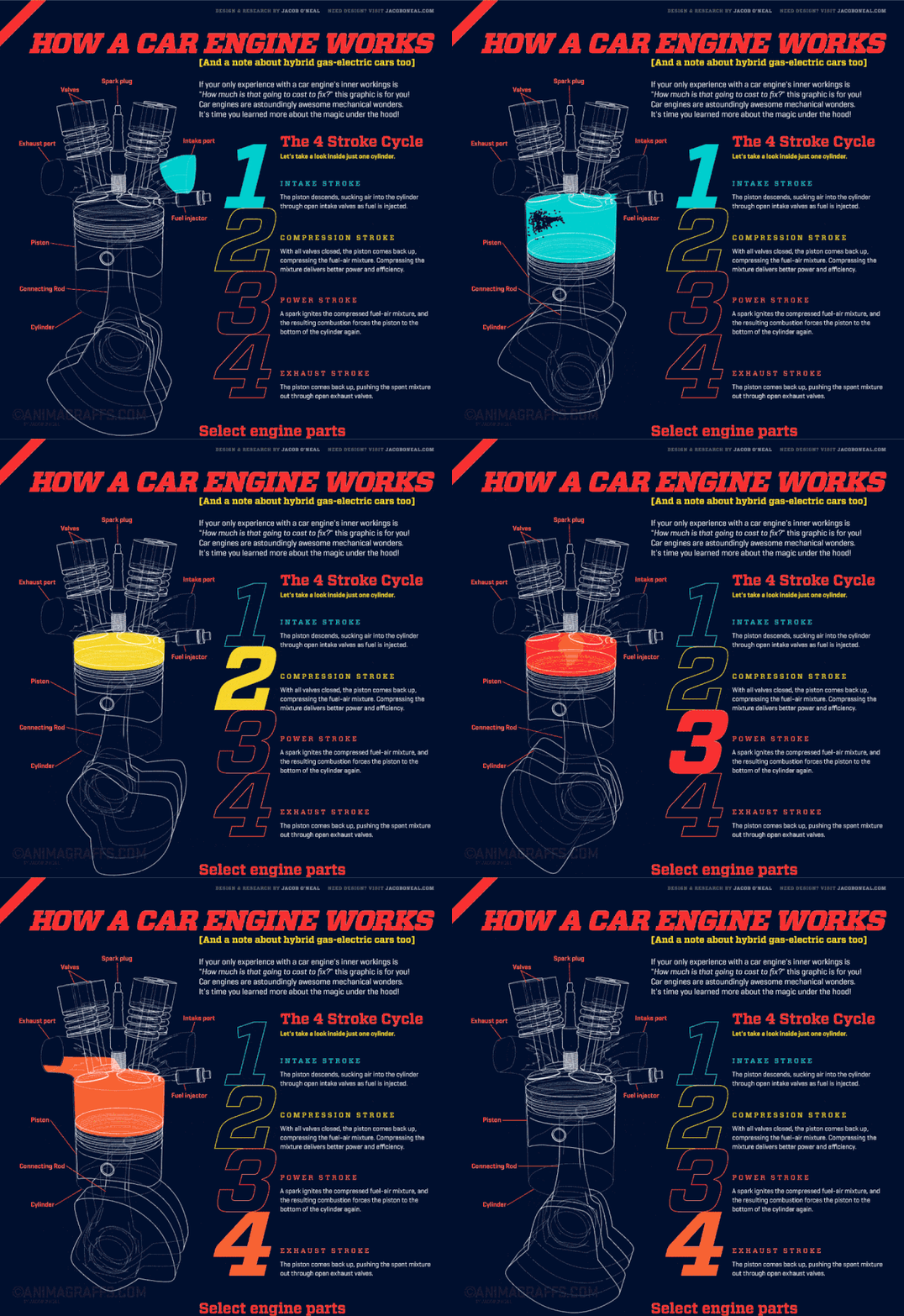
From Jacob O’Neal, a great series of animated GIFs about how internal combustion engines work. There are separate animations of the fuel, air, cooling, oil, electrical, and exhaust systems.
See also O’Neal’s animations on how a jet engine works and how a handgun works.
This video from Vox makes an often overlooked point about climate change. Climate change is not about saving the planet. Earth will be fine. Life, in general, will be fine. But many species of plants and animals will die. Addressing climate change is about saving plants and animals that are in some way “useful” to us and preventing human suffering. (via @mims)
Update: George Carlin riffs on this point in an old standup routine:
There is nothing wrong with the planet. The planet is fine. The people are fucked.
(via @austinkleon)
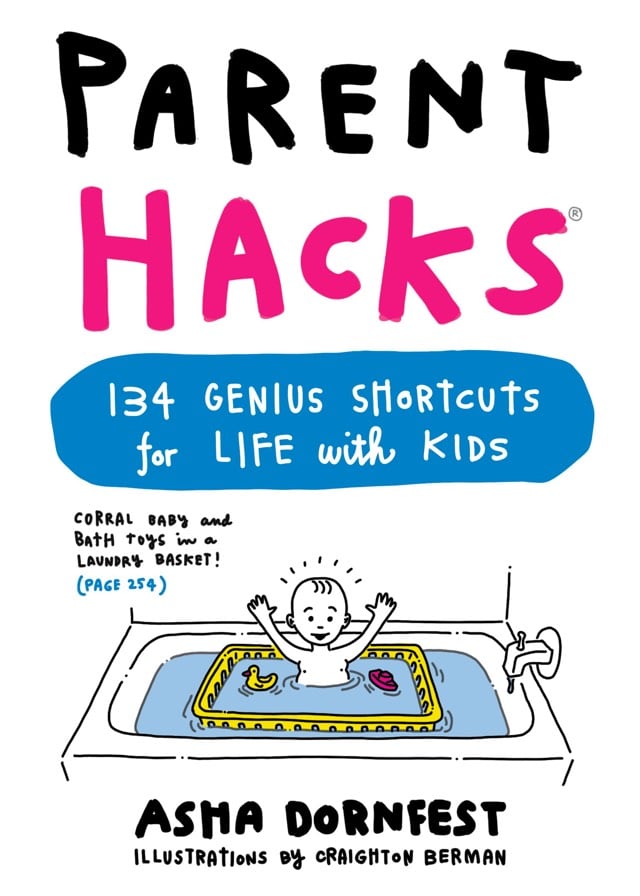
Asha Dornfest runs the Parent Hacks blog and she’s collected some of her best tips into a new book, Parent Hacks: 134 Genius Shortcuts for Life with Kids.
A parent hack can be as simple as putting the ketchup under the hot dog, minimizing the mess. Or strapping baby into a forward-facing carrier when you need to trim his fingernails-it frees your hands while controlling the squirming. Or stashing a wallet in a disposable diaper at the beach-who would ever poke through what looks like a used Pamper?
Dave Pell from Nextdraft tipped me off to the book, writing:
My friend Asha Dornfest has turned her excellent parenting blog into an even more excellent parenting book with 134 ingenious ideas for simplifying life with kids. Parent Hacks is so good that I may even have a few more kids.
The latest video from Kurzgesagt is on space elevators. How would you build one? Why not just keep launching rockets into space instead? Would be easier to build one on the Moon first?

Socials & More